
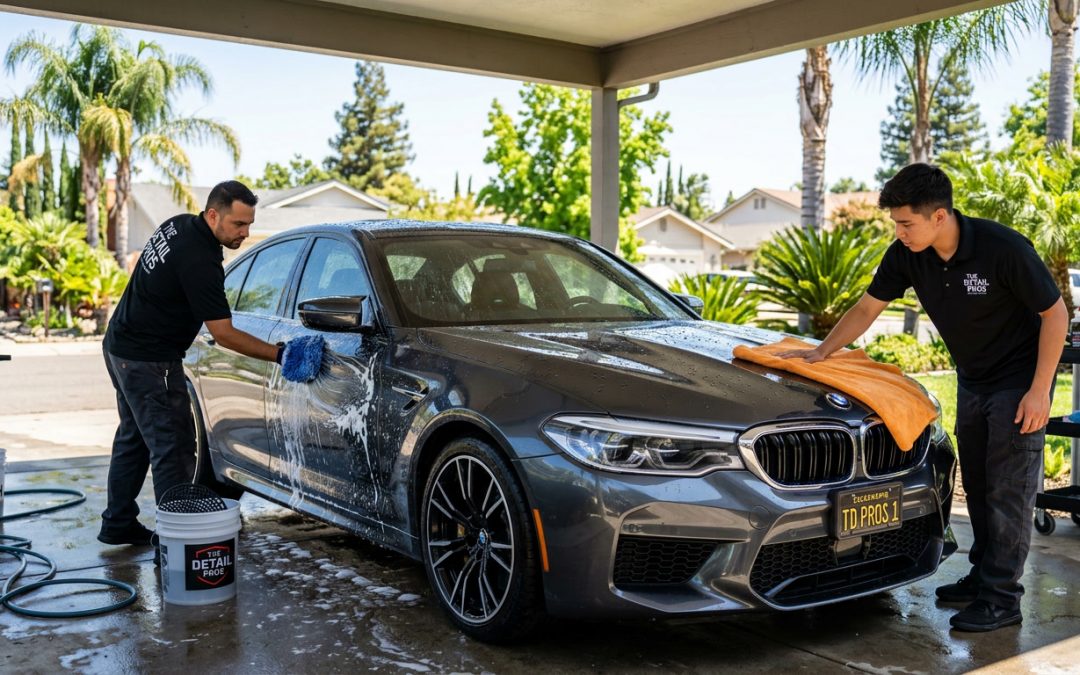
You paid for ceramic coating to make your paint easier to clean and better protected. But here’s the part a lot of owners miss: the coating usually doesn’t get “killed” by one dramatic mistake. It gets worn down slowly by bad wash habits.
That’s especially true in Sacramento. Between Central Valley dust, spring pollen, hard water, and summer heat, your paint sees a steady stream of contamination. Add rough towels, harsh soap, or rushed drying, and you can end up with micro-marring, water spots, and a coating that stops acting like it should.
The good news? Washing a ceramic-coated car the right way isn’t complicated. You just need a routine that reduces friction, uses the right products, and respects how coatings actually fail. [1][2]
Key Takeaways
- Pre-rinse and foam first. The less dirt you touch, the safer the wash.
- Use a pH-neutral, coating-safe soap. Harsh cleaners can weaken hydrophobic behavior over time. [2][3]
- Microfiber care matters more than most people think. Dirty or damaged towels are one of the biggest causes of micro-marring. [4]
- Blow-dry first when possible. Less paint contact means less risk.
- Sacramento hard water is a real problem. Dry quickly and avoid washing in direct sun. [5]
- If beading drops off, the coating may be clogged—not gone. A proper decontamination wash can sometimes restore performance.
Why the Wrong Wash Routine Hurts Ceramic Coatings
Ceramic coatings are durable, but they’re not scratch-proof. They create a sacrificial layer over your clear coat, which helps with chemical resistance, gloss, and easier maintenance. What they don’t do is make careless washing safe. [1][3]
The most common problem is micro-marring: tiny scratches that build up over time and make the finish look dull in direct sunlight. On a coated car, that usually comes from:
- Washing without a proper pre-rinse
- Dragging a mitt over dusty paint
- Using old, contaminated, or poorly washed microfiber towels
- Drying too aggressively
- Running through brush-style automatic washes
- Letting hard water dry on the surface
One bad wash probably won’t destroy your coating. But months of bad washes can make a good coating look tired much sooner than it should.
Start With a Touchless Pre-Wash
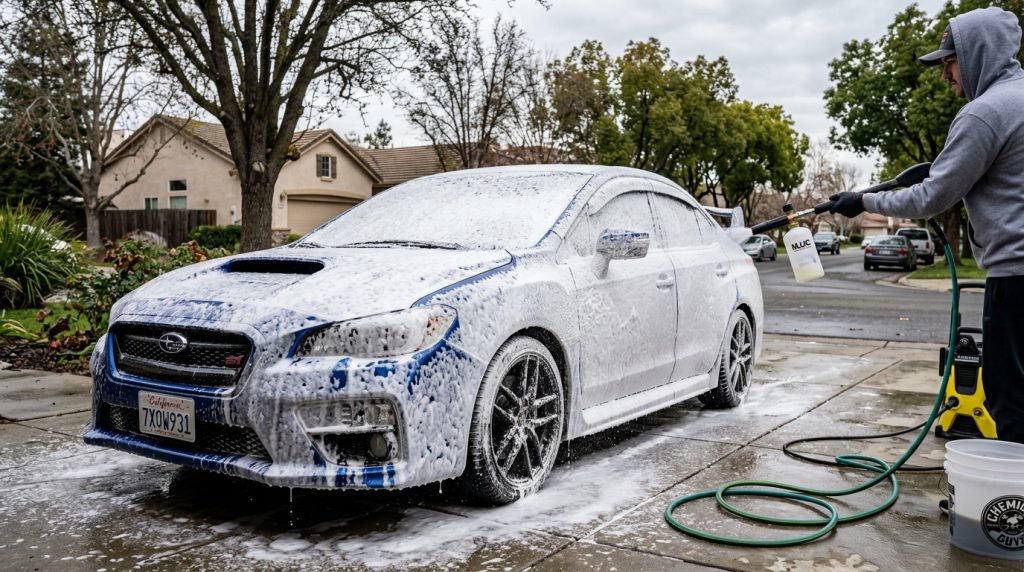
Before the two-bucket wash, before the mitt, before any towel touches the paint, start with a touchless pre-wash.
This is the step many “how to wash a ceramic-coated car” guides skip, and it’s one of the most important ones.
Why snow foam or pre-wash matters
A coated vehicle still picks up dust, grit, pollen, and traffic film. In Sacramento, you also get fine dirt carried around by dry wind, plus sticky seasonal fallout from trees and agricultural areas. If you go straight to hand washing, you’re rubbing that contamination across the coating.
A pre-wash helps loosen and encapsulate that grime before contact. [2]
Best pre-wash process
- Rinse the vehicle thoroughly first. Knock off loose dust and grit.
- Apply a foam pre-wash or coating-safe snow foam.
- Let it dwell briefly according to the product directions.
- Don’t let it dry on the surface.
- Rinse completely before you touch the paint.
If you have a pressure washer and foam cannon, great. If not, a strong hose rinse is still much better than going straight in with a mitt.
The Two-Bucket Method Still Matters
Once the heavy contamination is off, the two-bucket method is still the safest basic wash routine.
Use:
- One bucket for soap
- One bucket for rinsing your wash mitt
- Grit guards in both buckets if possible
Every time you wash a section, rinse the mitt before loading it with fresh soap. That keeps dirt from cycling right back onto the paint. [2]
A few simple rules help even more:
- Wash top to bottom
- Leave the dirtiest lower panels for last
- Use a separate mitt or brushes for wheels and tires
- Don’t scrub stubborn contamination; re-foam or re-rinse instead
For a ceramic-coated car, the goal isn’t just “get it clean.” It’s get it clean with as little friction as possible.
Use pH-Neutral Car Wash Soap Only
If you’re wondering what soap to use on a ceramic-coated car, the safe answer is simple: use a pH-neutral, coating-safe shampoo. [2][3]
Avoid:
- Dish soap
- Degreasers
- All-purpose cleaners on painted surfaces
- Strong alkaline or acidic cleaners unless you’re intentionally doing a decontamination step
Harsh cleaners can reduce the coating’s water behavior and force it to work harder than it needs to. Even when they don’t “strip” the coating outright, repeated use can shorten the slick, hydrophobic feel owners expect. [3]
What to look for in a coating-safe soap
- Labeled pH neutral or pH balanced
- Safe for coated, waxed, or sealed vehicles
- No heavy gloss fillers unless your installer recommends them
Also, use the soap at the right dilution. More soap doesn’t mean a safer wash. It usually just means more residue to rinse.
Microfiber Towel Care: The Hidden Failure Point
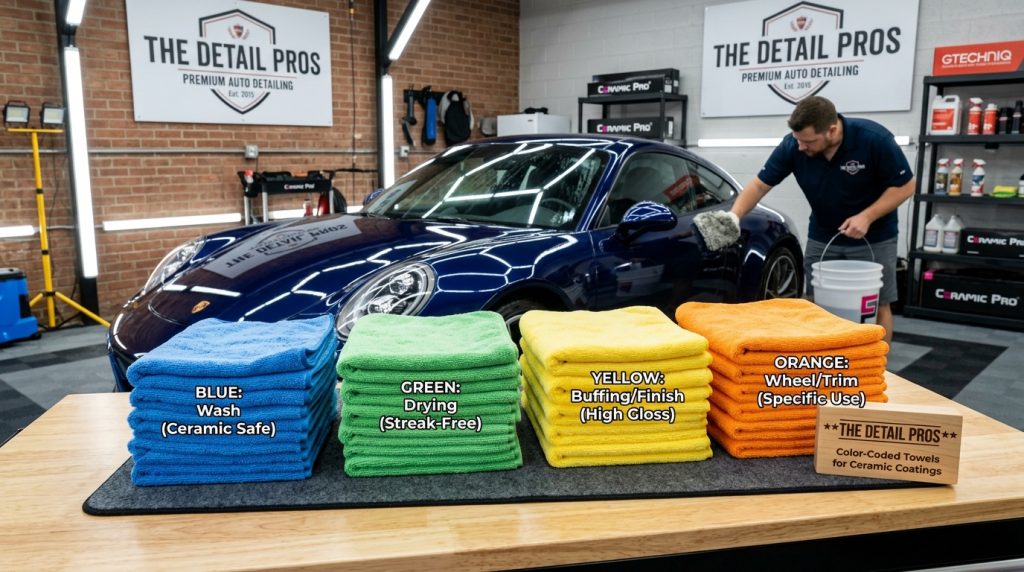
If there’s one part of ceramic coating maintenance most people underestimate, it’s microfiber care.
Your towels and mitts are the things actually touching the coating. If they’re dirty, worn out, or washed incorrectly, they can mar the surface no matter how careful the rest of your routine is.
How to Wash Microfiber Towels Properly
Microfiber used on paint should be washed differently than household laundry. [4]
Wash rules for paint-safe microfiber
- Wash microfiber separately from cotton towels, bath towels, and shop rags
- Use warm or cool water
- Use a dedicated microfiber detergent or a mild, fragrance-free liquid detergent
- Skip fabric softener
- Skip dryer sheets
- Avoid bleach
Fabric softeners and dryer sheets leave residue behind, which clogs the fibers and hurts absorbency. That makes towels less effective and more likely to drag.
Drying and storage rules
- Tumble dry on low heat or air dry
- Don’t bake microfiber on high heat
- Store clean paint towels in a sealed bin, cabinet, or clean drawer
- Keep paint towels separate from wheel, engine, and interior towels
A clean towel can become a bad towel fast if it’s tossed in the trunk loose or stored next to dirty tools.
When to retire a towel
Move microfiber out of paint duty if it:
- Feels stiff or crunchy
- Has embedded debris
- Stops absorbing well
- Gets dropped on the ground
- Has frayed edges or visible wear
A smart habit is to color-code your towels: one color for paint, one for wheels, one for interior, one for glass. That alone prevents a lot of accidental damage.
Drying a Ceramic-Coated Car: Blow-Dry vs. Towel-Dry
Drying is where a lot of coatings get hazed up.
The car may be perfectly washed, but if you drag a towel across a panel that still has dust, leftover minerals, or tiny grit, that’s enough to create light marring.
Towel drying: safe, but only if you do it right
Towel drying isn’t automatically bad. It just carries more risk than touchless drying.
If you towel dry:
- Use a clean, plush drying towel
- Lightly blot or lay the towel down and pull gently
- Don’t grind the towel into the paint
- Swap towels if one gets saturated or dirty
- Never use the same towel on lower panels and then jump back to upper paint
A drying aid or ceramic-safe spray can add lubrication and make this step safer.
Blow drying: usually the safer option
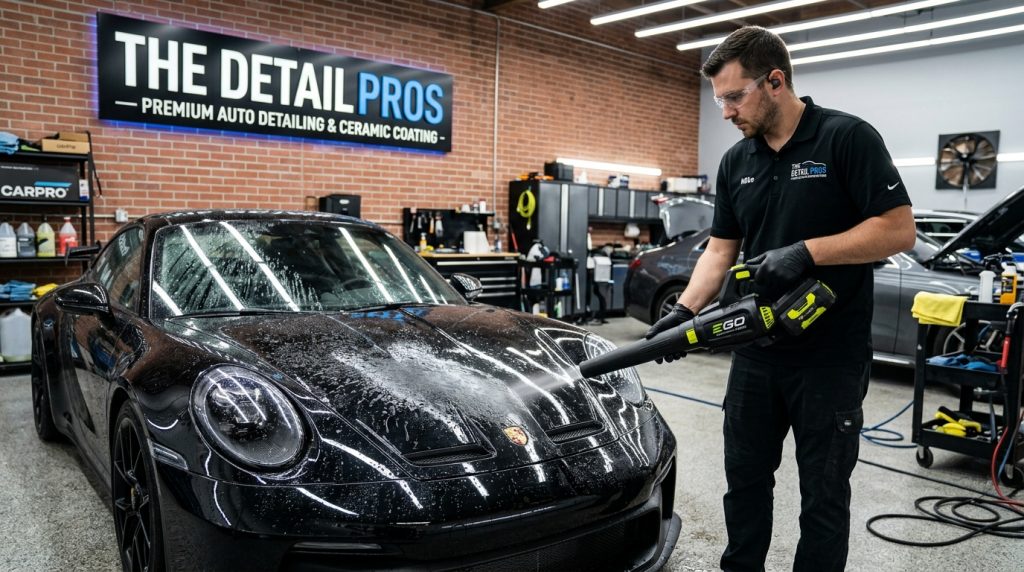
A dedicated car dryer or filtered blower is ideal because it removes water with little to no paint contact. That’s a big advantage on coated cars, since the coating naturally helps water move off the surface. [1][2]
Blow drying is especially helpful around:
- Mirrors
- Emblems
- Trim edges
- Grilles
- Door handles
- Wheel lug areas
Those spots hold water and love to drip after you think you’re done.
The best real-world approach
For most owners, the safest routine is:
- Blow off as much water as possible
- Follow up with a clean microfiber towel only where needed
That hybrid method keeps towel contact to a minimum without making the wash process a hassle.
Water Spot Prevention in Sacramento
This is where local conditions really matter.
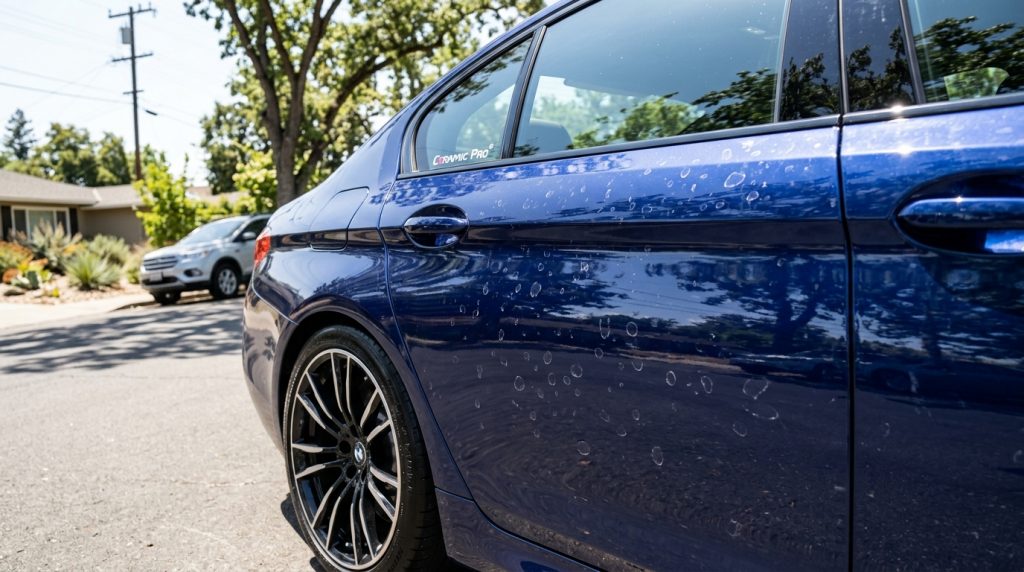
Sacramento-area drivers deal with warm weather, fast evaporation, and mineral-heavy water that can leave visible spots if it dries on the surface. Summer sun makes it worse, and even a quick wash can turn into mineral spotting if you work too slowly. [5]
On a ceramic-coated car, water spots aren’t just annoying. If minerals sit long enough, they can leave deposits that become harder to remove and may require polishing or coating correction.
How to avoid water spots
Wash in the shade or during cooler hours.
Early morning or later evening is much safer than washing on hot panels in direct sun.
Work one section at a time.
Don’t soap the whole car and then hope you can beat the heat.
Dry immediately after rinsing.
This matters more in Sacramento than in cooler, softer-water climates.
Use a drying aid.
A ceramic-safe drying aid helps water move off the surface and adds lubrication.
Consider a final rinse with filtered or deionized water.
If you’re picky about spotting, especially on dark paint, this can make a noticeable difference.
Watch for overspray and sprinkler water.
A freshly washed car parked near irrigation can pick up mineral spots surprisingly fast.
A Simple Sacramento Wash Routine for Ceramic-Coated Cars
If you want a straightforward routine you can repeat every week or two, use this:
- Park in shade and make sure the paint is cool.
- Clean your tools first. Start only with fresh towels, a clean mitt, and clean buckets.
- Pre-rinse the vehicle thoroughly.
- Apply a touchless foam pre-wash and let it dwell briefly.
- Rinse again to remove loosened contamination.
- Hand wash with pH-neutral soap using the two-bucket method.
- Work from top to bottom, leaving the dirtiest areas for last.
- Rinse completely before soap dries.
- Blow dry first, then towel dry only where needed.
- Check for leftover water spots, drips, or missed residue.
That’s the safest practical answer to how to wash a ceramic-coated car without slowly dulling the finish.
Sometimes the Coating Isn’t Failing—It’s Clogged
If your coating suddenly stops beading the way it used to, don’t assume it’s dead.
Often, the surface is just clogged with:
- Mineral deposits
- Road film
- Iron fallout
- Traffic grime
- Old topper residue
That buildup can mask the coating’s behavior and make it seem like protection is gone when it really just needs a proper maintenance decontamination.
When decontamination makes sense
An occasional coating-safe chemical decontamination can help restore performance, especially if the vehicle sees a lot of freeway miles or sits outside. That may include:
- A coating-safe iron remover
- A targeted water spot treatment
- Tar removal where needed
This is one area where it’s easy to overdo it. If you’re not sure what the coating needs, a professional maintenance wash is usually the safer call than experimenting with strong chemicals in the driveway.
If the finish has visible marring, haze, or etched spotting, it may need more than a wash. In that case, services like paint reconditioning and add-on correction work may make more sense than piling on more products.
Signs Your Coating Needs Professional Attention
A ceramic coating doesn’t always need reapplication right away. Sometimes it needs a better wash, decontamination, or correction.
Watch for these signs:
- Water no longer beads or sheets consistently
- The surface feels rough after washing
- You see swirls or haze in direct sunlight
- Water spots keep coming back
- Gloss looks muted even after a proper wash
- The coating performs unevenly from panel to panel
If you’re seeing those issues, it’s worth having a detailer inspect the surface before guessing. You may only need a professional reset, not a full redo.
Book a Coating-Safe Maintenance Wash or Inspection
If your coating isn’t behaving like it used to, The Detail Pros Sacramento can help you figure out whether it needs a safer maintenance wash, a decontamination step, or more involved paint reconditioning. We offer in shop or mobile services for Sacramento-area drivers who want professional care without the guesswork.
Book your maintenance wash or coating inspection today.
Frequently Asked Questions
Can I take a ceramic-coated car through an automatic car wash?
Brush-style automatic washes are still a bad idea for a ceramic-coated car. The coating helps with easier cleaning, but it doesn’t stop dirty brushes from causing swirl marks. Touchless washes are safer, though some use strong chemicals. If you want the coating to keep looking sharp, hand washing or a professional maintenance wash is the better long-term habit.
How often should I wash a ceramic-coated car in Sacramento?
For most Sacramento drivers, every one to two weeks is a good baseline. If the car lives outside, drives freeway miles daily, or gets hit with tree pollen, dust, or sprinkler water, you may need to wash more often. The main goal is to remove contamination before it bakes on or starts clogging the coating.
Do I need wax on top of a ceramic coating?
Usually, no. Traditional wax isn’t necessary on a coated car and may just mask how the coating is behaving. If you want a little extra slickness or help during drying, use a ceramic-safe drying aid or SiO2 booster that’s meant for coated paint. That keeps your maintenance routine simpler and more compatible.
What if my ceramic coating stopped beading water?
A loss of tight beading doesn’t always mean the coating has failed. Mineral deposits, road film, or iron contamination can clog the surface and reduce water behavior. Start with a proper wash and drying routine. If that doesn’t help, a professional decontamination wash or inspection can tell you whether the coating needs maintenance or actual correction.
Can I use a pressure washer on a ceramic-coated car?
Yes, as long as you use it sensibly. A pressure washer is great for pre-rinsing and helping remove loose contamination before contact washing. Just don’t use an aggressive tip too close to the paint, and don’t assume pressure alone replaces safe hand washing. It’s a helpful tool, not a shortcut past good technique.
Why Trust The Detail Pros Sacramento
The Detail Pros Sacramento helps drivers in the greater Sacramento area with detailing made easy, whether you want detailing to your doorstep or prefer in shop or mobile services. The team publicly emphasizes certified technicians and certified Master Detailers, and the service mix goes well beyond a basic wash into ceramic coating care, paint reconditioning, and buffing or polishing. That local, hands-on experience matters when you’re dealing with Sacramento hard water, heat, dust, and real-world daily driving.
Cited Works
[1] Ceramic Pro — “After Care.” https://ceramicpro.com/after-care/
[2] CARPRO — “How To Wash Your Ceramic Coated Car.” https://carpro.global/how-to-wash-your-ceramic-coated-car/
[3] Gtechniq — “How To Maintain A Ceramic Coating.” https://gtechniq.com/blogs/guides/how-to-maintain-a-ceramic-coating
[4] Microfiber Wholesale — “How to Wash Microfiber Towels.” https://www.microfiberwholesale.com/blogs/blog/how-to-wash-microfiber-towels
[5] City of Sacramento — “Water Quality.” https://www.cityofsacramento.gov/Utilities/Water/Water-Quality

 and then