
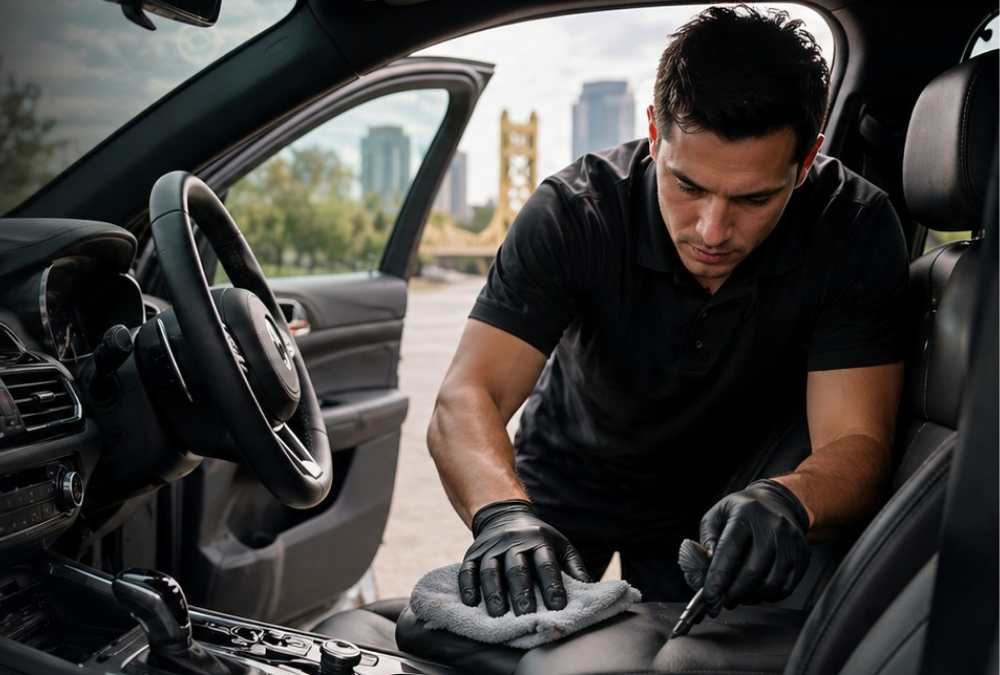
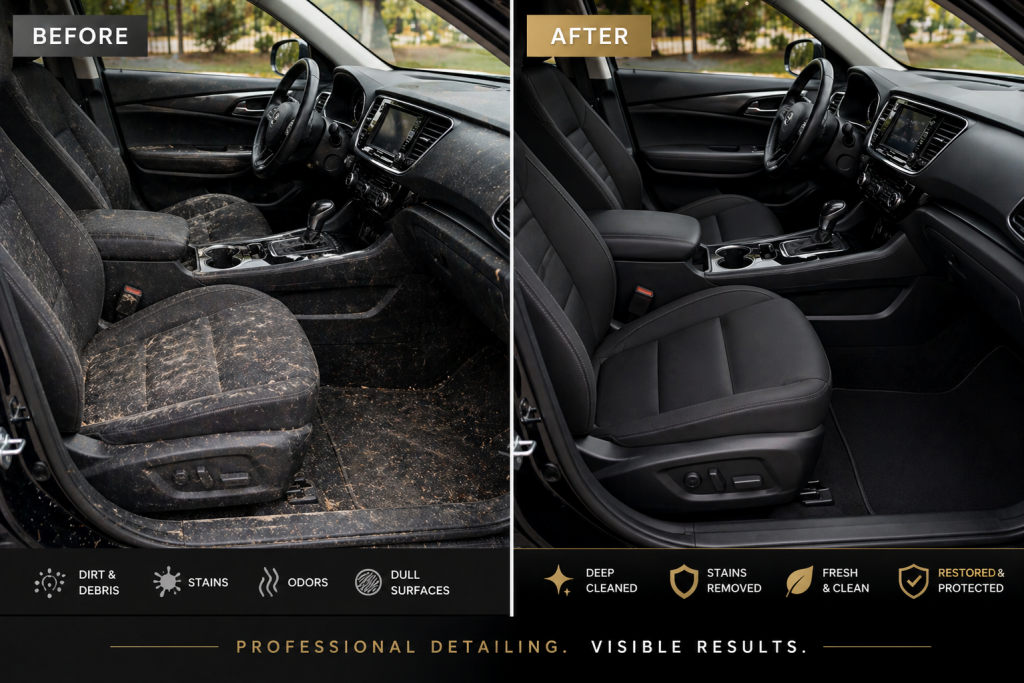
Your car’s cabin takes a beating. Coffee spills, dog hair woven into seat crevices, mystery stains on the carpet, and that lingering smell you can’t quite place. Sacramento’s hot summers make it worse—heat bakes odors into fabric and accelerates wear on leather surfaces.
Here’s the problem: when you search for interior car detailing in Sacramento, most results tell you it exists without explaining what you’re actually paying for. Is extraction included? What about steam cleaning? Will they address that pet odor, or is that extra?
Let’s break down exactly what interior detailing includes at different service levels, what typically costs more, and how to match your vehicle’s actual condition to the right service. No guessing, no surprises.
What Interior Detailing Actually Means
Interior detailing goes far beyond a quick vacuum and wipe-down. Professional interior work addresses surfaces, fabrics, leather, plastics, glass, and air quality in ways that restore—not just clean—your cabin.
The International Detailing Association defines professional detailing as cleaning, restoration, and finishing of a vehicle to produce a show-quality level of detail [1]. For interiors specifically, that means treating each surface type appropriately and addressing contamination that basic cleaning misses.
Here’s what separates professional interior detailing from a drive-through vacuum:
- Deep extraction pulls dirt and moisture from fabric fibers, not just the surface
- Steam cleaning sanitizes and loosens embedded grime without harsh chemicals
- Surface-appropriate products protect leather differently than vinyl or plastic
- Odor treatment neutralizes smells at the source rather than masking them
- Detail brushes and compressed air reach vents, seams, and crevices
The difference matters. A basic vacuum removes loose debris. Professional extraction can remove contaminants trapped deep in carpet padding—the stuff that causes persistent odors and staining [2].
The Three Levels of Interior Service
Most professional detailers structure interior work into tiers. Understanding what each level includes helps you choose based on your cabin’s actual condition, not guesswork.
Express-Level Interior Cleaning
This is maintenance-grade work for vehicles in generally good condition.
Typically included:
- Thorough vacuuming of carpets, seats, and floor mats
- Wipe-down of dashboard, console, and door panels
- Interior glass cleaning
- Light surface dusting and vent cleaning
Time estimate: 30–45 minutes for interior portion
Best for: Vehicles cleaned regularly with no major stains, odors, or heavy contamination. Think of it as keeping a clean cabin clean.
Standard Interior Detailing
This level addresses moderate buildup and light problem areas.
Typically included:
- Everything in express service
- More thorough cleaning of all interior surfaces
- Deeper vacuum work including under seats
- Conditioning of vinyl and plastic surfaces
- More attention to door jambs and sills
Time estimate: 1–2 hours for interior portion
Best for: Vehicles with visible dust buildup, light staining, or several months since last detail. This handles everyday wear from regular use.
Full Interior Restoration
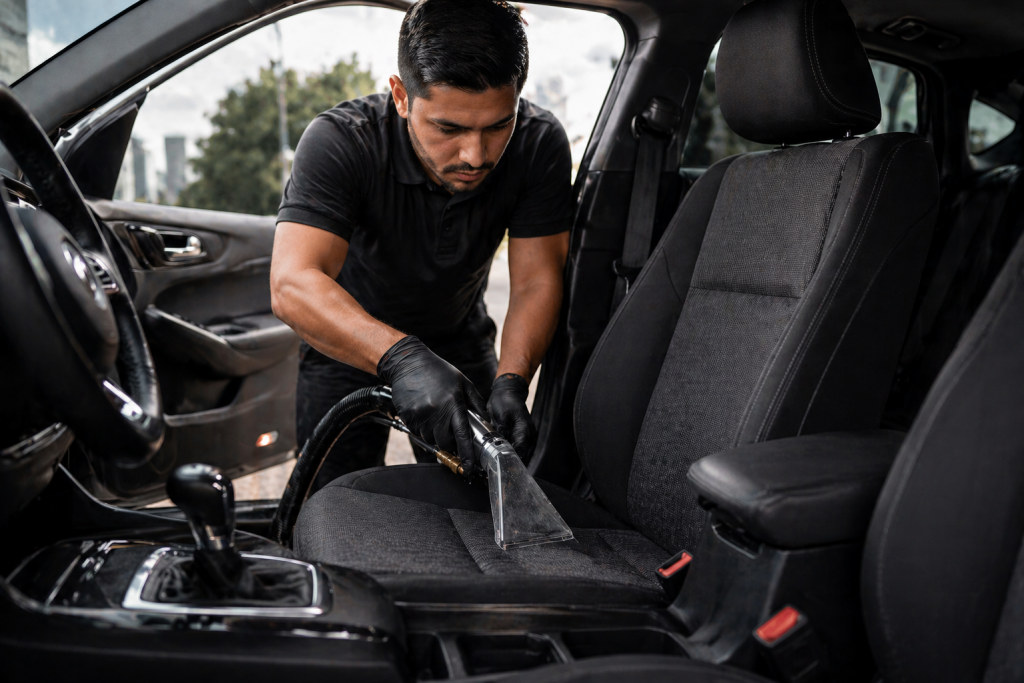
This is deep-clean territory—steam cleaning, hot-water extraction, and intensive treatment of problem areas.
Typically included:
- Complete extraction cleaning of carpets and fabric seats
- Steam cleaning of surfaces and hard-to-reach areas
- Leather cleaning and conditioning
- Detailed brush work on vents, seams, and crevices
- Headliner cleaning
- Thorough odor treatment
Time estimate: 2–4+ hours depending on vehicle size and condition
Best for: Vehicles with embedded stains, persistent odors, heavy pet hair, or those that haven’t been detailed in a year or more. This is restoration, not just maintenance.
Leather vs. Cloth: Different Processes, Different Needs
Your interior surfaces determine which cleaning methods work best. Leather and cloth require fundamentally different approaches.
Cloth and Fabric Seats
Fabric absorbs everything—spills, sweat, pet dander, food particles. That absorption is why cloth interiors often develop odors even when they look clean.
The extraction process:Hot-water extraction (sometimes called steam cleaning, though technically different) injects cleaning solution into fabric, then immediately vacuums it out along with dissolved dirt and moisture [2]. This reaches contamination trapped in seat foam and carpet padding that surface cleaning can’t touch.
Professional extractors pull moisture back out, but fabric still needs drying time. Expect 2–4 hours for seats to fully dry, sometimes longer in humid conditions.
When extraction is necessary:
- Visible staining that wipe-down cleaning won’t remove
- Odors that persist after vacuuming
- Seats that haven’t been deep-cleaned in over a year
- Any significant spill—coffee, milk, soda, pet accidents
Leather and Leatherette Seats
Leather requires gentler treatment but still needs proper cleaning and conditioning to prevent cracking and premature wear.
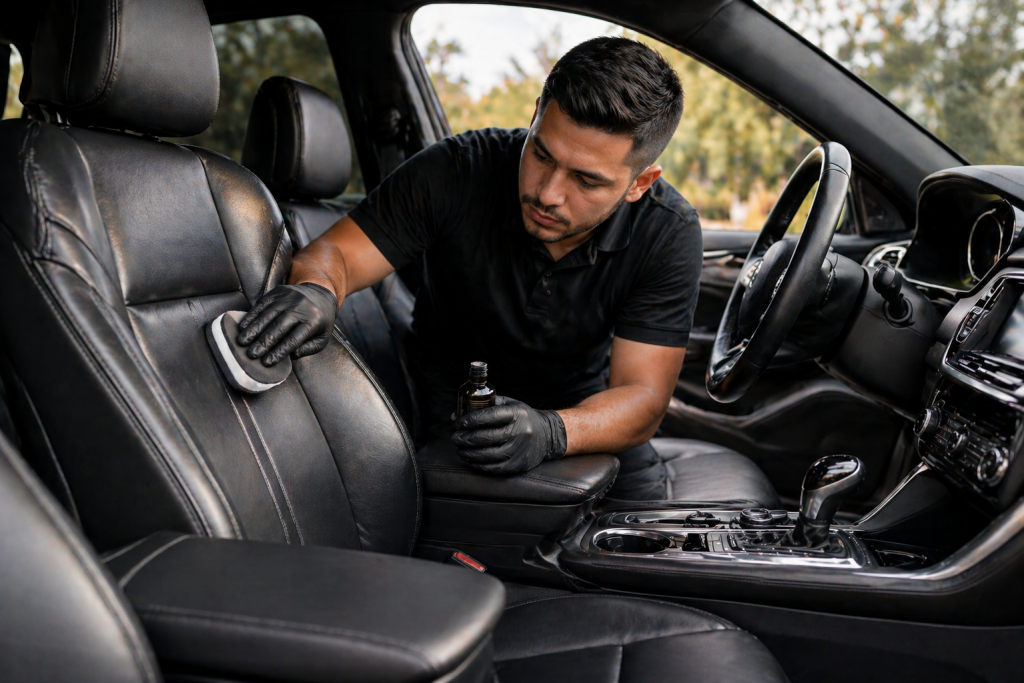
The leather process:Professional leather care involves pH-balanced cleaners that remove body oils, dirt, and grime without stripping protective coatings. Conditioning follows to restore moisture and flexibility [3]. Sacramento’s dry heat accelerates leather aging, making conditioning especially important here.
What leather cleaning addresses:
- Body oil buildup (especially on bolsters where you slide in and out)
- Surface dirt and light staining
- Dryness and early cracking
- Color transfer from denim or other clothing
What leather cleaning can’t fix:
- Deep cracks or peeling
- Significant dye transfer or discoloration
- Tears or physical damage
These require leather repair or recoloring—a specialty service beyond standard detailing.
Common Cabin Problems and Which Service Fixes Them
Matching your problem to the right service level prevents overpaying for what you don’t need or underpaying and being disappointed.
Stain Categories and Treatment Levels
Surface stains (recent, water-based):Coffee, soda, or water spills that happened recently and haven’t set often respond to standard detailing. If you can blot the stain and see improvement, it probably doesn’t need extraction.
Set-in stains (older, protein-based):Milk, food, sweat, or bodily fluids that have dried require extraction. These stains penetrate fabric fibers and won’t respond to surface cleaning alone [4].
Grease and oil stains:These need pre-treatment with appropriate solvents before extraction. Food grease, makeup, and automotive fluids fall into this category.
Mystery stains (unknown origin):When you don’t know what caused a stain, professional assessment helps. Some stains respond to treatment; others have already caused permanent discoloration.
Pet Hair and Dander
Pet hair is one of the most labor-intensive interior problems. Hair weaves into fabric fibers and resists vacuuming.
Light pet hair:A pet that rides occasionally leaves hair that standard detailing can address. Expect extra time but not necessarily extra charges.
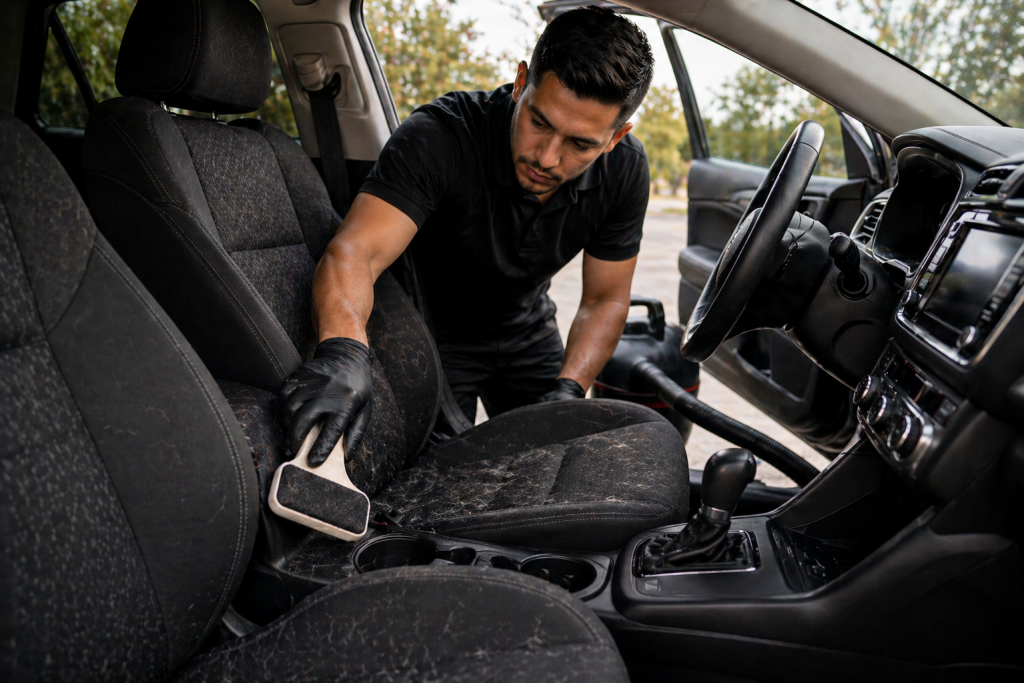
Heavy pet hair:Dogs that ride daily or shed heavily require dedicated removal time. This often means add-on pricing because the labor involved significantly exceeds standard service time. Specialized tools like rubber brushes, compressed air, and repeated passes with different attachments are necessary to remove embedded hair [5].
Odor Sources and Solutions
Odors are tricky because the treatment depends entirely on the source.
Surface odors (smoke, food smells):These often respond to thorough cleaning, extraction, and ozone treatment. Most dissipate after one professional service.
Embedded odors (pet urine, mold, spoiled milk):These contaminate carpet padding and seat foam. Treatment requires extraction, enzyme cleaners that break down organic compounds, and sometimes multiple treatments [6]. Severe cases may require padding replacement—a body shop service, not detailing.
HVAC system odors:That musty smell when you turn on the AC comes from mold or bacteria in the ventilation system. Vent cleaning during detailing helps, but persistent odors may need evaporator treatment, which is typically an additional service.
Biohazard and Extreme Contamination
Some situations go beyond standard detailing territory. Vomit, blood, heavy mold from water leaks, or severe pet accidents may require specialized biohazard cleaning protocols. These situations typically carry premium pricing due to the equipment, products, and safety procedures involved. If you’re dealing with something in this category, it’s worth discussing with your detailer before booking a standard package.
| Problem | Minimum Service Level | May Require Add-On |
| Dust and light dirt | Express | No |
| Moderate buildup | Standard | No |
| Light staining | Standard | Sometimes |
| Set-in stains | Full/Extraction | Yes |
| Light pet hair | Standard | No |
| Heavy pet hair | Standard + Add-on | Yes |
| Surface odors | Standard | Sometimes |
| Embedded odors | Full + Enzyme treatment | Yes |
| Leather conditioning | Standard or Full | Sometimes |
| Biohazard/extreme contamination | Specialty service | Yes |
What Typically Costs Extra
Understanding add-on pricing helps you budget accurately and avoid surprises.
Common Interior Add-Ons
Pet hair removal (heavy):When pet hair removal requires 30+ minutes of dedicated labor beyond normal service time, expect add-on charges. This is one of the most common extras for Sacramento pet owners.
Stain treatment:Targeted stain removal on specific areas—especially set-in stains requiring pre-treatment and multiple extraction passes—often carries additional cost.
Odor elimination:Basic odor treatment may be included in full details, but ozone treatment or enzyme-based decontamination for severe odors is typically priced separately.
Headliner cleaning:Headliners are delicate fabric glued to foam backing. Cleaning them without causing separation requires care and time, which some shops price as an add-on.
Leather conditioning (standalone):If you only need conditioning without full interior service, it’s usually available as an add-on to lower-tier packages.
Why Condition-Based Pricing Exists
Professional detailers often quote interior work based on actual vehicle condition rather than flat rates alone. A car detailed monthly takes far less time than one neglected for two years.
This isn’t upselling—it’s honest pricing. A “standard interior” that requires three times the normal labor because of heavy contamination can’t be priced the same as a well-maintained cabin [7].
Most shops assess your vehicle before starting and discuss any additional charges upfront. If you’re concerned about pricing, photos sent ahead of time often help get accurate estimates.
Time Estimates: What to Expect
Detailing takes time. Understanding realistic timeframes helps you plan.
Express interior only: 30–45 minutes
Standard interior only: 1–2 hours
Full interior with extraction: 2–4 hours
Severe contamination (heavy pet hair, major staining, embedded odors): 4+ hours, possibly requiring vehicle drop-off
Drying time after extraction: 2–4 hours in good conditions; longer in humidity
Mobile detailing in Sacramento is convenient, but full extraction work typically requires adequate drying time. Afternoon heat actually helps here—Sacramento summers accelerate drying significantly.
How to Assess Your Own Interior
Before booking, do a quick assessment to identify the right service level.
Check your seats:Run your hand across fabric seats. Does it feel gritty? That’s embedded dirt extraction removes. For leather, look at high-contact areas—are bolsters darker than the rest of the seat?
Smell test:Sit in your car with windows closed for a few minutes, then open the door and re-enter. You’ll notice odors your nose has become accustomed to.
Look at floor mats and carpet:Pull up floor mats and look underneath. Staining or discoloration there indicates contamination has spread to carpet padding.
Check crevices:Look in seat seams, between console and seats, and in door pockets. Heavy debris buildup suggests standard cleaning hasn’t been reaching these areas.
Assess leather condition:Gently flex leather surfaces. Stiffness, cracking, or a dry appearance indicates conditioning is overdue.
Choosing the Right Package for Sacramento Conditions
Sacramento’s climate creates specific interior challenges worth considering.
Summer heat accelerates everything:UV exposure through windows fades and cracks dashboards and leather. Interior temperatures can climb well above 100°F on summer days, which bakes in odors and accelerates material degradation. Regular conditioning and UV protection for leather and vinyl surfaces matter more here than in milder climates.
Pollen and dust:Spring pollen coats interiors quickly, and the Central Valley breeze carries dust that settles on every surface. If you park outside, standard detailing frequency may need to increase seasonally.
Commute time:Longer commutes mean more time in your cabin and more accumulation of body oils, food debris, and general wear. Heavy commuters benefit from more frequent maintenance than drivers who work from home.
Pet-owning households:If your dog rides regularly, building pet hair removal into your detailing routine prevents buildup from becoming a major project. Many Sacramento drivers find that addressing pet hair every few months is far easier than tackling months of accumulated shedding at once.
Surrounding areas:Whether you’re in Roseville, Elk Grove, Folsom, or closer to downtown Sacramento, the same climate factors apply. The dry heat, seasonal pollen, and dust are regional challenges that affect interiors throughout the greater Sacramento area.
Get a ‘Like-New’ Cabin Without the Guesswork
The difference between a disappointing detail and a “like-new” result often comes down to matching service level to actual condition. Express service on a heavily contaminated cabin leaves you unsatisfied. Full restoration on a well-maintained interior wastes money.
Here’s the simple framework:
- Assess your current condition using the guidelines above
- Identify specific problems (stains, odors, pet hair, leather wear)
- Match problems to service level using the table provided
- Ask about add-ons upfront for heavy pet hair, odor treatment, or stain removal
- Book with realistic time expectations
Professional interior detailing transforms how your cabin looks, feels, and smells. When done right, you get back a vehicle that feels genuinely clean—not just surface-wiped.
Ready to book the right interior service for your vehicle? Choose your package, add pet-hair or stain treatment if needed, and schedule mobile or in-shop detailing at your convenience. Book your detail today.
Frequently Asked Questions
How often should I get interior detailing in Sacramento?
For most drivers, professional interior detailing every 3–6 months maintains a clean cabin without major buildup. Heavy commuters, pet owners, or parents with young children may benefit from more frequent service. Between details, regular vacuuming and immediate spill cleanup extend results significantly. Sacramento’s dusty conditions and summer heat can accelerate the need for maintenance compared to milder climates.
Can interior detailing remove all pet odors?
Most pet odors respond well to professional extraction and enzyme treatment. However, severe contamination—like repeated pet accidents that have soaked into carpet padding—may require multiple treatments or, in extreme cases, carpet replacement. Professional assessment helps determine if full restoration is achievable. The sooner you address pet odors, the better the outcome typically is.
What’s the difference between steam cleaning and extraction?
Steam cleaning uses heated vapor to sanitize and loosen dirt, while hot-water extraction injects cleaning solution then vacuums it out with dissolved contaminants. Extraction is more effective for deep staining and embedded odors because it physically removes contamination rather than just loosening it. Many full details incorporate both methods for the best results.
How long does interior detailing take?
Service times vary significantly by package level and vehicle condition. Express interior work takes 30–45 minutes, standard detailing runs 1–2 hours, and full extraction services require 2–4 hours or more. Severely contaminated vehicles or those with heavy pet hair may take longer. After extraction, expect additional drying time of 2–4 hours—though Sacramento’s dry heat often speeds this up.
Is leather conditioning necessary if my seats look fine?
Yes—leather conditioning prevents problems rather than fixing them. Sacramento’s dry heat accelerates leather aging even when surfaces still look acceptable. By the time cracking becomes visible, damage has already occurred. Regular conditioning maintains flexibility and extends leather lifespan, costing far less than eventual repair or replacement.
About The Detail Pros Sacramento
The Detail Pros Sacramento brings together vetted, certified detailing professionals serving the greater Sacramento area, including Roseville, Elk Grove, Folsom, and surrounding communities. With over a decade of local experience, the team handles everything from routine maintenance details to intensive interior restoration. Services are available mobile—at your home or office—or at the downtown Sacramento facility. Every vehicle is assessed on arrival, with any condition-based adjustments discussed before work begins. The focus is straightforward: professional detailing that’s easy to book, honestly priced, and done right.
Cited Works
[1] International Detailing Association — “What is Detailing?” https://www.the-ida.com/page/whatisdetailing
[2] Institute of Inspection, Cleaning and Restoration Certification — “IICRC S100 Standard for Professional Cleaning of Textile Furnishings.” https://iicrc.org/standards/iicrc-s100/
[3] Leather Honey — “Why Leather Conditioning is Important.” https://www.leatherhoney.com/blogs/news/why-leather-conditioning-is-important
[4] American Cleaning Institute — “Stain Removal Guide.” https://www.cleaninginstitute.org/cleaning-tips/clothes/stain-removal-guide
[5] American Kennel Club — “How to Remove Dog Hair from Car.” https://www.akc.org/expert-advice/lifestyle/remove-dog-hair-from-car/
[6] Humane Society of the United States — “Removing Pet Odors and Stains.” https://www.humanesociety.org/resources/removing-pet-stains-and-odors
[7] Auto Care Association — “Consumer Attitudes and Behaviors Study.” https://www.autocare.org/research

 and then