
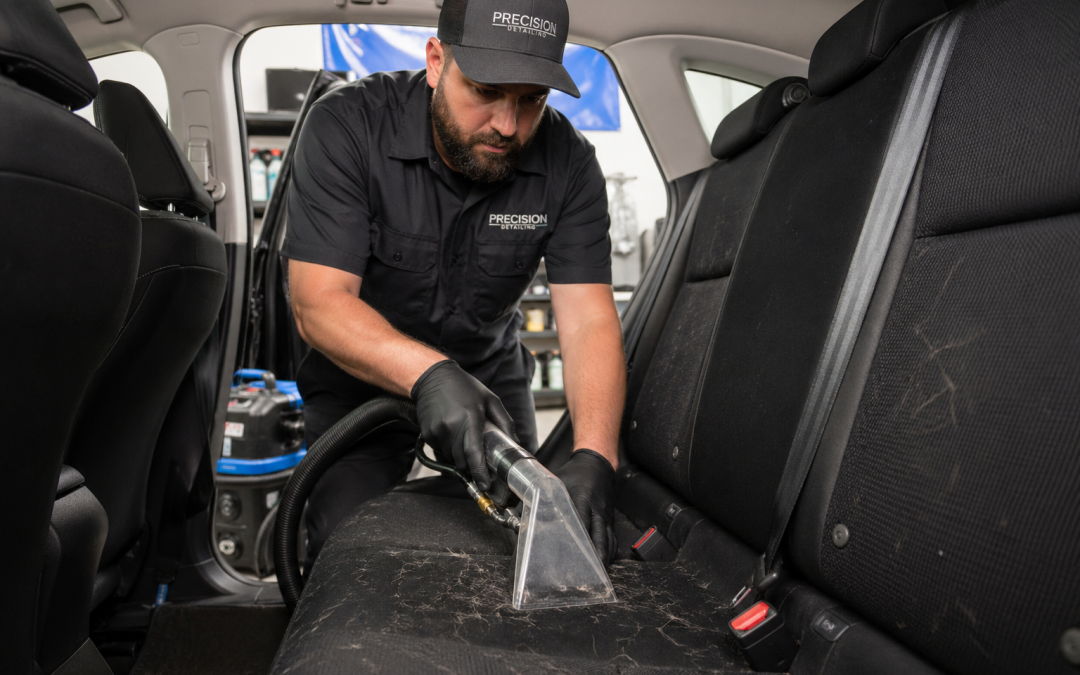
If you’ve ever tried to vacuum pet hair out of your car and watched it cling stubbornly to the fabric, you already know the frustration. That hair isn’t just sitting on the surface—it’s woven into the fibers of your seats and carpet, anchored by friction and static electricity. Standard vacuuming barely makes a dent.
Understanding why pet hair embeds so deeply, and what actually removes it without damaging your interior, makes the difference between hours of wasted effort and a genuinely clean vehicle. Here’s the method professional detailers use for pet hair removal from car seats and carpet, plus honest guidance on when DIY approaches fall short.
Quick Overview: The Pro Method
- Compressed air agitation to lift embedded hair
- Mechanical agitation with the right tool for each fabric type
- Vacuum extraction after agitation breaks the fiber bond
- Hot-water extraction for severe buildup, odor, or allergen concerns
Why Pet Hair Embeds So Deeply in Car Interiors
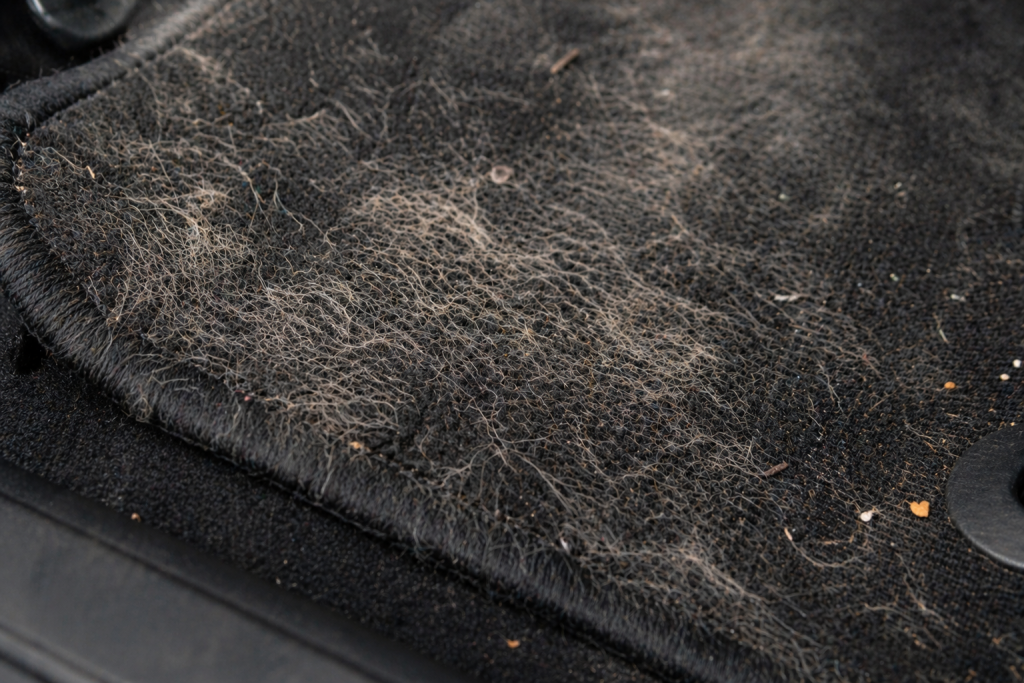
Pet hair doesn’t simply land on fabric and stay put. It works its way into the weave through a combination of fiber structure and friction.
Every time your dog jumps onto the back seat or your cat rides in a carrier, movement creates friction. That friction pushes individual hairs deeper into carpet loops and seat fabric. Static electricity compounds the problem by creating an electrostatic bond between the hair and the synthetic fibers commonly used in automotive upholstery [1].
The structure of pet hair itself makes extraction difficult. Dog and cat hair has a textured outer layer called the cuticle, which features microscopic scales. These scales catch on fabric fibers like tiny hooks, anchoring each strand in place [2]. The finer and softer the pet hair, the more easily it tangles into tight-weave materials.
This is why a quick pass with a household vacuum accomplishes almost nothing. You’re fighting physics—and physics usually wins.
How Fabric Type Affects Removal Difficulty
Not all car interiors trap pet hair equally. The material in your vehicle determines how embedded the hair becomes and which removal method works best.
Velour and Tight-Weave Cloth
Velour seats and dense automotive carpeting are the worst offenders for hair retention. The tight loop construction creates countless anchor points for hair to wrap around. These materials require the most aggressive extraction techniques and often need professional attention for severe buildup.
Leather and Vinyl
Smooth leather and vinyl surfaces allow pet hair to sit mostly on top rather than embedding. A damp microfiber cloth or soft brush usually handles these materials effectively. However, hair still collects in seams, stitching grooves, and perforated sections where it can be surprisingly stubborn.
Microfiber and Suede-Like Materials
Alcantara and similar synthetic suede materials present a middle ground. Hair embeds less than in traditional cloth but more than on smooth leather. These surfaces also scratch and mark easily, requiring careful technique to avoid visible damage.
Loop-Pile Carpet
Factory floor carpeting typically uses loop-pile construction that grabs and holds pet hair aggressively. The base of the loops traps hair where vacuum suction alone can’t reach it.
The Professional Method: Fiber Release Before Extraction
Professional detailers approach pet hair removal as a multi-step process. The goal is to break the friction bond first, then extract the loosened hair effectively. Here’s the sequence that actually works.
Step 1: Compressed Air Agitation
Many professionals begin with compressed air—often using a Tornador-style air tool or a standard blow gun attachment—to disrupt embedded hair and bring it closer to the surface. This step is especially useful in tight spaces like seat crevices, console gaps, and carpet edges where tools can’t reach easily.
Compressed air lifts hair without adding friction that could push it deeper. It also reveals the true extent of the problem before wet extraction begins. If you’ve ever thought your carpet looked “mostly clean” until air blasted hair out of nowhere, you understand why this step matters.
Step 2: Mechanical Agitation with the Right Tools
This step does the heavy lifting. The tool choice matters enormously—and this is where a lot of DIY efforts go wrong.
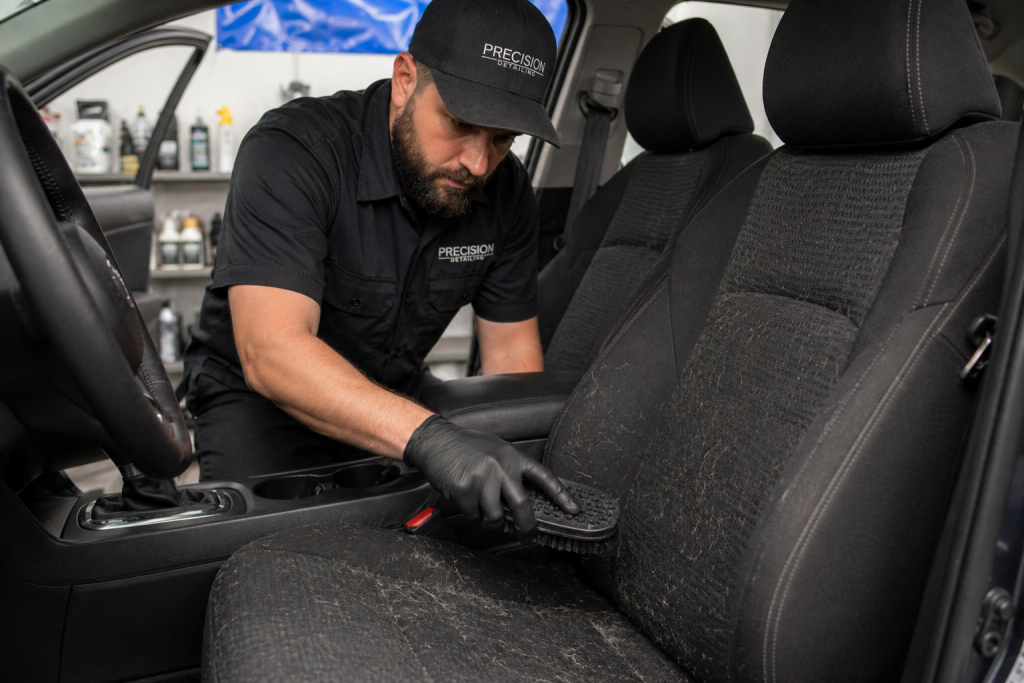
Rubber brushes and silicone pet hair tools (like the Lilly Brush or similar designs) work well for surface-level hair on most fabrics. The rubber creates static friction that pulls hair into clumps for easier removal. These tools are safe for most automotive materials when used with moderate pressure.
Pumice stones are sometimes recommended for carpet, but they require caution. Pumice is abrasive. On delicate fabrics, thin carpet, or materials showing wear, pumice can damage fibers, create visible marks, or accelerate deterioration. Professional detailers assess fabric condition before using pumice and often avoid it entirely on seats, door panels, and headliners. Reserve pumice for durable floor carpet only—and even then, test an inconspicuous area first.
Stiff-bristle brushes can loosen embedded hair but risk damaging some fabric types. Soft-bristle alternatives work better on delicate materials but require more passes.
Nitrile gloves dampened slightly can also pull surface hair effectively on cloth seats. They’re gentler than brushes and work surprisingly well for lighter accumulation.
The key is matching agitation intensity to fabric durability. Aggressive techniques on worn or delicate materials create new problems while solving the old one.
Step 3: Proper Vacuum Sequencing
Here’s something most DIY guides get backwards: vacuuming happens after agitation, not before. This sequence matters.
If you vacuum first, suction alone can’t break the fiber-and-friction bond holding most hair in place. You waste time and energy while leaving the majority of hair embedded.
After proper agitation brings hair to the surface, a strong vacuum with appropriate attachments removes the loosened material effectively. Professional-grade extractors generate significantly more suction than household vacuums—often measured in CFM (cubic feet per minute)—which is one reason DIY results often disappoint [3]. A standard household vacuum might produce 40-80 CFM, while a commercial shop vacuum designed for detailing can exceed 150 CFM.
Crevice tools handle seams, edges, and tight spaces. Upholstery brushes work well on seats and door panels. Wide floor tools cover carpet efficiently after agitation.
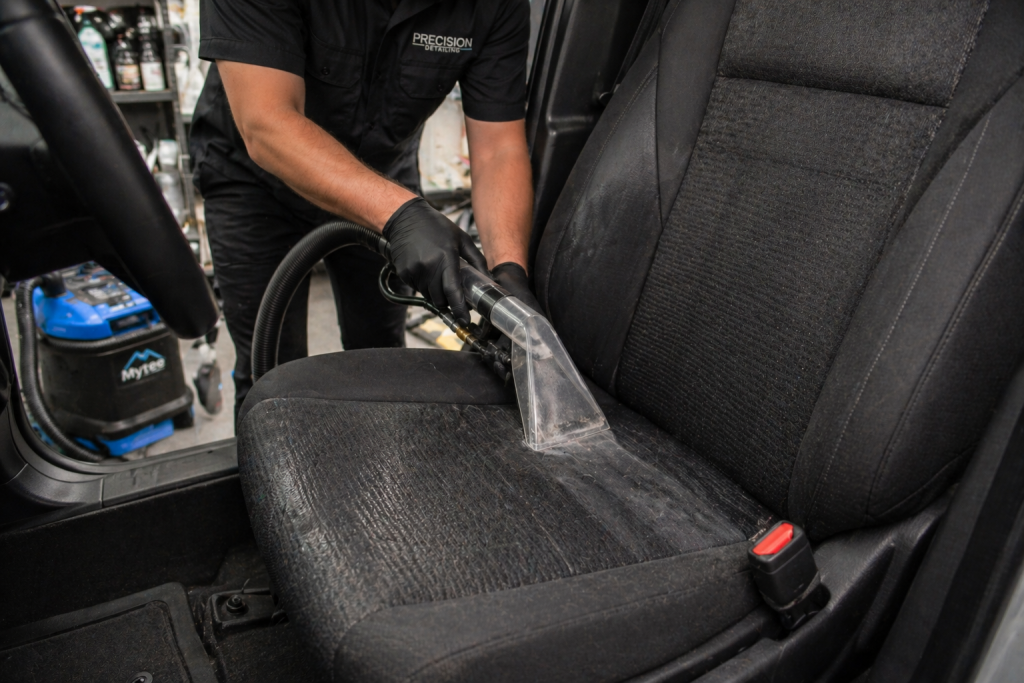
Step 4: Hot-Water Extraction for Deep Cleaning
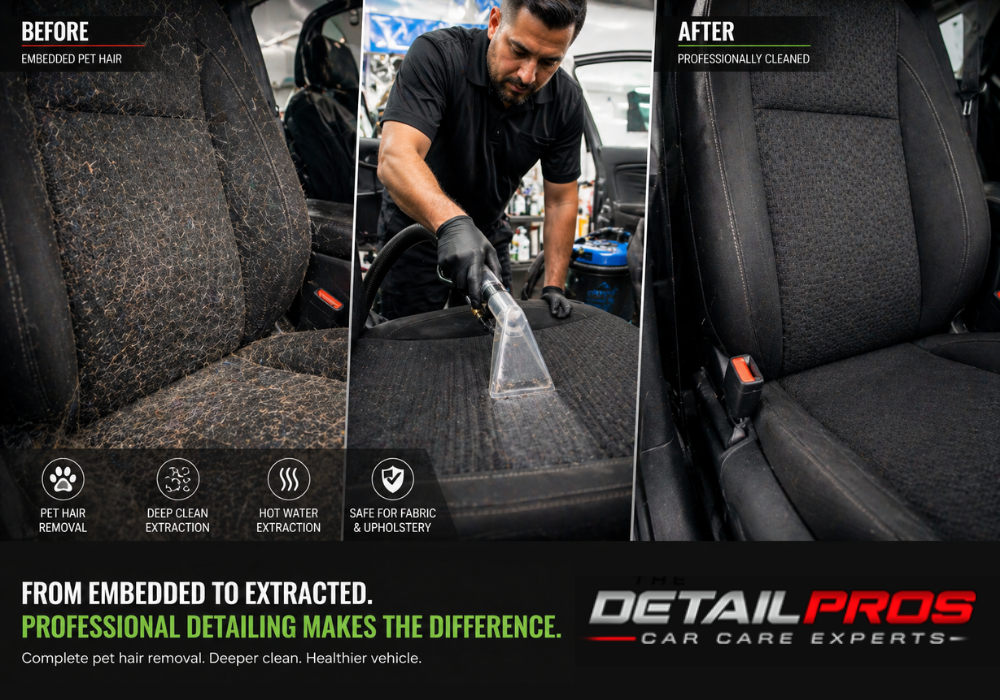
For severe pet hair situations—or when odor, dander, and allergens are concerns alongside visible hair—hot-water extraction provides the deepest clean.
This process injects heated cleaning solution into fabric, then immediately extracts the liquid along with embedded contaminants. It reaches deeper than any dry method and removes material that agitation and vacuuming miss [4].
Hot-water extraction also addresses what you can’t see: dander, skin cells, and odor-causing residue that accumulate alongside visible hair. For pet owners concerned about allergies or persistent smells, this step makes a noticeable difference.
A note on modern car seats: If your vehicle has heated seats, ventilated seats, or built-in sensors, a professional detailer will adjust the extraction process accordingly. Proper technique and controlled moisture application prevent issues with seat electronics—this is another area where experience matters.
DIY Tools: What Works, What Damages, and What Wastes Time
The internet offers endless pet hair removal hacks. Some work reasonably well. Others waste time or risk damaging your interior. Here’s what we’ve seen actually perform.
Reasonably Effective DIY Options
Rubber gloves or silicone brushes: Dampening a rubber glove and running your hand across fabric creates friction that balls up surface hair. This works for light accumulation but becomes tedious for heavy buildup.
Rubber squeegees: A clean window squeegee can pull hair from carpet when dragged firmly across the surface. Effective for floors, less practical for contoured seats.
Dedicated pet hair brushes: Tools like the Lilly Brush are designed specifically for this job and work better than improvised alternatives.
Lint rollers: Useful for final touch-ups on smooth or lightly affected surfaces. Impractical as a primary removal method due to limited coverage and constant sheet replacement.
Approaches That Risk Damage
Pumice stones on seats or door panels: As noted earlier, pumice is abrasive. Using it on anything other than durable floor carpet risks visible damage to fabric.
Stiff wire brushes: These can tear delicate fibers and leave permanent marks on upholstery.
Duct tape pressed aggressively: While tape can lift surface hair, pressing too hard can leave adhesive residue or damage some fabric finishes.
Approaches That Mostly Waste Time
Standard household vacuuming alone: Without agitation, suction can’t overcome the fiber-and-friction bond. You’ll remove loose debris but leave most embedded hair behind.
Fabric softener spray as a primary solution: This can help reduce static temporarily, but it doesn’t address mechanically embedded hair and may leave residue that attracts more dirt later.
When DIY Isn’t Worth the Effort
For light pet hair accumulation on durable materials, DIY removal is reasonable. A rubber brush, some patience, and a decent vacuum can produce acceptable results.
However, several situations make professional extraction the smarter choice:
Heavy or Long-Term Buildup
If your vehicle has transported pets regularly for months or years without deep cleaning, the embedded hair likely extends deeper than surface agitation can reach. Layers of hair, dander, and debris compact over time into a mat that resists DIY methods. We’ve seen vehicles where pet hair had worked so far into the carpet backing that only hot-water extraction could get it out.
Delicate or Worn Fabrics
Thin carpet, aging upholstery, suede-like materials, or any fabric showing wear requires careful technique. Aggressive DIY agitation risks visible damage, while professional detailers assess fabric condition and adjust their approach accordingly.
Odor or Allergy Concerns
Visible hair is only part of the problem. Pet dander, saliva residue, and accumulated skin cells trigger allergies and create persistent odors that surface cleaning doesn’t address. Hot-water extraction removes these embedded contaminants more effectively than any dry method.
Large Vehicles or Extensive Coverage
SUVs, minivans, and trucks with full-carpet interiors present a significant time investment for DIY cleaning. Professional detailers have equipment and efficiency that make thorough extraction practical where homeowner efforts become exhausting.
Preparing for Sale or Lease Return
If you need your vehicle to look and smell its best for a sale, trade-in, or lease return, professional results matter. Buyers and inspectors notice pet hair, and that first impression affects value.
What Professional Detailers Can Do That DIY Can’t
Beyond time savings, professional pet hair removal offers advantages that equipment and technique provide.
Stronger extraction equipment: Commercial vacuums and extractors generate significantly more suction than consumer models. This matters when pulling embedded material from deep in carpet pile.
Hot-water injection and extraction: Most vehicle owners don’t have access to automotive-grade extraction equipment. This process removes contaminants that dry cleaning leaves behind.
Fabric assessment: Experienced detailers recognize which materials tolerate aggressive agitation and which require gentler approaches. This prevents damage while achieving thorough results.
Comprehensive interior cleaning: Pet hair removal integrates with broader interior detailing—cleaning all surfaces, treating odors, and restoring the overall feel of the cabin.
If you’ve been hauling your golden retriever around in a black-interior SUV for three years, you know exactly why professional help starts looking appealing.
How Sacramento-Area Conditions Affect Pet Hair Accumulation
Sacramento’s climate creates specific challenges for pet owners trying to keep vehicles clean.
The region’s dry summers and pollen-heavy springs mean windows often stay up with air conditioning running. This creates a closed environment where shed hair accumulates faster than in vehicles that ventilate frequently.
Central Valley dust mixes with pet hair and dander, creating a compound debris layer that clings more stubbornly than hair alone. Regular removal before heavy buildup develops makes each cleaning session easier—and Sacramento drivers who wait too long between cleanings often find themselves dealing with a much bigger job than expected.
Protecting Your Interior After Cleaning
Once you’ve invested in thorough pet hair removal, simple habits keep the problem manageable.
Seat covers and cargo liners: Purpose-built covers create a barrier between pets and fabric. Choose covers that wash easily and install securely without shifting.
Regular brushing before car rides: A quick brush removes loose hair before it transfers to your interior.
Blankets or towels in pet areas: A dedicated blanket that gets washed regularly is easier to manage than embedded carpet hair.
Consistent maintenance cleaning: Light, frequent cleaning prevents the deep accumulation that requires aggressive extraction. A rubber brush and quick vacuum every few weeks maintains results longer than waiting until buildup becomes severe.
Book an Interior Deep Clean
If pet hair has taken over your car’s interior—or you want a fresh start before it gets worse—professional extraction handles what DIY methods can’t.
When booking, let your detailer know about pet hair severity. Details about how long pets have been riding in the vehicle, which areas are most affected, and whether odor is a concern help ensure accurate quoting and appropriate service. The more we know upfront, the better we can match the right approach to your vehicle’s actual condition.
Book an interior deep clean with The Detail Pros Sacramento and get a cabin that looks and smells like yours again.
Frequently Asked Questions
Why does pet hair stick so stubbornly to car seats and carpet?
Pet hair embeds through friction and static electricity. Movement pushes hair into fabric weave, while electrostatic charge creates a bond between hair and synthetic fibers. The microscopic scales on pet hair catch on fabric like tiny hooks, anchoring each strand in place. That’s why surface vacuuming alone rarely removes embedded hair effectively—you need to break the friction bond first through agitation.
Can I use a pumice stone to remove pet hair from car seats?
Pumice stones should only be used on durable floor carpet, and even then with caution. The abrasive surface can damage seat fabric, door panels, headliners, and delicate materials by tearing fibers or creating visible marks. For seats and upholstery, rubber brushes or silicone pet hair tools provide effective agitation without the damage risk.
How often should I clean pet hair from my car if my dog rides regularly?
Light maintenance every two to four weeks prevents heavy buildup that requires aggressive extraction. A quick rubber brush agitation and vacuum session keeps accumulation manageable. Deeper professional cleaning every few months addresses embedded hair and dander that maintenance cleaning misses—especially important if anyone in your household has pet allergies.
Does hot-water extraction damage car interiors?
When performed correctly with appropriate equipment, hot-water extraction is safe for most automotive fabrics. Professional detailers control water temperature, solution strength, and extraction timing to clean thoroughly without over-wetting or damaging materials. For vehicles with heated or ventilated seats, experienced detailers adjust their technique to protect seat electronics while still achieving a deep clean.
What should I tell a detailer when booking for pet hair removal?
Share how long and how frequently pets have ridden in the vehicle, which areas have the heaviest accumulation, and whether odor or allergies are concerns. This information helps the detailer choose appropriate methods and provide accurate pricing. A vehicle with three years of regular pet travel requires different treatment than one with light, recent exposure—and knowing upfront means no surprises for either party.
About Our Expertise
The Detail Pros Sacramento has served Sacramento-area vehicle owners for years, addressing everything from light maintenance details to severely neglected interiors. Our team includes certified Master Detailers trained in fabric assessment, extraction techniques, and odor treatment. We understand how Central Valley conditions affect vehicles and how different interior materials require different approaches. Whether your vehicle needs routine care or recovery from years of pet travel, we match the method to the job—and we’re always honest about what it’ll take to get real results.
Cited Works
[1] American Kennel Club — “Why Does Dog Hair Stick to Everything?” https://www.akc.org/expert-advice/lifestyle/why-does-dog-hair-stick-to-everything/
[2] ASPCA — “Hair and Fur: What’s the Difference?” https://www.aspca.org/pet-care/general-pet-care/hair-and-fur
[3] International Detailing Association — “Interior Detailing Best Practices.” https://www.the-ida.com/
[4] Institute of Inspection, Cleaning and Restoration Certification — “Hot Water Extraction Cleaning.” https://iicrc.org/

 and then