
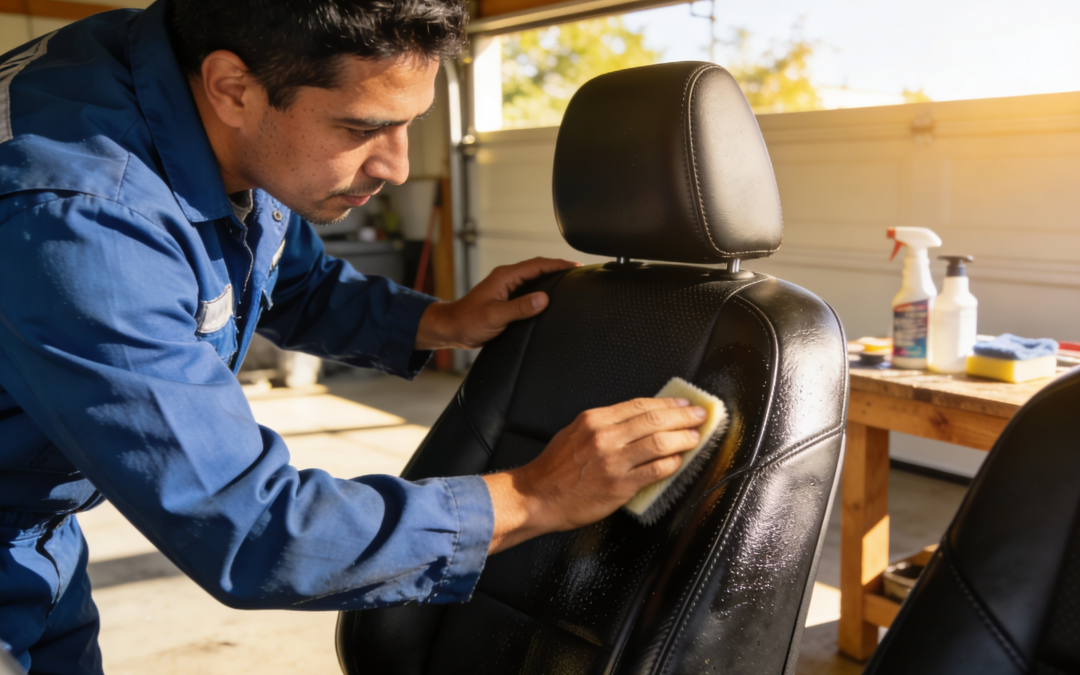
Sacramento summers are rough on leather car seats. When your parked car’s interior climbs past 140°F, leather loses moisture faster than normal, cracks form sooner, and UV damage accelerates. According to Consumer Reports, this combination of heat and sun exposure is one of the leading causes of premature interior wear [1].
If you have ever conditioned your seats only to end up with a slippery, greasy surface that looks nothing like the original factory finish, you are not alone. In our Sacramento shop, that is one of the most common complaints we hear from drivers who tried to do the right thing but ended up with seats that feel worse than before.
Most leather care guides skip the details that actually matter: how to maintain that original matte look, what to do about perforated leather, and how to prevent dye transfer from dark clothing onto light-colored seats. This guide covers all of it, based on what we see working (and failing) on Sacramento vehicles every week.
Quick summary for busy readers: Clean first, condition second, apply thin layers, buff off all excess, and avoid silicone-based products if you want a matte finish. For perforated leather, spray onto your towel instead of the seat. And if your seats already feel stiff, blotchy, or damaged, professional conditioning can often restore what home products cannot.
Why Sacramento Heat Is Especially Hard on Leather
Leather is animal skin, and like skin, it needs moisture to stay flexible. The Central Valley’s combination of high heat and low humidity creates conditions that pull moisture out of leather faster than almost anywhere else in the country.
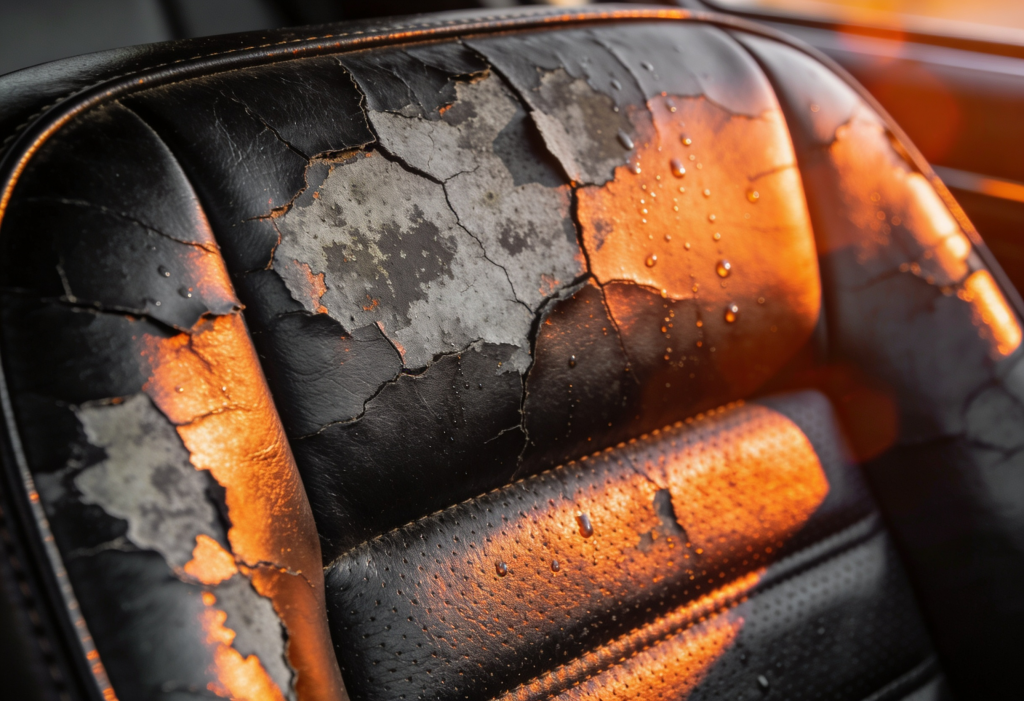
Here is what happens inside a parked car on a typical Sacramento summer day. According to the National Highway Traffic Safety Administration, dashboard temperatures can exceed 150°F in direct sunlight, and that heat radiates throughout the cabin for hours [2]. Your seats absorb that heat, release it slowly, and go through the same heating-and-cooling cycle day after day. Over time, natural oils evaporate from the leather’s surface, the material becomes stiff, UV rays break down dyes and cause fading, and stitching threads weaken and pull away.
The repeated thermal stress is cumulative. A vehicle parked outdoors in Sacramento will show leather wear faster than the same vehicle garaged in a milder climate, even with identical mileage and use patterns.
[Image Placeholder: Close-up of cracked leather on a seat bolster showing heat and UV damage]
Leather Cleaner vs. Leather Conditioner: Two Different Jobs
One of the most common mistakes we see is using only a conditioner and skipping the cleaner entirely. Or worse, using a combination product that does neither job well.
Leather cleaner removes what builds up on the surface: body oils, sweat, sunscreen residue, food particles, and general grime. Without cleaning first, conditioner traps that contamination against the leather. The result is a sticky film that attracts more dirt and can actually accelerate wear.
Leather conditioner replenishes moisture and helps the leather stay supple. It typically contains oils, waxes, or synthetic polymers that either absorb into the material or form a protective layer on top.
The order matters. Clean thoroughly, let the leather dry completely, apply conditioner in thin layers, and buff off any excess. Using conditioner on dirty leather is like applying moisturizer to unwashed skin. It seals in whatever is already there.
What About Synthetic and Vegan Leathers?
Many modern vehicles use synthetic materials like MB-Tex, SofTex, or leatherette instead of genuine leather. These surfaces often look and feel similar but respond differently to products. Synthetic materials typically have a more uniform protective coating and may not absorb conditioner the same way. If you are unsure what your seats are made of, check your vehicle’s specifications or ask a detailer. The cleaning principles remain the same, but you may need less conditioner, or a product specifically formulated for synthetic surfaces.
How to Get a Factory-Matte Finish Instead of Shiny or Greasy
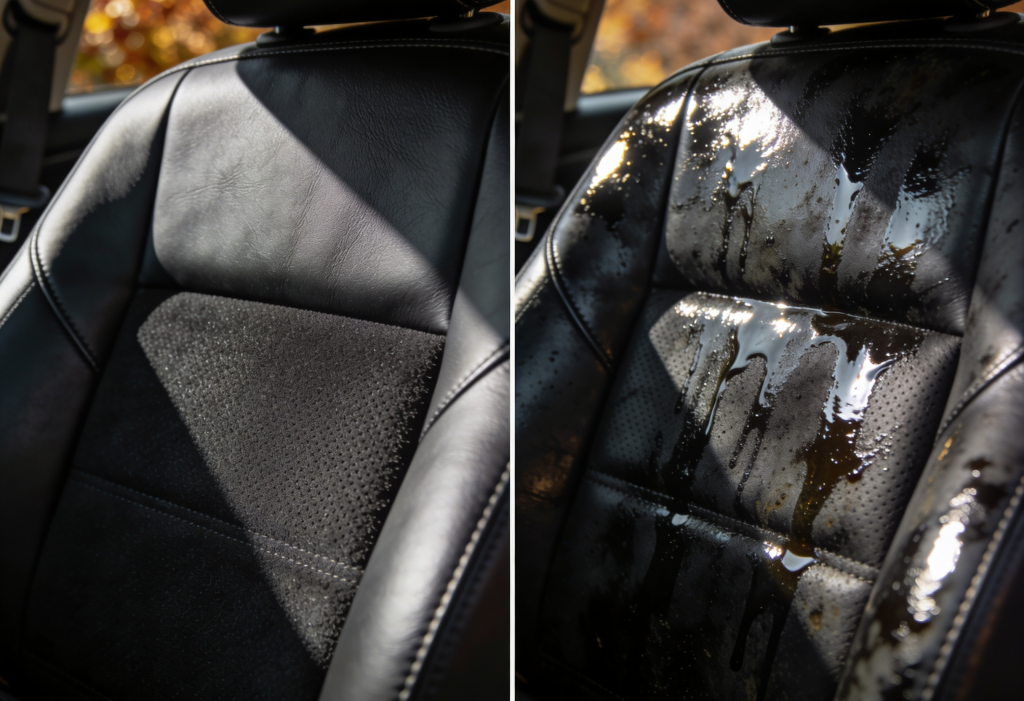
That glossy, slick feeling after conditioning usually means product is sitting on the surface rather than absorbing into the leather. Modern automotive leather has a protective topcoat that limits how much conditioner actually penetrates [3]. When you apply too much in one session, the excess just coats that topcoat, which is exactly what causes the greasy look and slippery feel.
To maintain the original matte factory appearance:
- Choose a water-based conditioner rather than oil-heavy formulas
- Apply in very thin layers using a microfiber applicator pad
- Allow each layer to absorb for several minutes before buffing
- Wipe away all excess product with a clean, dry microfiber towel
- Avoid silicone-based products, which create artificial shine and attract dust
The absorption test we use: After applying conditioner, wait five minutes and run a clean white microfiber towel firmly across the surface. If the towel picks up visible product, you have applied too much or the leather is not absorbing what you have used. Buff it off and apply less next time.
The goal is leather that feels soft and conditioned but looks the same as it did from the factory. If your seats look wet or shiny after conditioning, you have overdone it.
[Image Placeholder: Side-by-side comparison showing a leather seat section with matte finish vs. one with greasy, shiny buildup]
Cleaning and Conditioning Perforated Leather Seats
Perforated leather, the type with small ventilation holes for heated and cooled seats, requires extra care that most guides skip entirely. Liquid can seep through those perforations into the foam padding underneath, and that creates problems you cannot see until they become serious.
The risks with perforated leather are real. Trapped moisture can cause mold or mildew growth in the foam. Excess cleaner or conditioner can stain the seat from below, creating discoloration that works its way back up. And the perforations themselves can clog with product buildup, which defeats the purpose of the ventilation and makes the surface feel waxy.
The Right Approach for Perforated Seats
- Spray cleaner onto your applicator or towel, never directly onto the leather.
- Use a lightly dampened towel rather than a wet one.
- Work in small sections to avoid saturating the material.
- Consider foam-style cleaners, which spread with less liquid volume.
- Let the seats dry completely before conditioning.
- When conditioning, use even thinner layers than you would on solid leather.
- Apply with a light wipe-on motion, wait briefly, then buff off thoroughly.
This approach prevents product from migrating into the perforations and causing long-term issues.
If you have ventilated seats with heating and cooling functions, proper care becomes even more important. Moisture trapped in that foam can affect the heating elements over time and create persistent odors that are difficult to eliminate.
Preventing Dye Transfer Onto Light-Colored Leather
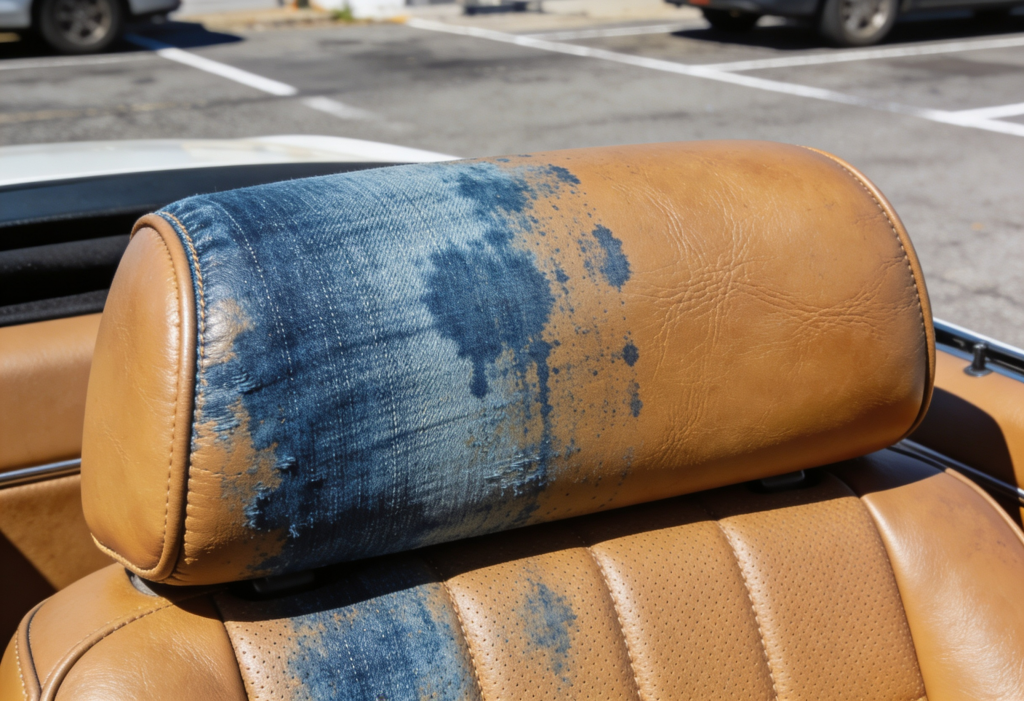
If you have tan, beige, or white leather seats, dye transfer is a concern that most leather care guides completely ignore. Dark jeans, new clothing, and certain fabrics can leave blue or black stains that become extremely difficult to remove once they bond to the leather.
How dye transfer works: New clothing, especially dark denim, releases excess dye during the first several wears. Friction from sliding in and out of the vehicle rubs that dye into the leather’s surface. Heat accelerates the transfer and makes stains more permanent. And moisture from sweat or humidity can activate dyes in fabric, making the problem worse on hot days when you are perspiring.
Automotive upholstery specialists have documented dye transfer as one of the most common causes of staining on light-colored leather interiors [4]. The good news is that prevention is straightforward.
Clean seats regularly to remove dye residue before it has time to set and bond. Apply a quality leather protectant that creates a barrier against stains. Avoid wearing brand-new dark denim in your vehicle without pre-washing it at least once. And address any visible dye marks quickly, before heat and time cure them into the leather.
Once dye has fully bonded to the leather’s topcoat, removal becomes a professional-level problem. A detailer with specialized cleaners and techniques may be able to lift the stain, but there are no guarantees. Prevention is always easier than correction.
[Image Placeholder: Close-up of blue jean dye transfer on tan leather seat bolster]
UV Protection for Leather in Sacramento
Sunlight fades and damages leather even through window glass. According to the Skin Cancer Foundation, standard automotive glass blocks most UVB rays but allows a significant portion of UVA rays to pass through [5]. That means the sun-facing surfaces of your seats are absorbing UV radiation every time your car sits in the sun, even with the windows up.
Over months and years of Sacramento sunshine, this UV exposure causes visible damage. You will notice faded or uneven color on sun-facing surfaces, dry and rough texture compared to shaded areas, cracking along the top of seat bolsters, and weakened or faded stitching.
Protection strategies that actually work:
Use a windshield sunshade when parked. This is the single most effective habit for reducing interior heat and UV exposure. Park in shade or covered structures when possible. Apply conditioners with UV inhibitors regularly. These will not stop UV damage completely, but they add a meaningful layer of defense. Consider ceramic window tint for long-term protection, especially if you park outdoors regularly. We offer professional window tinting services that pair well with interior details to help keep your cabin cooler and your leather protected.
Even with good conditioning habits, direct sun exposure will eventually take a toll. The combination of heat and UV is harder on leather than either factor alone, which is why Sacramento vehicles need more frequent attention than cars in cooler, cloudier climates.
A Practical Hot-Weather Leather Care Routine
Keeping leather in good condition does not require complicated products or constant attention. What it requires is consistency matched to Sacramento’s climate.
Monthly Maintenance
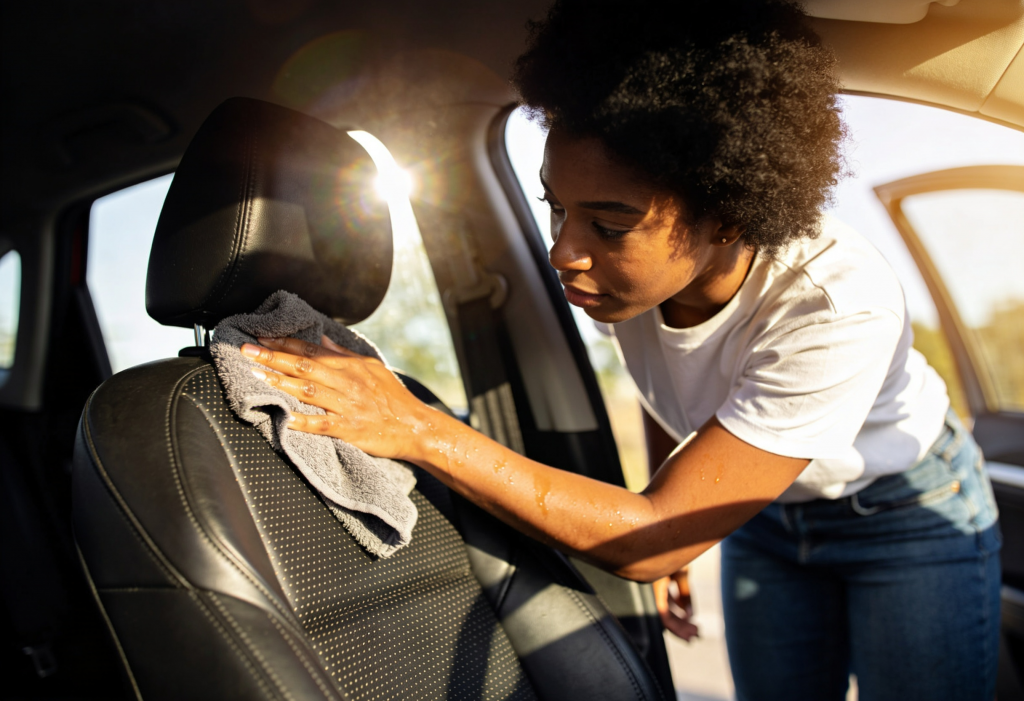
Start by vacuuming seats and crevices to remove loose debris that can scratch the leather during cleaning. Wipe down all leather surfaces with a pH-balanced cleaner formulated for automotive leather. Allow the leather to dry completely. Apply a thin layer of conditioner, then buff to a matte finish with a clean microfiber towel. The whole process takes about fifteen to twenty minutes for most vehicles.
Seasonal Deep Cleaning (Every 3–4 Months)
Use a soft detailing brush with cleaner to agitate dirt from seams, stitching, and textured areas where grime accumulates. Clean door panels, armrests, center console surfaces, and the steering wheel if they are leather. Apply two thin layers of conditioner, buffing between applications. Inspect for early signs of cracking, wear, or discoloration.
During peak summer months, you may need to condition more frequently if you notice the leather feeling dry or stiff. Vehicles parked outdoors in direct sun all day will need more attention than garage-parked cars. Pay attention to how the leather feels. If it is starting to feel tight or less supple, that is the signal to condition again.
When to Call a Professional Detailer
Some leather issues go beyond what regular cleaning and conditioning can fix. There is no shame in recognizing when a problem needs professional tools, products, or techniques.
Consider professional help when:
- Leather has visible cracking, peeling, or texture damage
- Dye transfer stains have set into light-colored seats
- Seats look blotchy, discolored, or unevenly worn
- Conditioning no longer restores a supple feel
- You want deep extraction cleaning for heavily soiled seats
- The interior has odors that regular cleaning will not eliminate
Professional hot-water extraction and conditioning treatments can restore leather that feels stiff, dry, or neglected. An experienced detailer can also identify early damage and recommend the right level of care before problems get worse.
In our shop, we regularly see vehicles where the owner did everything right but the leather still needs professional restoration. Sacramento’s climate is demanding, and sometimes even well-maintained leather needs deeper intervention.
If your leather seats feel stiff, look blotchy, or need more help than at-home products can provide, book an interior detail with leather conditioning at The Detail Pros Sacramento. Our mobile and in-shop services make it easy to get your seats properly cleaned, conditioned, and protected, without the greasy residue or guesswork.
Book your interior detail today
Frequently Asked Questions
How often should I condition leather car seats in hot weather?
In Sacramento’s summer heat, condition leather every four to six weeks to replace moisture lost to high temperatures. Vehicles parked in direct sunlight may need conditioning more frequently. The key indicator is how the leather feels: if it starts to feel dry, tight, or stiff, it is time for another application regardless of the calendar.
Why do my leather seats feel slippery after conditioning?
Slippery seats typically mean too much conditioner was applied or the product contains silicone additives that coat the surface rather than absorbing into it. Buff off the excess with a dry microfiber towel and switch to a water-based conditioner. Apply thinner layers next time and always remove what the leather does not absorb within a few minutes.
Can I use household cleaners on leather car seats?
Household cleaners are not recommended for automotive leather. Products like dish soap, all-purpose cleaners, or alcohol-based solutions can strip natural oils, damage the protective topcoat, or cause discoloration. Use pH-balanced cleaners formulated specifically for automotive leather care. The small cost difference is worth avoiding the damage.
How do I remove blue jean stains from tan leather seats?
Fresh dye transfer can sometimes be lifted with a dedicated leather cleaner and gentle agitation using a soft brush or microfiber towel. Set-in stains are more difficult and may require professional treatment with specialized cleaners. To prevent future transfer, clean seats regularly and apply a leather protectant that creates a barrier against dye penetration.
Is leather conditioner with UV protection worth using?
Yes, especially in sunny climates like Sacramento. Conditioners with UV inhibitors provide an extra layer of defense against fading and material breakdown. However, they work best as part of a broader protection strategy that includes parking in shade, using sunshades consistently, and considering window tint for vehicles that spend significant time outdoors.
About The Detail Pros Sacramento
The Detail Pros Sacramento has served the Sacramento area for over a decade, providing professional mobile and in-shop detailing services for everyday drivers, classic car owners, and enthusiasts. Our team includes certified detailers trained in proper leather care, paint correction, ceramic coating, and interior restoration. We focus on doing the job right rather than rushing through it, because your vehicle deserves more than a quick wipe-down.
Cited Works
[1] Consumer Reports — “How to Protect Your Car’s Interior From Sun Damage.” https://www.consumerreports.org/cars/car-maintenance/how-to-protect-your-cars-interior-from-sun-damage/
[2] National Highway Traffic Safety Administration — “Where’s Baby? Look Before You Lock.” https://www.nhtsa.gov/campaign/heatstroke
[3] Leather Naturally — “Automotive Leather: Understanding Finished Leather in Vehicles.” https://www.leathernaturally.org/leather-information/automotive-leather
[4] Colourlock — “Blue Jean Dye Transfer on Leather Car Seats.” https://www.colourlock.com/blue-jean-dye-transfer-on-leather
[5] Skin Cancer Foundation — “Can You Get a Sunburn Through a Window?” https://www.skincancer.org/blog/can-you-get-a-sunburn-through-a-window/

 and then