
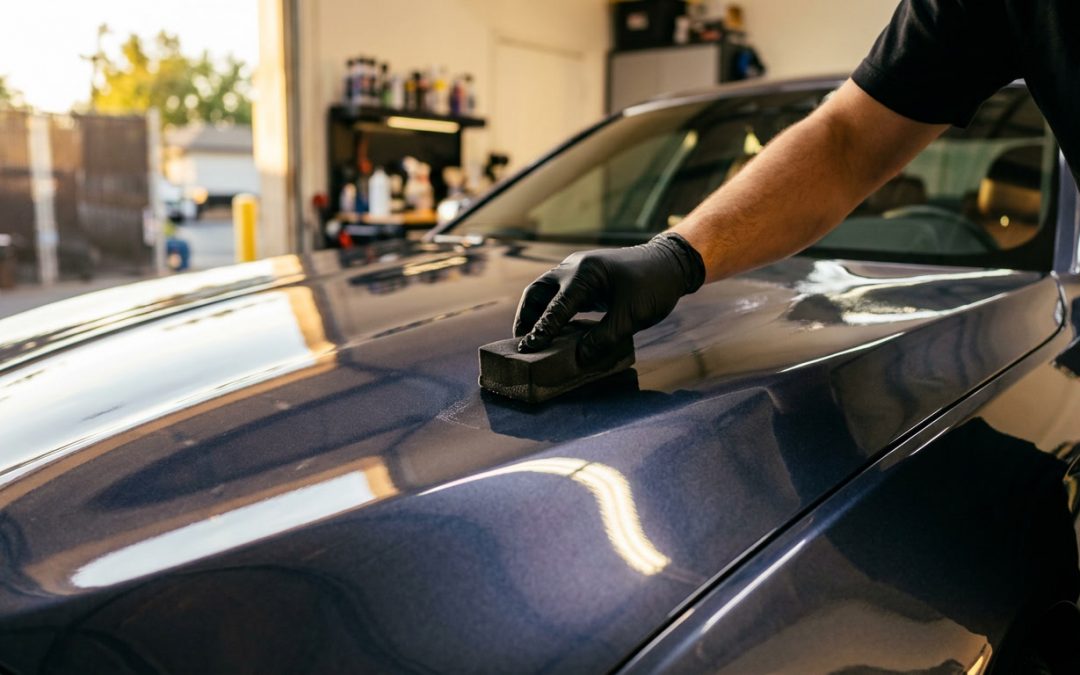
Most pricing pages for ceramic coating give you a range—sometimes $500 to $2,000 or more—without explaining what actually drives those numbers. You’re left guessing whether a higher quote means better work or just higher margins, and whether a lower quote means savings or shortcuts.
Ceramic coating costs aren’t random. They’re tied directly to your vehicle’s current condition, the prep work required, and the type of coating applied. Once you understand these cost drivers, you can book the right service without surprises and get results that actually hold up.
This guide breaks down the real factors behind ceramic coating pricing in Sacramento, explains why paint preparation matters more than most people realize, and shows you how to choose the right service for your vehicle.
What Ceramic Coating Does for Sacramento Vehicles
Ceramic coating is a liquid polymer that chemically bonds to your vehicle’s clear coat, creating a semi-permanent protective layer. Unlike wax or sealants that sit on top of the paint and wear off within weeks or months, a properly applied ceramic coating can protect your finish for years [1].
The practical benefits are straightforward:
- Hydrophobic surface: Water beads and rolls off, taking dirt and contaminants with it
- UV protection: Reduces oxidation and fading from prolonged sun exposure
- Chemical resistance: Guards against bird droppings, tree sap, and road contamination
- Easier maintenance: Routine washes become faster and more effective
- Enhanced gloss: Amplifies paint depth and clarity
Sacramento’s climate creates specific challenges for unprotected paint. Central Valley heat accelerates oxidation. Agricultural dust settles into finishes quickly. Municipal water in many Sacramento neighborhoods runs hard, leaving mineral deposits that etch into clear coats over time. A quality coating creates a barrier against these daily threats [2].
For drivers in areas like East Sacramento, Land Park, or Elk Grove—where tree cover means more sap exposure and shaded parking means slower drying—that protection becomes especially practical.
The Three Cost Drivers Behind Sacramento Ceramic Coating Prices
When you see a wide price range for ceramic coating, those numbers reflect differences in three areas: paint condition and required prep, coating type and durability, and vehicle size.
Paint Condition and Required Preparation
This is the biggest variable—and the one most pricing pages skip over.
Ceramic coating locks in whatever is underneath it. Swirl marks, water spots, light scratches, and oxidation will be sealed in place if they’re not corrected first. A coating applied over damaged paint won’t hide the damage. It will preserve it [3].
Vehicles in good condition may only need a thorough wash, clay bar treatment, and light polish before coating. This is typically the lower end of the price range—often in the $500–$800 range for smaller vehicles in the Sacramento market.
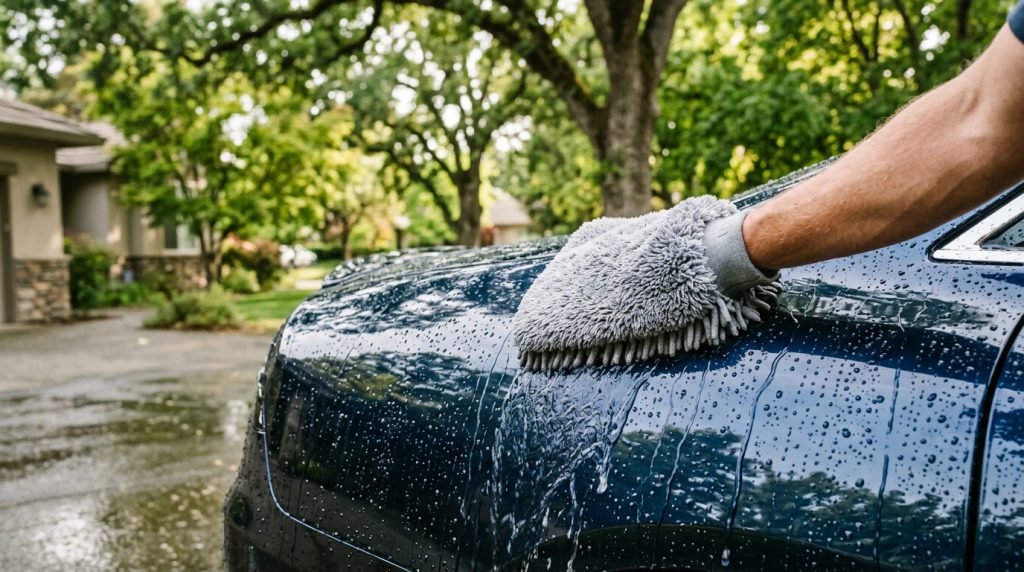
Vehicles with moderate defects typically require single-stage paint correction, which removes surface-level swirls and light marring. This adds several hours of labor. Expect pricing closer to $1,000–$1,500 depending on vehicle size.
Vehicles with significant damage—deep swirls, heavy oxidation, visible scratches—may need multi-stage correction. This involves progressively finer polishing compounds and pads to restore clarity before coating can be applied. Multi-stage correction on a full-size truck or SUV can push total costs to $1,800–$2,500 or higher [4].
A reputable detailer will evaluate your paint under proper lighting before quoting you. If someone quotes a flat price without seeing the vehicle, that’s worth questioning.
Coating Type: Consumer-Grade vs. Professional-Grade Products
Not all ceramic coatings deliver the same protection or longevity. The market includes everything from spray-on consumer products to professional-grade coatings that require trained installation.
Consumer and entry-level coatings (often SiO2-based sprays or wipes) typically offer protection measured in months. They’re easier to apply but provide less durability and chemical resistance. These products can be useful for maintenance between professional applications, but they don’t deliver the same results as true ceramic coatings [5].
Professional-grade coatings from brands like Opti-Coat, Gtechniq, and Ceramic Pro require controlled application conditions and proper surface preparation. They’re formulated with higher concentrations of silicon dioxide (SiO2) and other active ingredients, creating a harder, more durable bond with your clear coat. Protection can last multiple years with proper care [6].
The difference shows up in real-world durability. Professional coatings maintain their hydrophobic properties and chemical resistance far longer than consumer-grade alternatives.
When comparing quotes, ask specifically what product is being applied. A significantly cheaper quote might mean a lower-grade coating that won’t deliver the longevity you’re expecting.
Vehicle Size and Surface Complexity
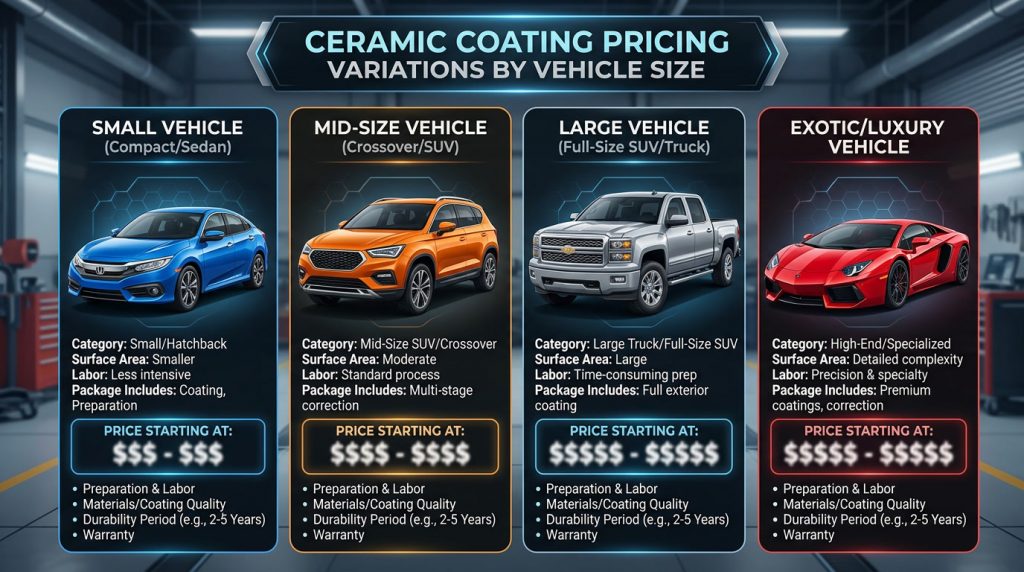
A compact sedan has less surface area than a full-size SUV or truck. More surface area means more product, more prep time, and more application time. Most shops price in tiers based on vehicle size [7].
Beyond size, complexity matters. Vehicles with intricate body lines, textured plastic trim, or aftermarket additions require more careful masking and application work.
As a rough reference for the Sacramento market:
| Vehicle Size | Light Prep Estimate | Moderate Correction Estimate |
| Compact / Sedan | $500–$800 | $1,000–$1,400 |
| Midsize SUV / Crossover | $700–$1,000 | $1,200–$1,600 |
| Full-size Truck / SUV | $900–$1,300 | $1,500–$2,200+ |
These ranges reflect general Sacramento-area pricing. Your actual quote depends on your vehicle’s specific condition and the coating product selected.
Why Paint Preparation Makes or Breaks Your Results
The coating itself is only as good as the preparation beneath it. This is where many quick-turnaround shops cut corners.
What Happens When Prep Gets Rushed
If your vehicle has visible paint defects and you apply ceramic coating without correction, you’re paying to preserve those defects for years. The coating will make them harder to remove later, not easier.
We see this frequently on trucks from areas like Elk Grove and Natomas—vehicles with heavy water spotting or oxidation from sitting outside. Coating over that damage just locks it in.
Quality prep typically includes:
- Thorough wash and decontamination: Removes surface dirt, road film, and bonded contaminants
- Clay bar treatment: Pulls embedded particles from the clear coat that washing alone can’t remove
- Paint correction (as needed): Polishing to remove swirls, scratches, and oxidation
- Panel wipe: Removes polishing oils and residue so the coating bonds properly
- Controlled environment application: Coating applied in a dust-free setting with proper temperature and humidity
This process takes time. A legitimate ceramic coating installation rarely takes less than a full day for prep and application combined. Multi-stage corrections on larger or more damaged vehicles can extend the timeline to two or three days [8].
Curing Time: The Factor Everyone Forgets to Ask About
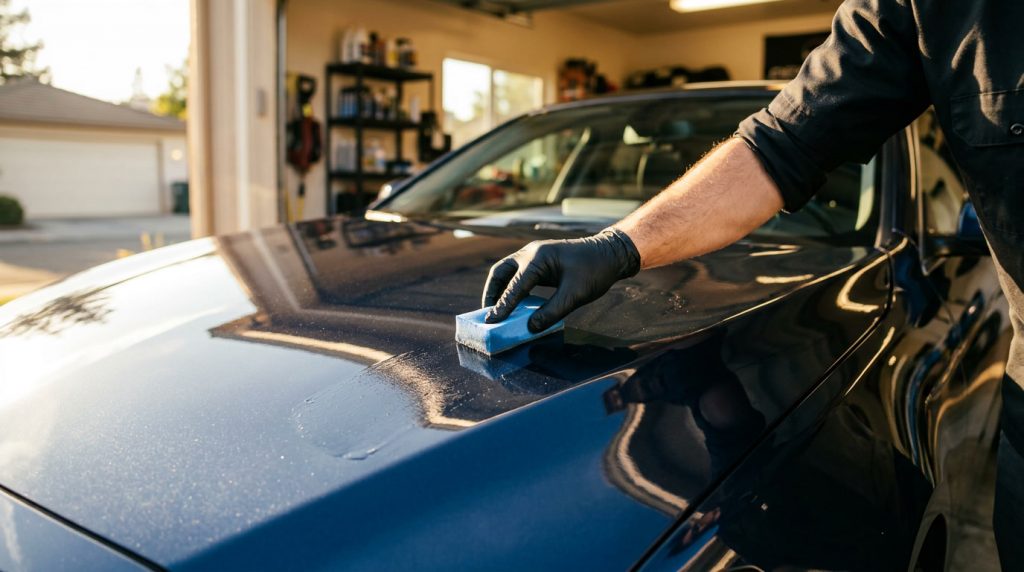
After application, ceramic coatings need time to cure—the chemical bonding process continues after you drive away. During this window, the coating is vulnerable to water, contamination, and physical contact.
Initial cure: Most professional coatings require 24–48 hours before the vehicle can be exposed to water. No driving in rain and no washing during this period [9].
Full cure: Complete hardening typically takes 7–14 days, depending on the product and environmental conditions. During this time, avoid automatic car washes, parking under trees, and leaving the vehicle outside overnight if possible.
Sacramento’s warm, dry climate actually helps with curing. Heat accelerates the process, which is one advantage of coating vehicles here rather than in cooler, more humid regions.
Ask your installer about specific curing requirements for the product they use. Rushing this phase can compromise the coating’s durability and performance.
Maintenance After Ceramic Coating
Ceramic coating is not a “never wash again” solution. It’s a “wash smarter, not harder” solution.
The Right Wash Cadence for Sacramento Conditions
A coated vehicle still needs regular washing to perform at its best. The hydrophobic properties actually work better when the surface is clean. Buildup of dust, water spots, and contaminants can diminish the coating’s water-shedding ability over time.
Recommended wash schedule:
- Every 1–2 weeks during summer months (more dust, harder water, more UV exposure)
- Every 2–3 weeks during cooler months
- Immediately after exposure to bird droppings, tree sap, or heavy contamination
What to Use and What to Avoid
Use these:
- pH-neutral car wash soap designed for coated vehicles
- Microfiber wash mitts and drying towels
- Touchless or hand-wash methods
Avoid these:
- Automatic car washes with brushes (can introduce swirls and degrade coating)
- Harsh detergents or dish soap (can strip protective properties)
- Air-drying (allows water spots to form, especially with Sacramento’s hard water)
Periodic maintenance: Many professional coatings benefit from an annual “top-up” application of a compatible spray sealant. This refreshes the hydrophobic layer and extends the coating’s effective lifespan. Your installer should provide specific product recommendations [10].
How to Book the Right Ceramic Coating Service
Booking ceramic coating without surprises comes down to proper evaluation, clear communication, and realistic expectations.
What a Good Consultation Looks Like
A quality detailer will:
- Inspect your paint under proper lighting: Swirl marks and defects are often invisible in normal light but obvious under LED inspection lights
- Explain what level of correction your vehicle needs: Based on actual condition, not assumptions
- Quote based on the specific work required: Not a one-size-fits-all price
- Specify the coating product being used: Including expected durability and warranty information
- Outline the timeline: Including prep, application, and curing requirements
Be skeptical of quotes given over the phone without seeing the vehicle, prices that seem dramatically lower than competitors, or promises of same-day application for full coating services.
Questions to Ask Before Booking
- What coating product do you use, and how long does it typically last?
- What prep work is included in the quoted price?
- Will you assess my paint and explain what correction is needed before starting?
- What’s the curing timeline, and are there restrictions I need to follow?
- What maintenance do you recommend to keep the coating performing well?
- Do you offer any follow-up services or warranty support?
Understanding What You’re Paying For
A higher quote often reflects more thorough preparation, better products, or more experienced technicians—not just higher margins. The cheapest option frequently means shortcuts on prep, lower-grade coatings, or both.
That said, the most expensive option isn’t automatically the best either. Look for alignment between the quoted price, the work described, and the reputation of the shop.
Ceramic Coating vs. Other Protection Options
Ceramic coating isn’t the right choice for every vehicle or every budget. Understanding the alternatives helps you make a better decision.
| Protection Type | Durability | Application Time | Relative Cost | Best For |
| Carnauba Wax | 4–8 weeks | 30–60 minutes | Low | Budget-conscious owners, enthusiasts who enjoy frequent detailing |
| Paint Sealant | 3–6 months | 1–2 hours | Low–Medium | Moderate protection with easy reapplication |
| Ceramic Coating | 2–5+ years | 1–3 days | Medium–High | Long-term protection, reduced maintenance, maximum gloss |
| Paint Protection Film (PPF) | 5–10 years | 1–2 days | High | Impact protection, high-wear areas, maximum defense |
[11]
For drivers who plan to keep their vehicle for several years and want to reduce ongoing maintenance while preserving the finish, ceramic coating typically offers strong value. For those who might trade in within a year or two, a quality sealant might make more sense financially.
Red Flags When Shopping for Ceramic Coating in Sacramento
The Sacramento detailing market includes excellent professionals and some operators cutting corners. Know what to watch for.
Warning signs:
- Quoting without seeing the vehicle
- Prices dramatically below market rate
- Vague answers about products and processes
- Same-day “full ceramic coating” services
- No mention of paint evaluation or correction
- Pressure tactics or limited-time deals
- No information about curing requirements or aftercare
Good signs:
- Transparent evaluation process
- Clear explanation of what’s included
- Willingness to answer detailed questions
- Realistic timeline expectations
- Specific product and warranty information
- Aftercare guidance and maintenance recommendations
Book a Paint Evaluation and Find the Right Package
The best way to know exactly what your vehicle needs—and what it will cost—is to have it evaluated by someone who knows what they’re looking for.
A proper assessment takes the guesswork out of the process. You’ll understand your paint’s current condition, what prep work makes sense, and which coating option fits your goals and budget.
Book a paint evaluation with The Detail Pros Sacramento and choose the right package for your vehicle’s actual needs—no surprises, no pressure.
Frequently Asked Questions
How long does ceramic coating last in Sacramento’s climate?
Professional-grade ceramic coatings typically last two to five years or longer in Sacramento, depending on the product quality, application technique, and maintenance afterward. Sacramento’s warm climate can actually be favorable for coating longevity, though regular washing is essential to prevent hard water spots and dust buildup from diminishing performance over time.
Is ceramic coating worth it on an older vehicle?
It depends on the paint’s condition. If the clear coat is still intact and defects can be corrected, ceramic coating can restore and protect the finish effectively. However, if the clear coat is failing or the paint has deep damage that can’t be polished out, coating may not be the best investment. A professional evaluation will tell you whether your vehicle is a good candidate.
Can I apply ceramic coating myself instead of hiring a professional?
Consumer-grade ceramic products exist, but they offer significantly less durability and protection than professional coatings. More importantly, proper surface preparation—especially paint correction—requires specialized tools, products, and experience. Without thorough prep work, even a quality coating won’t deliver lasting results. Professional installation typically provides better value over time.
How soon can I wash my car after ceramic coating?
Most professional coatings require 24–48 hours before any water contact, including rain or washing. Full curing takes one to two weeks, during which you should avoid automatic car washes and minimize exposure to contaminants. Your installer should provide specific guidance for the product they apply.
What’s the difference between ceramic coating and paint protection film?
Ceramic coating is a liquid polymer that bonds to paint, providing chemical and UV protection with hydrophobic properties. Paint protection film (PPF) is a thick, clear urethane film that physically shields against rock chips, scratches, and impacts. They serve different purposes—coating protects against environmental damage while PPF protects against physical damage. Many owners use both together for comprehensive protection.
About Our Expertise
The Detail Pros Sacramento brings over a decade of professional detailing experience to the greater Sacramento area. Our certified technicians are trained in proper paint evaluation, correction techniques, and ceramic coating application procedures. We work with professional-grade coating products and assess each vehicle individually, ensuring you get accurate recommendations based on your specific situation rather than one-size-fits-all pricing. Every ceramic coating service includes thorough paint preparation, controlled application conditions, and clear aftercare guidance to help you get the most from your investment.
Works Cited
[1] International Detailing Association — “Understanding Ceramic Coating Technology and Application Standards.” https://www.the-ida.com/page/CesureSertmicCoatingBasics
[2] Chemical Guys — “How Ceramic Coatings Protect Against Environmental Contaminants.” https://www.chemicalguys.com/blogs/knowledge-base/what-does-ceramic-coating-do
[3] Auto Detailing Network — “Why Paint Correction Before Ceramic Coating Matters.” https://www.autodetailingnetwork.com/paint-correction-before-coating/
[4] Detail King Institute — “Understanding Paint Correction Stages and Pricing.” https://www.detailking.com/auto-detailing-training/paint-correction-guide/
[5] Consumer Reports — “Car Wax, Polish, and Ceramic Coating: What’s the Difference?” https://www.consumerreports.org/cars/car-maintenance/car-wax-polish-ceramic-coating-differences/
[6] Ceramic Pro — “Professional vs. Consumer Ceramic Coatings: Key Differences.” https://www.ceramicpro.com/professional-vs-diy-ceramic-coatings/
[7] Mobile Tech RX — “How to Price Ceramic Coating Services by Vehicle Size.” https://www.mobiletechrx.com/blog/ceramic-coating-pricing-guide/
[8] International Detailing Association — “Best Practices for Ceramic Coating Application.” https://www.the-ida.com/page/CeramicCoatingApplication
[9] Gtechniq — “Ceramic Coating Curing Times and Care Guidelines.” https://www.gtechniq.com/support/curing-guidelines/
[10] Opti-Coat — “Maintaining Your Ceramic Coating for Maximum Longevity.” https://www.opti-coat.com/maintenance-guide/
[11] Car and Driver — “Ceramic Coating vs. Wax vs. Sealant: Which Protection Is Right for Your Car?” https://www.caranddriver.com/features/a15122967/ceramic-coating-vs-wax-comparison/

 and then
Recent Comments