
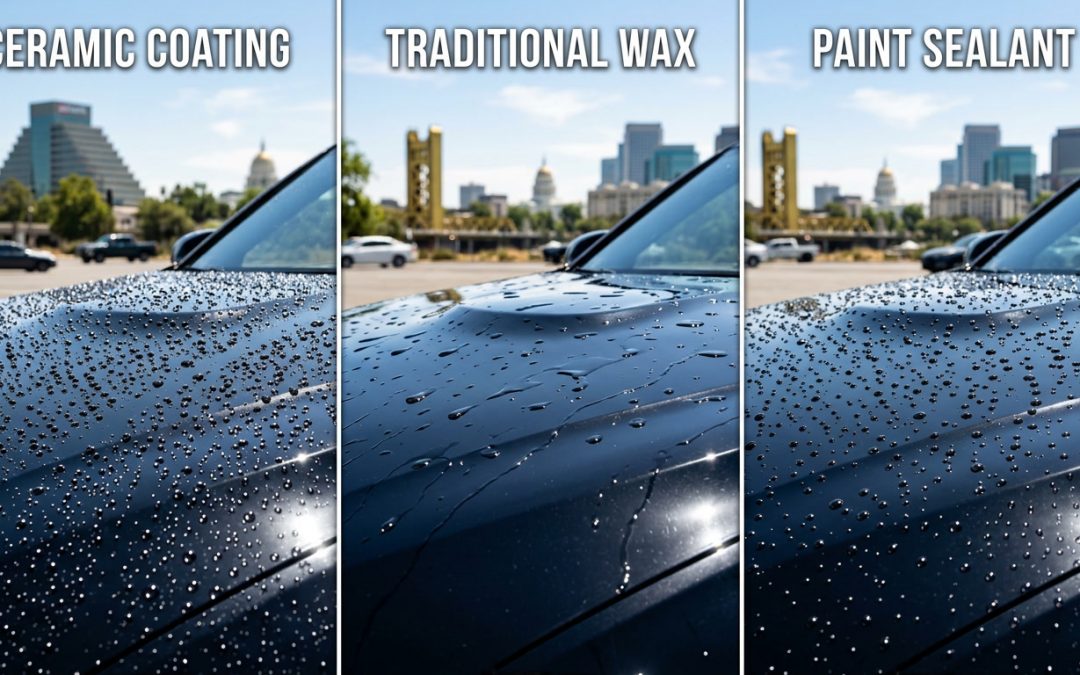
Most paint protection comparisons read like they were written in a climate-controlled lab somewhere in the Pacific Northwest. Moderate temperatures. Occasional rain. Maybe some light pollen in spring.
That’s not Sacramento.
At our shop, we see what Central Valley conditions actually do to unprotected paint. Vehicles come in after a few months of summer parking-lot duty looking like they’ve aged years. The combination of relentless UV, triple-digit heat, agricultural dust, and hard water creates a punishment test that most product marketing conveniently ignores.
So when Sacramento drivers ask us whether ceramic coating is worth the money—or whether wax or sealant can do the job—the honest answer depends on factors that have nothing to do with which product sounds most impressive.
It depends on how you actually use your car, how much time you’ll realistically spend maintaining it, and whether you understand what each option can and cannot do under local conditions.
Why Sacramento Changes the Paint Protection Math
National detailing guides typically assume you’re dealing with moderate weather and regular rainfall. Sacramento’s reality breaks those assumptions.
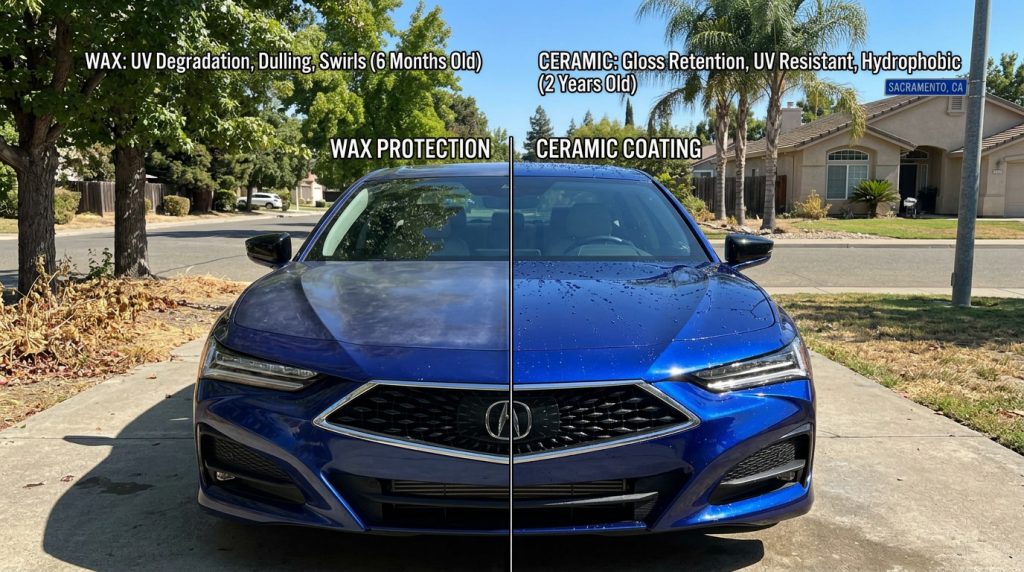
The region sees over 260 sunny days annually, with summer temperatures routinely pushing past 100°F [1]. That sustained UV exposure degrades traditional wax faster than manufacturers advertise. The polymer bonds in waxes and sealants break down under heat stress, which means a product rated for “up to six months” might give you eight weeks of real protection here.
Then there’s the contamination factor. Central Valley dust, agricultural pollen, and construction debris settle onto paint surfaces constantly. When combined with Sacramento’s notoriously hard water, you get mineral deposits that bond to unprotected clear coat and become progressively harder to remove.
Heat accelerates oxidation. UV rays cause clear coat degradation over time. Dust and pollen create abrasive particles that can introduce micro-scratches during washing if the surface lacks adequate protection or lubricity.
None of this means traditional protection is useless in Sacramento. It means the maintenance schedule changes. A product that performs well in milder climates will demand more frequent attention here.
The Three Main Protection Categories Explained
Before comparing performance, it helps to understand what each product type actually does at a fundamental level.
Carnauba Wax
Carnauba wax derives from the leaves of a Brazilian palm tree and has been the traditional choice for automotive paint protection for decades [2]. Enthusiasts often prefer carnauba for its warm, deep shine—a visual quality that synthetic products struggle to replicate exactly.
The trade-off is durability. Carnauba is a natural product that breaks down relatively quickly under heat and UV exposure. Quality carnauba waxes typically last four to eight weeks under favorable conditions. In Sacramento’s summer heat, expect performance closer to the lower end of that range.
Synthetic Paint Sealant
Paint sealants use synthetic polymers engineered to bond more durably to automotive paint than natural wax [3]. They create a harder, slicker surface that resists contamination more effectively and lasts longer—typically three to six months depending on the specific formula and environmental conditions.
The visual result is slightly different from carnauba. Many detailers describe sealant shine as “colder” or more reflective, though the difference is subtle enough that most vehicle owners won’t notice or care.
Professional Ceramic Coating
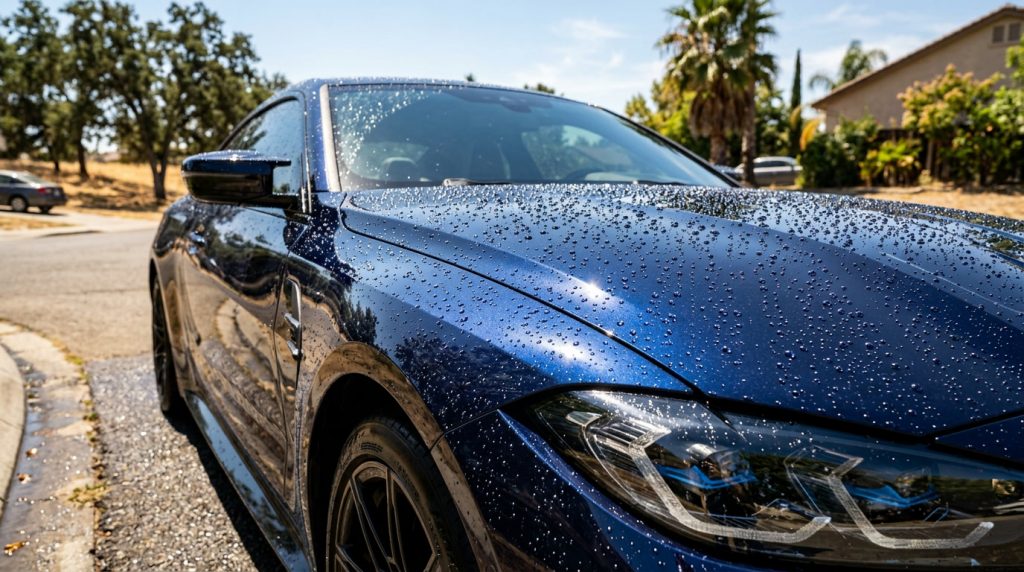
Ceramic coatings use silicon dioxide (SiO2) or related compounds to form a semi-permanent chemical bond with your vehicle’s clear coat [4]. Professional-grade coatings can provide protection for multiple years with proper maintenance, creating a hydrophobic surface that causes water, dirt, and contaminants to release more easily than from waxed or sealed paint.
The primary barrier is cost. Professional ceramic coating installation typically ranges from several hundred to over a thousand dollars, depending on vehicle size, paint condition, and the specific coating system used.
The SiO2 Spray Sealant Question: Marketing vs Reality
This is where product marketing creates genuine confusion for consumers.
Walk through any auto parts store and you’ll find products advertising “ceramic infused” formulas or “SiO2 technology” sitting on shelves next to traditional sealants at similar price points. These are not the same as professional ceramic coatings, despite using similar terminology.
SiO2 spray sealants typically contain lower concentrations of silicon dioxide and don’t require the extensive surface preparation or controlled curing process that professional coatings demand [5]. They offer meaningfully better durability than traditional wax—often lasting two to four months—but they don’t deliver the same hardness, chemical resistance, or multi-year longevity as professionally applied coatings.
Think of SiO2 spray sealants as occupying practical middle ground: easier to apply than a true coating, more durable than wax, but not a substitute for professional installation if you want serious long-term protection.
For Sacramento drivers, SiO2 sealants can be a reasonable choice if you want improved contamination resistance without the coating investment. Just understand what the product actually delivers versus what the packaging implies.
Choosing Protection by Maintenance Time Budget
Here’s a more practical framework for thinking about paint protection: how many minutes per week are you honestly willing to spend maintaining your vehicle’s exterior?
Be realistic. The answer matters more than product specifications.
If You Can Commit 30+ Minutes Weekly
Traditional carnauba wax can work for you. You’ll need to wash regularly, stay ahead of contamination before it bonds to the surface, and reapply wax every six to eight weeks during summer months.
The reward is that warm, classic shine enthusiasts appreciate. The cost is consistent time investment.
If You Have 15–20 Minutes Weekly
Paint sealant or a quality SiO2 spray sealant fits your situation better. You still need regular washing, but the slicker surface makes washing faster and the protection lasts longer between applications.
Plan on reapplication every two to four months depending on conditions and product quality.
If You Have Under 10 Minutes Weekly
Ceramic coating makes the most practical sense. The hydrophobic surface means less contamination adheres to the paint in the first place. Washes go faster because dirt releases more easily. And you’re not spending time reapplying protection every few weeks.
The upfront cost is higher, but the ongoing time investment drops substantially.
Realistic Durability Under Sacramento Conditions
Here’s what we actually see in terms of protection longevity for vehicles regularly exposed to Sacramento’s sun, heat, and dust:
| Protection Type | Typical Durability (Sacramento Summer) | Reapplication Frequency |
| Carnauba Wax | 4–8 weeks | Every 6–8 weeks |
| Synthetic Sealant | 2–4 months | 3–4 times per year |
| SiO2 Spray Sealant | 2–4 months | 3–4 times per year |
| Professional Ceramic Coating | 2–5+ years | Annual inspection recommended |
These ranges assume proper washing technique and reasonable ongoing maintenance. Even the best coating won’t compensate for neglect over time.
Why Wash Method Matters More Than Product Choice
No paint protection eliminates the need for proper washing technique. But the protection type you choose affects how much washing technique matters and how forgiving the surface will be.
Wax and sealant provide some lubricity during washing, reducing the friction that creates swirl marks. Ceramic coatings take this further by creating a harder, slicker surface that contaminants can’t grip as effectively [6].
However, poor washing technique damages any protected surface. Dirty wash mitts dragging particles across paint, improper drying methods, and skipping pre-rinse steps introduce scratches regardless of what protection you’ve applied.
For Sacramento drivers dealing with constant dust and pollen accumulation, proper washing fundamentals—like the two-bucket method or rinseless wash techniques—protect your investment better than any product choice alone.
The Automatic Car Wash Reality
Here’s something coating advertisements rarely address directly: automatic car washes are hard on every type of paint protection.
The brushes and friction in traditional tunnel washes create micro-scratches over time. Even touchless automatic washes rely on harsh chemical concentrations that can degrade wax, sealant, and eventually coating performance with repeated exposure [7].
Ceramic coatings resist this degradation better than wax or sealant, but they’re not immune. If you depend heavily on automatic washes for convenience, you’ll get reduced longevity from any protection product.
For Sacramento daily drivers who need quick, convenient washing options, touchless automatic washes represent the lesser problem. But the best results come from proper hand washing or professional maintenance washes.
What Each Option Actually Costs Over Three Years
Upfront price tells only part of the story. Here’s a realistic comparison of what each protection approach costs over a three-year period for an average-sized sedan.
Carnauba Wax (DIY Application)
- Product cost: $20–$50 per container
- Reapplication frequency: 6–8 times per year in Sacramento
- Time investment: 30–60 minutes per application
- Three-year total: $100–$200 in product, plus significant time commitment
Synthetic Sealant (DIY Application)
- Product cost: $25–$60 per container
- Reapplication frequency: 3–4 times per year
- Time investment: 20–40 minutes per application
- Three-year total: $75–$150 in product, plus moderate time commitment
Professional Ceramic Coating
- Installation cost: $500–$1,500+ depending on paint preparation needs and coating tier
- Ongoing maintenance: Annual inspection, occasional professional maintenance wash
- Time investment: Minimal beyond regular washing
- Three-year total: $500–$1,500 upfront, minimal ongoing product expense
The calculation shifts based on how you value your time, whether you enjoy the detailing process, and how long you plan to keep the vehicle.
Understanding Paint Correction: The Step Before Coating
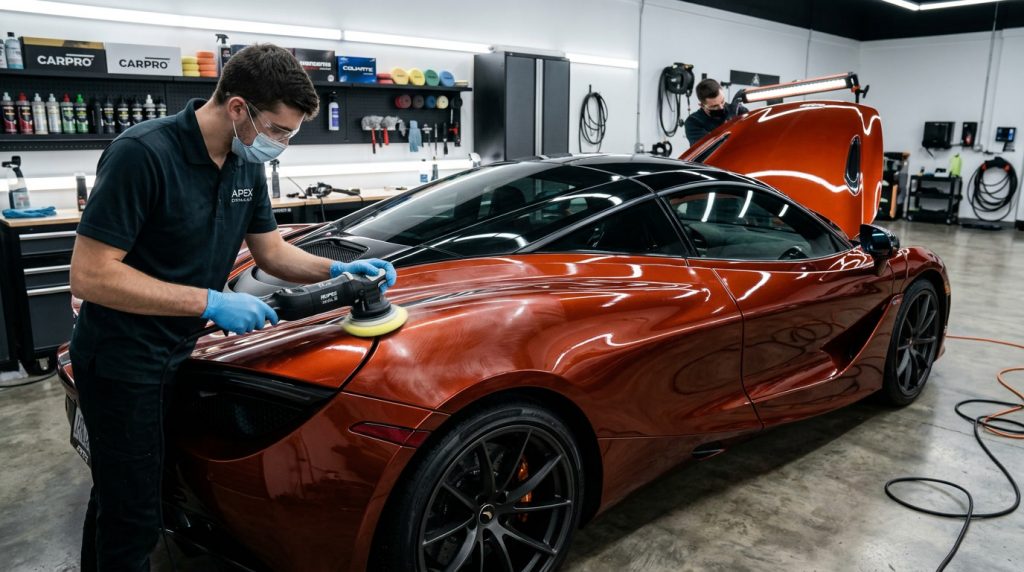
Professional ceramic coating delivers the best results when applied to properly prepared paint. This is where paint correction enters the equation—and it’s a factor that significantly impacts the overall investment.
Paint correction involves using machine polishing to remove defects like swirl marks, light scratches, water spot etching, and oxidation from your vehicle’s clear coat. The goal is restoring optical clarity before sealing that corrected finish under a protective coating.
If your vehicle’s paint already shows visible defects in direct sunlight, applying a coating over those imperfections simply locks them in. The coating protects whatever surface exists beneath it—good or bad.
Most professional coating installations include at least some level of paint correction in the quoted price. Vehicles with more severe defects may require multi-stage correction work, which adds to the total cost but produces dramatically better final results.
When we assess vehicles for coating, this is one of the first things we evaluate. Some paint needs minimal preparation. Others need significant correction before coating makes sense.
When Ceramic Coating Makes the Most Sense
Ceramic coating delivers the best value when:
- You plan to keep the vehicle for three or more years
- You want to minimize ongoing maintenance time
- Your vehicle experiences significant sun and heat exposure regularly
- You’re willing to follow proper washing technique to protect the coating
- You want maximum contamination resistance for Sacramento’s dust and pollen
- Your paint is in good condition or you’re already investing in paint correction
Coating also makes sense if you’re already booking a comprehensive detail service. Once swirl marks and defects are removed through correction, coating preserves that restored finish and prevents rapid re-contamination.
When Wax or Sealant Makes More Sense
Traditional wax or sealant can be the smarter choice when:
- You enjoy the detailing process and have time for regular maintenance
- You’re leasing the vehicle or plan to sell it within a year or two
- Your budget doesn’t accommodate professional coating installation
- You want to experiment with different products before committing to a longer-term solution
There’s nothing wrong with wax or sealant as a protection strategy. The key is understanding the maintenance commitment required and being honest about whether you’ll actually maintain that schedule under Sacramento’s demanding conditions.
A Practical Decision Framework
Work through these questions to identify which protection approach fits your situation:
How long do you plan to keep this vehicle?If less than two years, ceramic coating may not deliver enough value to justify the investment. Sealant is likely the better choice.
How much time will you realistically commit to exterior maintenance?Be honest with yourself. If the answer is “almost none,” coating protects you from the consequences of that reality.
What’s your vehicle’s current paint condition?Ceramic coating performs best on corrected paint. If your paint shows significant defects, you’ll need correction work first, which increases the total investment.
Do you park outdoors most of the time?Sacramento sun exposure accelerates degradation of every protection type. More exposure means more benefit from longer-lasting protection.
How do you typically wash your vehicle?If you rely exclusively on automatic washes, you’ll get reduced performance from any protection. If you’re willing to hand wash or use professional maintenance services, coating delivers its full potential.
Making the Investment Work for Your Schedule
If you decide ceramic coating is worth pursuing, timing the installation strategically makes the process more efficient.
Many Sacramento drivers add coating as an upgrade during a full detail service. If you’re already booking a Standard or Ultimate detail package, that’s an ideal time to add paint protection—the vehicle is already being thoroughly cleaned, decontaminated, and prepped.
This approach means your coating goes onto a properly prepared surface without requiring separate appointments, and you avoid duplicating prep work.
Frequently Asked Questions
How long does ceramic coating last in Sacramento’s heat?
Professional ceramic coatings typically provide two to five years of protection under Sacramento conditions, though actual durability depends on the coating quality, installation process, and how consistently you maintain the vehicle afterward. Annual inspections help identify any areas needing attention before protection degrades significantly.
Can I apply ceramic coating myself to save money?
Consumer-grade ceramic coating kits exist, but they generally offer shorter durability and require careful surface preparation to perform properly. Professional installation includes thorough paint decontamination, correction work if needed, and controlled application conditions that are difficult to replicate in a home garage environment.
Will ceramic coating prevent all scratches and damage?
No coating makes paint scratch-proof. Ceramic coatings add surface hardness and chemical resistance, making the finish more resistant to light contamination and significantly easier to clean. They don’t prevent rock chips, deep scratches, or damage from improper washing technique.
Is wax or sealant worth applying over ceramic coating?
Generally not recommended. Adding traditional wax or sealant over a ceramic coating can interfere with the coating’s hydrophobic properties and self-cleaning behavior. Most coating manufacturers recommend using coating-specific maintenance products instead.
How do I know if my existing coating is still working?
The easiest test is observing water behavior on the surface. A healthy coating causes water to bead tightly and sheet off quickly. If water spreads flat or contamination starts adhering more than usual, the coating may need professional inspection or maintenance treatment.
Why Professional Guidance Matters for This Decision
Paint protection isn’t one-size-fits-all. Your vehicle’s age, current paint condition, daily exposure patterns, and realistic maintenance habits all influence which option delivers the best value for your specific situation.
The Detail Pros Sacramento works with Sacramento-area drivers regularly, and we see firsthand how local conditions affect paint protection performance across different product types and application quality levels. Our certified technicians can assess your vehicle’s current condition and recommend the right level of protection based on how you actually use your car—not based on what sounds most impressive in marketing materials.
Whether you need paint correction before coating, want to add protection during a detail service, or just need honest guidance on maintaining what you already have, we can help you make a decision that fits your life and budget.
Ready to protect your vehicle the right way? Book a detail with a coating upgrade, or contact us to discuss what makes sense for your situation.
About The Detail Pros Sacramento
The Detail Pros Sacramento brings over a decade of professional detailing experience to the greater Sacramento area. Our certified technicians specialize in paint correction, ceramic coating installation, and comprehensive detail services designed around local driving conditions. We operate both mobile and in-shop, making professional care convenient for busy Sacramento drivers who want more than a quick wash but don’t have time for unnecessary hassle.
Cited Works
[1] National Weather Service — “Sacramento, CA Climate Summary.” https://www.weather.gov/wrh/Climate?wfo=sto
[2] International Detailing Association — “Understanding Automotive Waxes and Their Properties.” https://www.the-ida.com/page/wax-basics
[3] Chemical Guys — “Paint Sealant vs Wax: Understanding the Differences.” https://www.chemicalguys.com/blogs/knowledge-base/paint-sealant-vs-wax
[4] AMMO NYC — “How Ceramic Coatings Work and What They Actually Do.” https://www.ammonyc.com/how-to/ceramic-coating-explained/
[5] Adams Polishes — “SiO2 Spray Sealants vs Professional Ceramic Coatings: What’s the Difference?” https://adamspolishes.com/blogs/ask-adam/sio2-vs-ceramic-coating
[6] Gtechniq — “The Science Behind Ceramic Coating Hydrophobicity.” https://www.gtechniq.com/ceramic-coating-science
[7] Consumer Reports — “How Car Washes Affect Your Vehicle’s Paint and Finish.” https://www.consumerreports.org/cars/car-maintenance/how-car-washes-affect-your-cars-paint/

 and then