
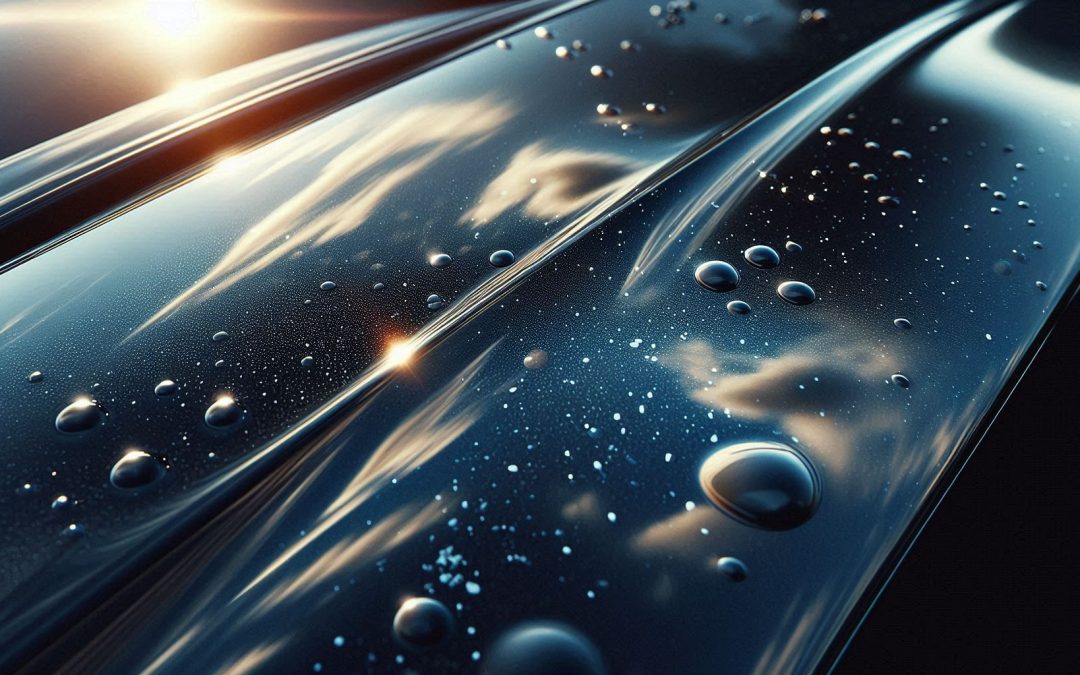
Those white, chalky rings on your hood are not just ugly. They are mineral deposits left behind when water evaporates, and if you ignore them long enough, they can permanently damage your clear coat.
Hard water spots rank among the most common—and most misunderstood—problems Sacramento drivers deal with. Between sprinkler overspray, mineral-heavy tap water, and summers where temperatures regularly push past 100 degrees, vehicles around here face constant exposure to the conditions that cause these spots in the first place.
We see it regularly at the shop: a customer comes in frustrated because they have been scrubbing at water spots for weeks with no results. Nine times out of ten, the issue is not their effort—it is that the spots crossed the line from surface deposits into actual paint damage, and no amount of scrubbing will fix them.
This guide explains how to tell the difference, which removal methods actually work, and how to keep spots from coming back.
The Triage Test: Run This Before You Grab Any Product
Before you reach for a bottle of water spot remover and start scrubbing, you need to answer one critical question: are you dealing with surface deposits, or has the damage already penetrated your clear coat?
This distinction changes everything. Surface deposits respond to chemical removal. Etched clear coat does not.
How to Check Your Water Spots
Try this simple triage test:
- Wash and dry the affected area to remove loose contamination
- Run your fingernail lightly across a water spot and feel for texture
- Look at the spot from multiple angles under direct light
If the spot feels raised or textured and you can see mineral buildup sitting on top of the paint, you are likely dealing with removable deposits.
If the spot feels smooth or slightly depressed—like the paint surface itself has been altered—you may be looking at etching.
Quick Reference: Deposits vs. Etching
| Characteristic | Removable Deposits | Etched Clear Coat |
| Texture | Raised, gritty, or rough | Smooth or slightly depressed |
| Appearance after washing | White or chalky residue remains | Dull, hazy rings |
| Response to vinegar solution | Improves or dissolves | No change |
| Touch test | Feels like something is sitting on the paint | Feels like the paint itself has changed |
What Etching Actually Looks Like
Etched water spots create a different kind of damage. Instead of minerals sitting on your clear coat, the minerals have chemically reacted with the clear coat itself, leaving behind a permanent impression [1].
Etching often appears as:
- Dull, hazy rings that remain after cleaning
- Slight depressions you can feel with a fingertip
- Spots that look worse in direct sunlight
- Areas where wax or sealant will not bond properly
Once etching occurs, no chemical remover will fix it. The only solution is paint correction—physically leveling the clear coat through polishing or compounding to remove the damaged layer.
This is why the triage step matters. Applying acidic water spot removers to already-etched paint wastes product and delays the correction you actually need.
What Causes Hard Water Spots on Cars?
Hard water spots form when water containing dissolved minerals—primarily calcium and magnesium—lands on your vehicle and evaporates. The water disappears, but the minerals stay behind, leaving visible deposits on your paint, glass, and trim.
Sacramento’s municipal water contains moderate to high mineral content, which makes this problem especially common in our area [2]. But tap water is not the only culprit.
Common Sources of Hard Water Spots
Sprinkler overspray is one of the biggest offenders. Park near a lawn or commercial landscaping, and your vehicle becomes a target for repeated mineral deposits. Each watering cycle adds another layer, and Sacramento’s hot afternoons bake those minerals onto the surface fast.
Car washes using unfiltered water can leave spots if vehicles are not dried properly. Even some professional washes rely on air drying, which allows minerals to settle.
Rain mixed with airborne contaminants creates a different kind of water spot. Acid rain and pollution combine with moisture to leave deposits that behave differently than pure hard water stains [3].
Morning dew and condensation pick up dust and debris from your paint surface, then evaporate and concentrate those particles into visible rings.
Understanding the source matters because it affects how aggressive your removal method needs to be—and whether prevention is even realistic.
Surface-Level Hard Water Spot Removal Methods
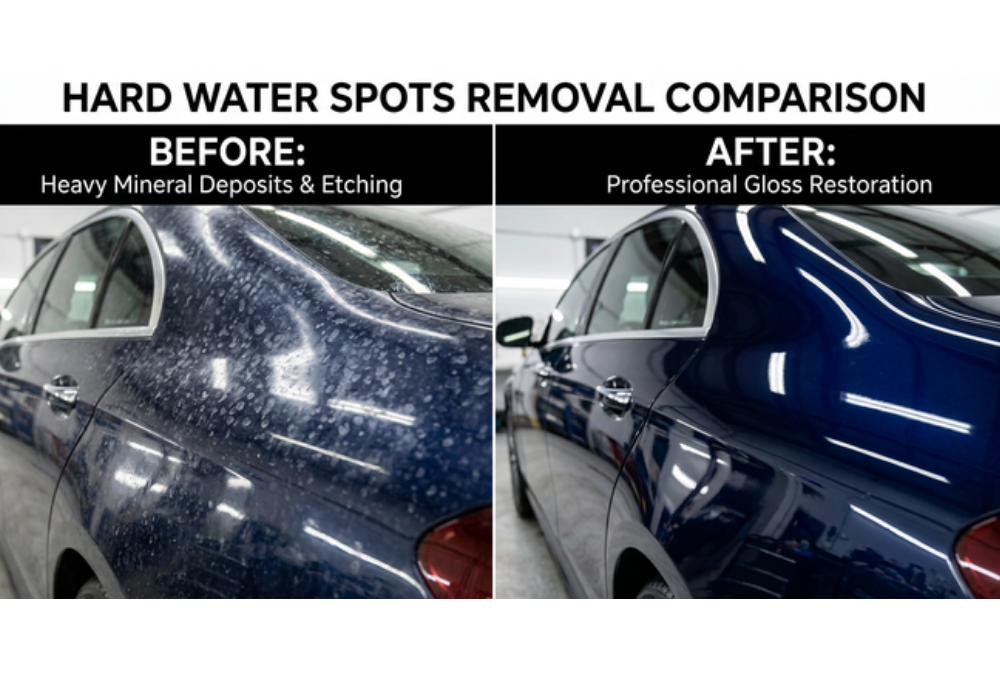
When your triage test confirms you are dealing with mineral deposits rather than etching, you have several removal options. Start with the gentlest approach and escalate only if needed.
Method 1: Distilled Water and Vinegar Solution
For light, fresh water spots, a simple acidic solution often works.
What you need:
- Distilled water
- White vinegar
- Spray bottle
- Clean microfiber towels
Mix equal parts distilled water and white vinegar. Spray the solution onto the affected area, let it dwell for 30 to 60 seconds, then wipe with a clean microfiber towel. Rinse thoroughly afterward.
The mild acidity helps dissolve calcium and magnesium deposits without damaging paint [4]. This method works best on spots that are days old, not weeks.
Method 2: Dedicated Water Spot Removers
Commercial water spot removers contain stronger acids—typically citric, phosphoric, or oxalic acid—formulated to dissolve stubborn mineral buildup more effectively than vinegar.
Important considerations:
- Always work in the shade on a cool panel
- Follow product dwell times exactly
- Rinse completely before the product dries
- Test on an inconspicuous area first
These products work well for moderate deposits, but they are not magic. If minerals have been baking onto your paint in Sacramento’s summer heat for weeks, you may need mechanical help.
Method 3: Clay Bar Treatment
A clay bar removes bonded surface contamination that chemical cleaners cannot dissolve [5]. For water spots that resist acidic removers, clay bar treatment often succeeds where sprays fail.
The clay physically pulls embedded minerals away from the paint surface. Always use a quality clay lubricant generously—never drag a clay bar across dry or insufficiently lubricated paint, or you will create fine scratches that require their own correction.
Clay bar treatment also prepares your paint for protection products, making it a logical step before applying wax, sealant, or ceramic coating.
What NOT to Do
Many DIYers make water spot damage worse before they make it better. Avoid these common mistakes:
- Abrasive kitchen sponges or scrub pads will scratch your clear coat
- Dish soap strips protective coatings and can dry out trim
- Rubbing aggressively without lubrication creates swirl marks
- Leaving acidic products on too long can damage paint
- Using glass cleaners on paint or paint products on glass without checking compatibility
If you have tried vinegar, dedicated removers, and clay bar treatment—and the spots remain—stop. Continued chemical application will not help, and aggressive scrubbing risks creating new damage.
At this point, the spots have likely etched your clear coat. Polishing is the only finish-safe solution.
Paint Correction for Etched Water Spots
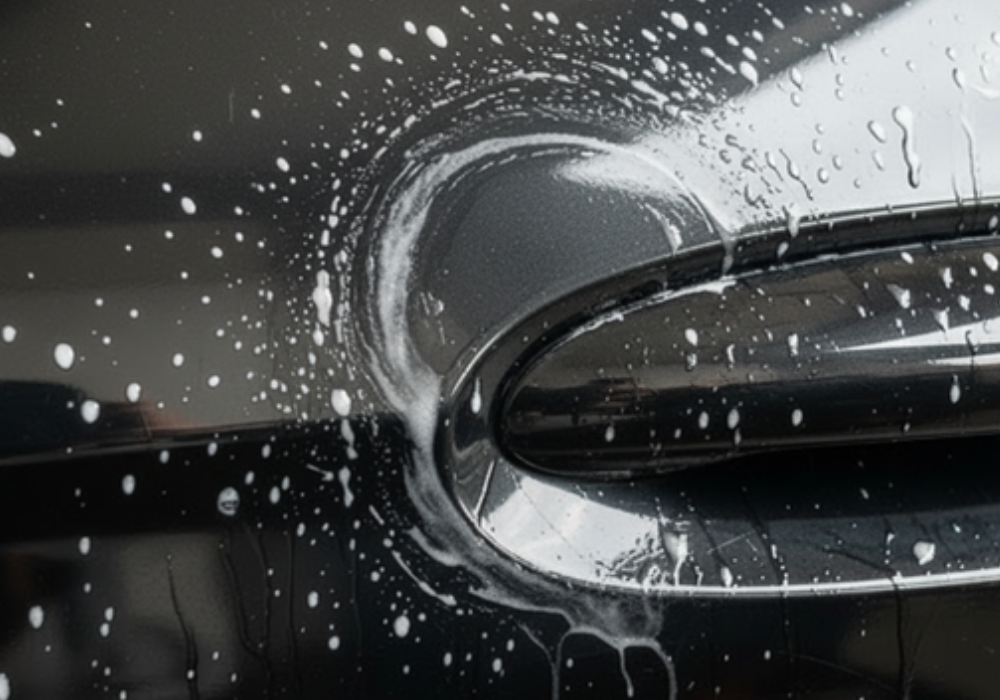
Etched water spots require paint correction because the damage exists within the clear coat itself, not on top of it.
How Paint Correction Works
Paint correction uses abrasive compounds and polishing pads to remove a thin layer of clear coat, eliminating the etched impressions along with it [6]. The process requires skill, proper equipment, and knowledge of how much clear coat your vehicle has to spare.
Single-stage polish handles light etching and minor imperfections.
Multi-stage correction addresses deeper etching, combining cutting compounds with finishing polishes to restore clarity and gloss.
Here is the reality: removing too much clear coat creates bigger problems than water spots, and uneven correction leaves visible haze or holograms. This is not a job where you can just “figure it out as you go.”
When to Seek Professional Help
Consider professional paint correction if:
- Multiple etched spots cover large panels
- The etching is deep enough to feel with your finger
- You have already tried chemical removal without success
- Your vehicle has dark paint that shows imperfections easily
- You are not confident assessing your clear coat thickness
A trained detailer can assess your clear coat thickness, recommend the appropriate level of correction, and restore your paint without compromising its integrity.
Glass vs. Paint: Why Water Spots Behave Differently
Hard water spots on glass require different treatment than spots on paint. Understanding the difference prevents damage and saves time.
Water Spots on Automotive Glass
Glass is harder and more chemically resistant than clear coat, which means:
- Spots take longer to etch glass but still can over time
- You can use more aggressive products safely
- Mechanical removal with fine steel wool (#0000 grade) is sometimes appropriate when used with ample glass cleaner or dedicated lubricant
- Glass polish or cerium oxide compounds work for stubborn cases
Many water spot removers safe for paint are too weak for heavily spotted glass. Conversely, products designed for glass may be too harsh for paint.
Critical warning: Even #0000 steel wool can micro-scratch glass if used dry. Always flood the surface with lubricant first.
Water Spots on Paint
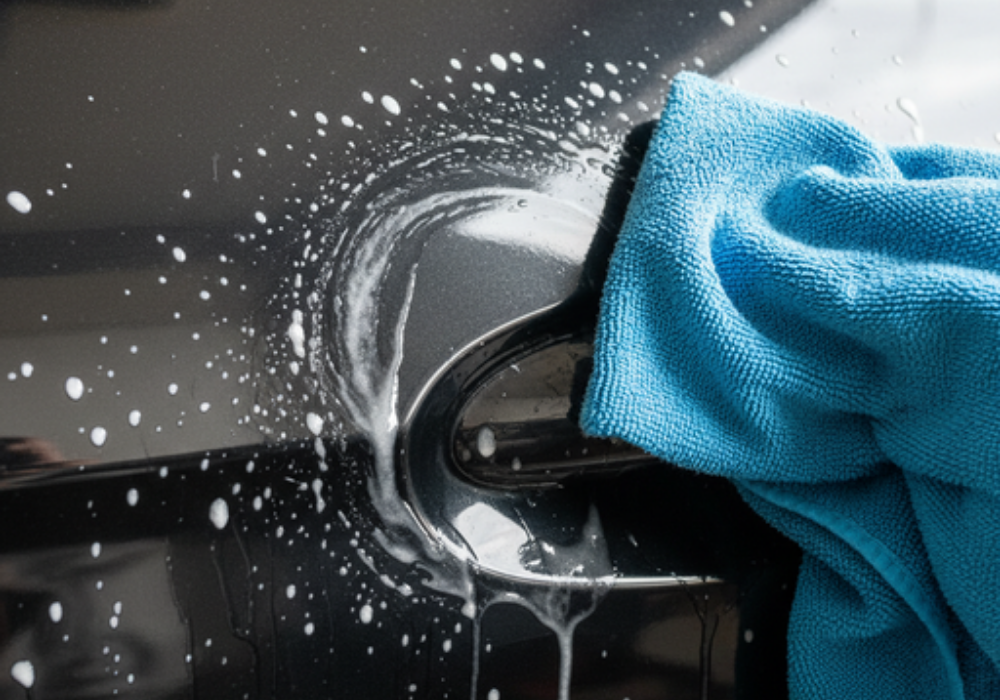
Automotive clear coat is softer and more vulnerable to chemical damage. This means:
- Acidic products require careful dwell time management
- Mechanical abrasion must be controlled and lubricated
- Etching happens faster than it does on glass
- Protection products matter more for prevention
When treating a vehicle with spots on both surfaces, work the glass and paint separately with appropriate products for each.
How to Prevent Hard Water Spots in Sacramento
Removal is important, but prevention saves you time, money, and potential paint damage.
Safe Washing Practices
Wash in the shade or on cool panels. Water evaporates faster on hot surfaces, leaving mineral deposits before you can rinse them away. Early morning or late evening works best during Sacramento summers.
Dry immediately and thoroughly. Never let your vehicle air dry after washing. A quality microfiber drying towel or forced air dryer removes water before evaporation concentrates minerals on your paint.
Use filtered or deionized water for final rinse. If your water source is particularly hard, a final rinse with filtered water reduces mineral content significantly.
Avoid parking near sprinklers. This sounds obvious, but sprinkler overspray is one of the most common causes of water spots in residential areas. Choose parking spots strategically—even a few extra feet of distance can make a difference.
Protection Products That Help
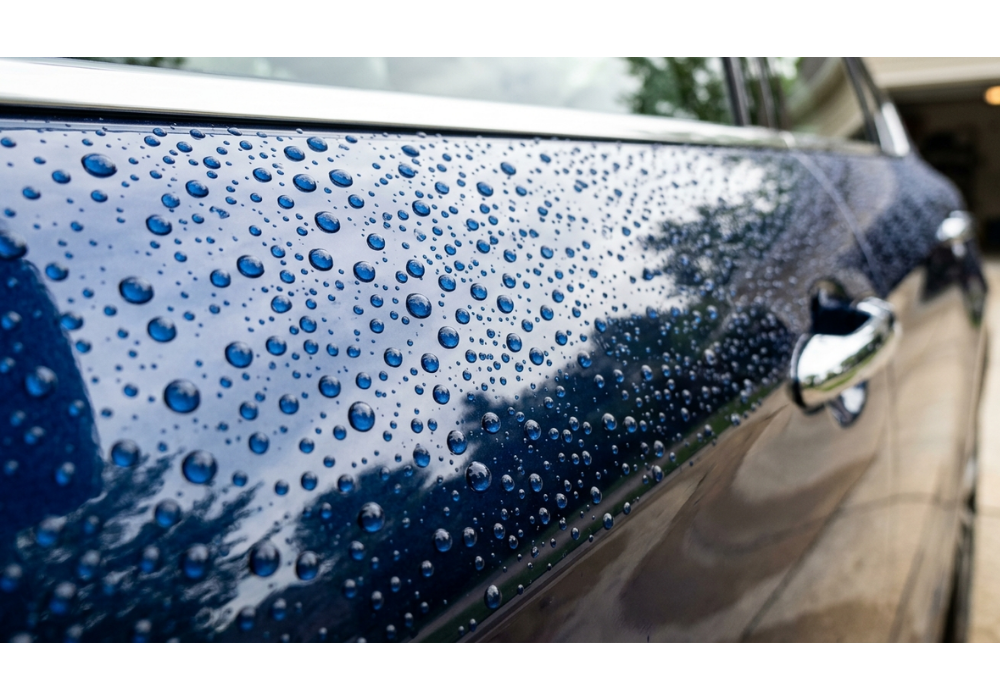
Paint sealants and ceramic coatings create a hydrophobic barrier that encourages water to bead and roll off rather than sitting on the surface [7]. No coating makes your paint immune to water spots, but proper protection reduces how readily minerals bond to the surface and makes removal easier when spots do form.
Regular maintenance washing keeps deposits from accumulating. Fresh spots are easier to remove than baked-on, layered mineral buildup.
Quick detailer sprays between washes help remove light contamination before it becomes a problem.
Frequently Asked Questions
Can hard water spots permanently damage car paint?
Yes, if left untreated long enough. Mineral deposits initially sit on top of clear coat, but prolonged exposure—especially in heat—allows them to etch into the paint itself. Once etching occurs, the damage is permanent unless corrected through polishing. Early removal prevents this progression. Sacramento’s hot summers accelerate this process significantly.
Does vinegar remove hard water spots from cars?
A diluted vinegar solution removes light, fresh water spots effectively. Mix equal parts white vinegar and distilled water, apply to the affected area, let it sit briefly, then wipe and rinse. For older or heavier deposits, you may need a dedicated water spot remover or clay bar treatment. Vinegar will not fix spots that have already etched into the clear coat.
How do I know if my water spots are etched?
Run your fingernail across a clean, dry water spot. If you feel a raised texture, you likely have removable deposits. If the spot feels smooth or slightly depressed—and remains visible after chemical treatment—you are probably dealing with etched clear coat that requires polishing to correct.
Will ceramic coating prevent water spots?
Ceramic coating reduces water spot formation by creating a hydrophobic surface that repels water, but it does not make your paint immune. Water that sits long enough will still leave deposits. The advantage is easier removal since minerals bond less readily to coated surfaces, and the coating itself is sacrificial—it takes the damage instead of your clear coat.
Can I remove hard water spots from car windows the same way as paint?
Glass tolerates more aggressive treatment than paint. While some mild removers work on both, stubborn glass spots often require dedicated glass polish, cerium oxide compounds, or fine steel wool (#0000 grade with plenty of lubricant) that would damage clear coat. Treat each surface with appropriate products.
How long before water spots etch into paint?
There is no exact timeline because it depends on mineral concentration, temperature, and UV exposure. In Sacramento’s summer heat, spots can begin etching within days rather than weeks. The safest approach is to remove water spots as soon as you notice them rather than waiting.
Experience You Can Trust
The Detail Pros Sacramento has helped Sacramento-area drivers deal with hard water spots, etched paint, and mineral damage for years. Our certified detailers understand the difference between surface deposits that need chemical removal and etched clear coat that requires correction—and we have the tools and training to handle both.
Whether you need a clay bar treatment to remove bonded contamination or multi-stage paint correction to eliminate etching, we assess your vehicle’s condition first and recommend only what actually makes sense.
Dealing with hard water spots that will not come off? If your spots have crossed into etching territory, chemical removers will not fix them. Book a paint reconditioning consultation with The Detail Pros Sacramento to find out what your paint actually needs—and get it looking right again.
Cited Works
[1] International Detailing Association — “Understanding Paint Defects and Correction Methods.” https://www.the-ida.com/page/resources
[2] United States Geological Survey — “Water Hardness and Alkalinity: USGS Water Science School.” https://www.usgs.gov/special-topics/water-science-school/science/hardness-water
[3] Environmental Protection Agency — “Effects of Acid Rain on Materials.” https://www.epa.gov/acidrain/effects-acid-rain
[4] American Chemical Society — “Acids, Bases, and the Chemistry of Cleaning.” https://www.acs.org/education/resources/highschool/chemmatters/past-issues/archive-2014-2015/soaps-and-detergents.html
[5] SEMA — “Professional Detailing and Surface Preparation Best Practices.” https://www.sema.org/sema-enews/2020/25/the-art-of-detailing
[6] 3M Automotive Aftermarket Division — “Paint Correction and Polishing Techniques.” https://www.3m.com/3M/en_US/auto-body-repair-us/resources/
[7] Ceramic Pro — “How Ceramic Coatings Protect Automotive Paint.” https://www.ceramicpro.com/knowledge-base/

 and then