
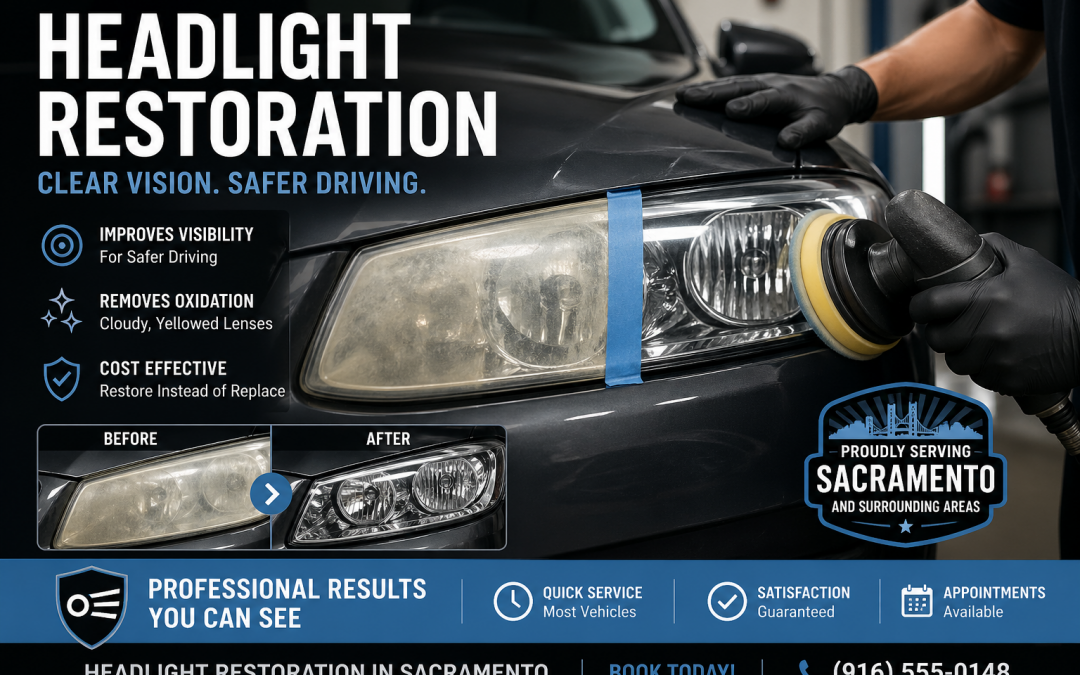
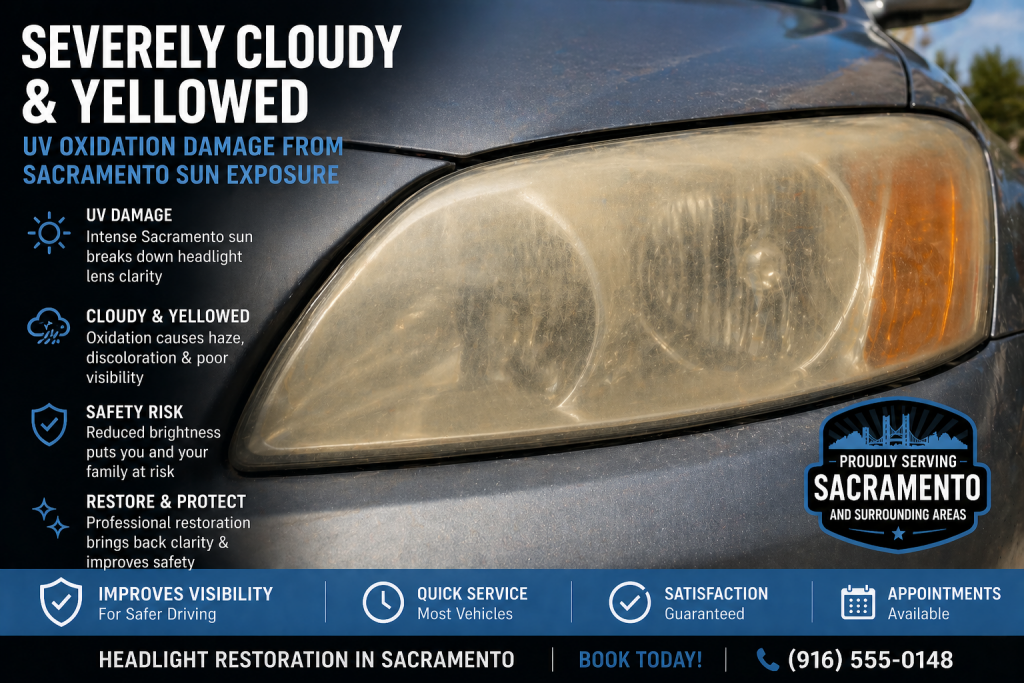
You probably noticed it during a night drive on Highway 50 or I-80. The road ahead looked dimmer than it should, even with your headlights on. When you checked, the lenses looked cloudy, yellowed, or hazy instead of crystal clear.
Foggy headlights are more than a cosmetic issue. According to AAA, deteriorated headlights can dramatically reduce visibility, affecting how well you see the road and how visible your vehicle is to other drivers [1]. In Sacramento, where Central Valley summers deliver intense UV exposure and triple-digit temperature swings are routine, headlight oxidation happens faster than many drivers expect.
We see this every week at The Detail Pros Sacramento. A customer books a detail, and we point out that their headlights are cutting their nighttime visibility in half. Most had no idea the problem was that serious.
Here’s what Sacramento drivers ask us most: whether DIY kits actually work, what professional restoration involves, how long results last, and when replacement makes more sense than restoration.
Why Headlights Get Cloudy in the First Place
Modern headlight lenses are made from polycarbonate plastic, not glass. Polycarbonate is lighter, more impact-resistant, and easier to mold into complex shapes. But it has one major weakness: it degrades under UV exposure [2].
Manufacturers apply a clear protective coating to new headlight lenses. Over time, sunlight breaks down that coating. Once the coating fails, UV rays attack the polycarbonate itself, causing oxidation. The surface becomes porous and rough, scattering light instead of allowing it to pass through cleanly.
Sacramento-Specific Factors That Accelerate Oxidation
Several local conditions speed up this process:
- High UV index during Sacramento’s long, sunny summers—we regularly see 100+ degree days from June through September
- Temperature cycling between hot days and cooler nights, which stresses the lens material
- Road debris and bug impacts on commutes along I-80, Highway 50, and Business 80
- Parking outdoors in neighborhoods without garage access or shade coverage
Vehicles that sit outside in direct sunlight most of the day tend to show oxidation earlier than garaged vehicles. Headlights facing south or west often degrade faster than those with less sun exposure.
DIY Headlight Restoration Kits: What They Actually Do
Walk into any auto parts store and you’ll find multiple headlight restoration kits priced between $10 and $40. Most include some combination of sanding discs, polishing compound, and application cloths.
How DIY Kits Work
The basic approach is straightforward:
- Sand the oxidized outer layer off the lens using progressively finer abrasives
- Polish the sanded surface to restore clarity
- Apply whatever sealant or coating the kit includes
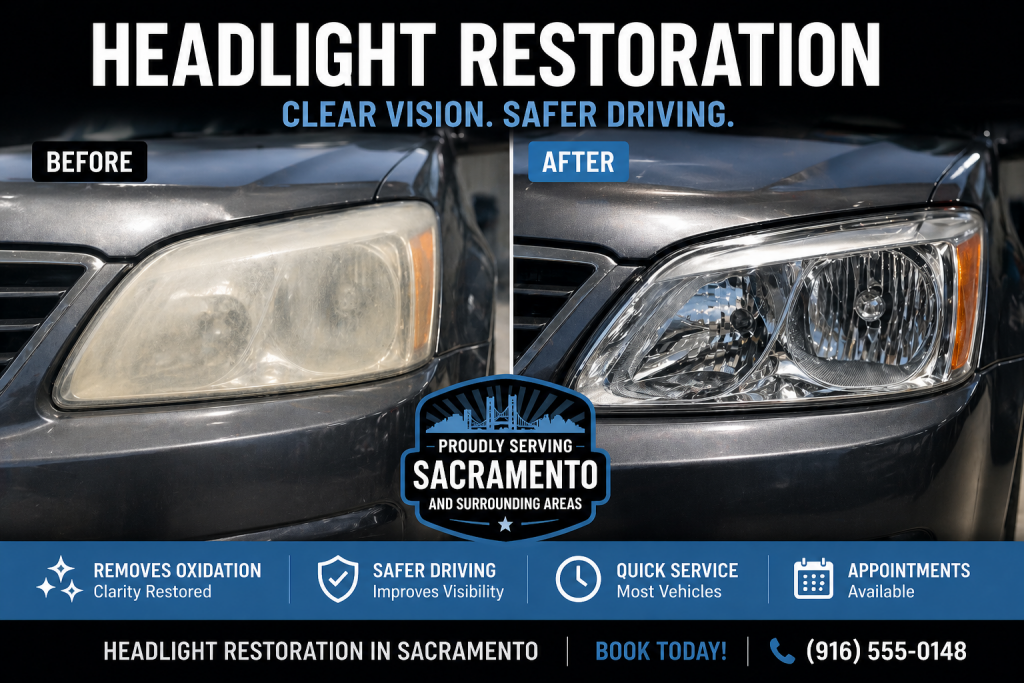
This process can work. Light to moderate oxidation often responds well to careful sanding and polishing. The lens looks clearer because you’ve physically removed the damaged material.
Where DIY Kits Fall Short
The limitation is usually in step three. Most consumer kits include a basic sealant that provides minimal UV protection. Without proper UV-blocking protection, the polycarbonate is immediately exposed to the same conditions that caused the problem originally [3].
The result? Clarity returns temporarily, then the lens hazes over again. Many DIY restorations start showing oxidation within a few months, especially on vehicles parked outside in Sacramento’s sun.
Other common DIY issues:
- Uneven sanding that creates visible scratches or distortion
- Insufficient wet-sanding that fails to remove deeper oxidation
- Skipping grits that leaves the surface too rough for a clear finish
- Improper sealant application that peels or fails quickly
For a quick improvement before selling a vehicle or passing inspection, a DIY kit can be adequate. For lasting results, the sealant step is where professional service makes the biggest difference.
Do Toothpaste, Bug Spray, or WD-40 Actually Work?
You’ve probably seen the viral videos. Someone rubs toothpaste on a foggy headlight and it looks clearer. Or they spray bug repellent and the haze seems to disappear.
Here’s what’s actually happening:
Toothpaste contains mild abrasives that can remove very light surface haze—similar to a gentle polish. It won’t remove actual oxidation that has penetrated the lens, and it provides zero UV protection afterward. The haze returns quickly.
Bug spray (DEET-based) appears to work because the DEET literally dissolves the top layer of polycarbonate plastic. You’re not restoring the lens; you’re chemically damaging it. The surface becomes more vulnerable to future oxidation, and the lens can develop permanent clouding or texture damage.
WD-40 leaves an oily film that temporarily makes the lens look clearer by filling in surface imperfections. It washes off, attracts dirt, and does nothing to address actual oxidation.
None of these methods include UV protection. None address oxidation below the surface. And some—especially bug spray—can permanently damage the lens. We’ve seen headlights that were damaged beyond restoration because someone tried the bug spray trick first.
What Professional Headlight Restoration Includes
Professional restoration follows a similar concept to DIY but uses better materials, more controlled technique, and—critically—a proper UV sealant that protects the restored surface.
The Professional Process
A thorough professional headlight restoration typically involves:
Surface preparation. We mask the area around the headlight to protect paint and trim. The lens is cleaned to remove surface contamination before any abrasive work begins.
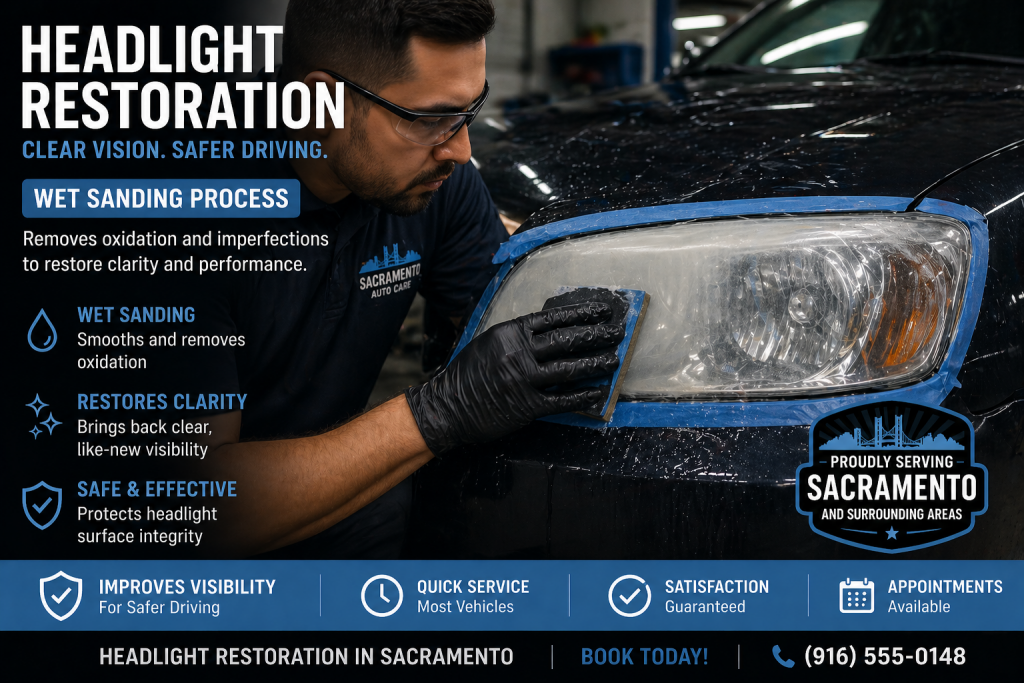
Wet sanding progression. Our technicians sand the lens using multiple grit levels, starting coarse enough to remove oxidation and progressing through finer grits to create a smooth, even surface. Wet sanding reduces heat and removes particles more effectively than dry sanding.
Machine polishing. After sanding, we machine-polish the lens to remove fine scratches and restore optical clarity.
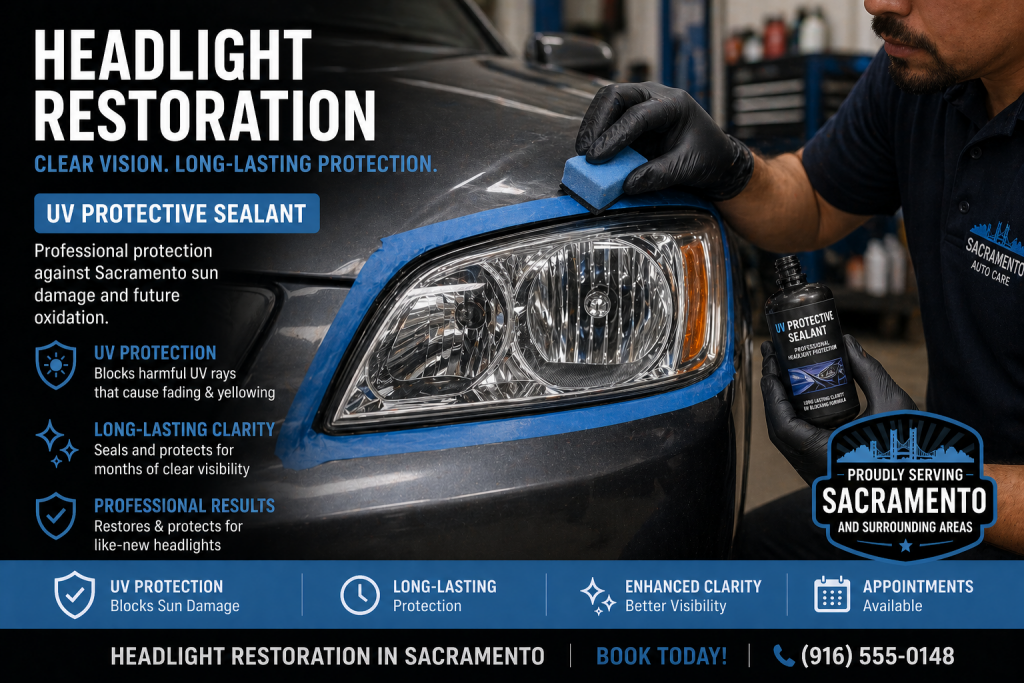
Professional UV sealant application. This is the step that separates lasting results from temporary fixes. Professional-grade UV sealants—including dedicated automotive clear coats and ceramic coating options—create a barrier that protects the bare polycarbonate from sun damage [4]. Without this layer, oxidation restarts immediately.
The type of sealant matters significantly. Basic spray sealants offer some protection but break down faster. Automotive-grade 2K clear coats bond more permanently to the lens surface. Ceramic coatings add hydrophobic properties and additional UV resistance. We choose the right protection level based on your vehicle’s parking conditions and how long you want results to last.
Sanding vs Polish-Only Restoration
You may see services advertised as “polish only” headlight restoration. This approach skips sanding and only buffs the surface.
Polish-only works for very light haze or surface contamination, but it cannot remove actual oxidation that has penetrated the lens material. If you can feel texture or roughness on the lens, or if the yellowing is below the surface, sanding is necessary for a real fix.
Our technicians assess whether your headlights need full restoration or just polishing based on the oxidation depth—we don’t automatically sell you the more expensive service if you don’t need it.
How Long Does Headlight Restoration Last?
This is the question everyone asks, and the honest answer is: it depends on the restoration quality and your vehicle’s conditions.
Typical Longevity Expectations
| Restoration Type | Expected Clarity Duration |
| Basic DIY kit (minimal sealant) | 2–6 months |
| Quality DIY with aftermarket UV sealant | 6–12 months |
| Professional restoration with UV sealant | 1–3 years |
| Professional restoration with ceramic coating | 2–4 years |
These ranges assume typical Sacramento driving and parking conditions. Vehicles garaged during the day will see longer-lasting results. Vehicles parked in direct Central Valley sunlight daily will see faster re-oxidation.
Maintenance Tips to Extend Results
After restoration, a few simple habits help protect your investment:
- Park in shade when possible, especially during peak afternoon sun
- Apply wax or sealant to headlight lenses during regular vehicle waxing
- Clean headlights regularly to remove bug residue, road film, and contamination
- Avoid harsh chemicals that can strip protective coatings
We recommend reapplying a UV protectant spray every 6–12 months as preventive maintenance—this is something you can do yourself between professional services.
When Should You Replace Headlights Instead of Restoring Them?
Restoration isn’t always the right answer. Some headlights are too far gone, and replacement makes more practical sense.
Signs Replacement Is the Better Choice
Internal damage or moisture. If you see condensation, water droplets, or fogging inside the headlight housing, restoration won’t help. Internal moisture indicates a failed seal that requires housing replacement.
Deep cracks or crazing. Surface oxidation can be sanded away. Deep cracks that extend through the lens material cannot be polished out safely.
Severe pitting. Heavy rock chip damage creates pits that may be too deep to sand out without affecting lens thickness and light transmission.
Internal reflector degradation. The reflective coating inside the headlight housing can deteriorate over time, reducing light output even with a perfectly clear lens. If the reflector looks dull or flaking, replacement is needed.
Repeated restoration failures. If a headlight has been restored multiple times and keeps re-oxidizing quickly, the lens material may be too damaged to hold a protective coating effectively.
Cost Comparison Considerations
Aftermarket replacement headlights vary widely in quality and price. OEM replacements from the vehicle manufacturer typically cost significantly more but often include better optics and fit. Professional restoration usually costs less than quality replacement lenses and can restore full clarity when the damage is appropriate for restoration.
We’ll tell you honestly if restoration makes economic sense for your situation—or if you’re better off putting that money toward replacement.
Headlight Clarity and Nighttime Visibility: Why It Matters
Cloudy headlights don’t just look worn. They measurably reduce how much light reaches the road.
Data from the Insurance Institute for Highway Safety confirms that headlight performance varies dramatically based on condition [5]. Oxidized headlights can reduce light output significantly compared to the same headlight when new—that translates directly into reduced visibility distance at night. Less time to see obstacles, pedestrians, or road hazards.
It also affects how visible your vehicle is to oncoming traffic. Dimmer headlights make your vehicle harder to see from a distance, which matters on Sacramento’s busier roads and highways.
For safety reasons, California vehicle code requires headlights to meet minimum brightness standards. Severely oxidized headlights can potentially fail inspection, though enforcement varies.
Book Headlight Restoration with Your Next Detail
If your vehicle is already scheduled for a Standard or Ultimate detail, adding headlight restoration at the same time makes sense. The vehicle is already being cared for, and we can assess headlight condition as part of the service.
Restored headlights improve both the look and the function of your vehicle. Clear lenses make the whole front end look newer, and better light output improves your nighttime driving experience.
Ready to see the difference? Contact The Detail Pros Sacramento to add headlight restoration to your next detail appointment or book it as a standalone service. Professional restoration typically starts around $75–$150 depending on oxidation severity and the protection level you choose.
Frequently Asked Questions
How much does professional headlight restoration cost compared to DIY kits?
Professional headlight restoration in Sacramento typically costs $75–$150 or more depending on oxidation severity and sealant type, while store-bought kits run $10–$40. The difference is in the UV protection and longevity. DIY results often fade within months, while professional restoration with proper ceramic coating or automotive clear coat can last two to four years—making the per-year cost comparable or lower.
Can headlight restoration fix internal fogging or moisture?
No. Restoration addresses external oxidation on the lens surface only. Internal moisture or fogging indicates a broken seal in the headlight housing, which requires repair or replacement of the entire headlight assembly. Our technicians can quickly determine whether your haze is external oxidation or an internal seal failure before you pay for service that won’t solve the problem.
How do I know if my headlights need full sanding or just polishing?
Run your finger across the lens surface. If it feels rough, textured, or tacky, oxidation has penetrated the material and sanding is needed. If the surface feels smooth but looks slightly hazy, light polishing may be sufficient. We assess every headlight before starting work and recommend only what’s actually needed for your specific situation.
Will headlight restoration help my vehicle pass smog or safety inspection?
Restoring clarity improves light output, which can help meet visibility requirements for inspection. However, headlights with internal damage, broken seals, or non-functioning bulbs will still fail regardless of lens clarity. Restoration addresses the optical clarity component but cannot fix electrical or housing issues.
How often should I have my headlights restored?
With proper UV sealant application and reasonable maintenance, professional restoration typically lasts one to three years depending on sun exposure and parking conditions. Vehicles parked outdoors in direct Sacramento sun may need restoration more frequently than garaged vehicles. Applying UV protectant spray every six to twelve months between restorations helps extend results.
About The Detail Pros Sacramento
The Detail Pros Sacramento brings over a decade of professional detailing experience to the greater Sacramento area. Our certified technicians are trained in proper headlight restoration techniques, including wet-sanding progression, professional polishing, and UV sealant application that protects your results. We offer both mobile service at your home or office and in-shop appointments at our Sacramento facility. Every service is backed by our commitment to quality workmanship and honest assessment of what your vehicle actually needs—we’ll tell you if restoration makes sense or if replacement is the smarter choice.
Cited Works
[1] AAA — “Headlight Study: Deteriorated Headlights Dramatically Reduce Visibility.” https://newsroom.aaa.com/2018/08/deteriorated-headlights-dramatically-reduce-visibility/
[2] SAE International — “UV Degradation of Polycarbonate Headlight Lenses.” https://www.sae.org/publications/technical-papers/content/2004-01-1625/
[3] Consumer Reports — “How to Restore Your Car’s Headlights.” https://www.consumerreports.org/cars/car-maintenance/how-to-restore-your-cars-headlights/
[4] 3M Automotive — “Headlight Restoration Systems Technical Bulletin.” https://www.3m.com/3M/en_US/automotive-us/applications/headlight-restoration/
[5] Insurance Institute for Highway Safety — “Headlight Performance in IIHS Tests.” https://www.iihs.org/topics/headlights

 and then