
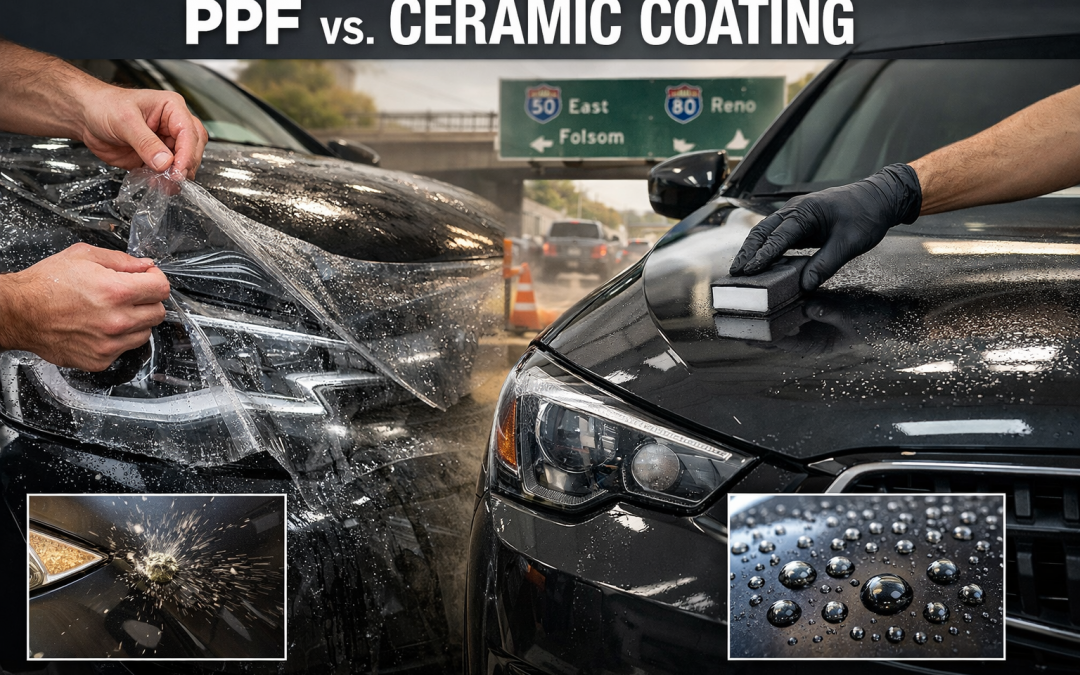
If you commute on Highway 50, I-80, or Business 80, your vehicle’s paint takes a beating you might not notice until it’s too late. Loose gravel, kicked-up debris, sand from construction zones—these routes deliver a steady stream of small impacts that chip away at your clear coat over months and years of daily driving.
When Sacramento drivers start looking into paint protection, two products come up constantly: paint protection film (PPF) and ceramic coating. Both promise to protect your finish. Both require real investment. And both get marketed with claims that range from accurate to wildly optimistic.
The challenge? Most comparison articles come from companies selling one product or the other. They skip the practical details—maintenance demands, edge-lift issues, realistic lifespans, and what each product actually does versus what people assume it does.
This guide breaks down the core distinction between PPF and ceramic coating based on what each product is genuinely designed to accomplish. Understanding that difference helps you make a smarter protection decision for how your vehicle is actually used on Sacramento roads.
What Paint Protection Film Actually Does
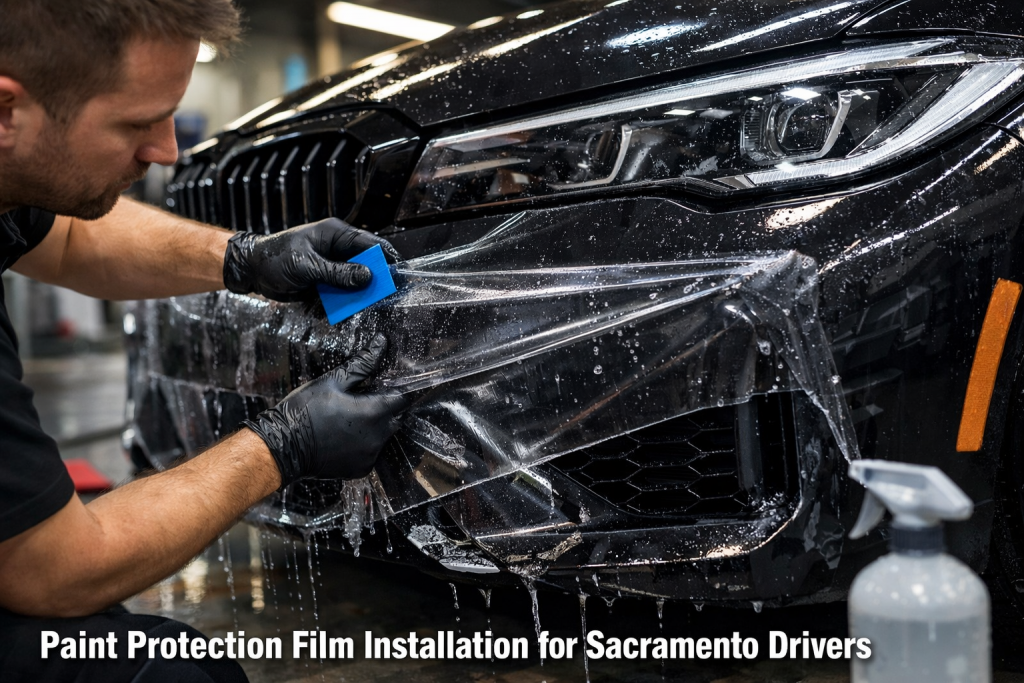
Paint protection film is a thermoplastic urethane film applied to vulnerable painted surfaces. It typically ranges from 6 to 8 mils thick—substantially thicker than any coating product [1].
PPF is designed primarily for impact protection. The film acts as a physical barrier between your paint and road hazards. Rock chips, gravel spray, sand, bug impacts, and minor debris contact the film instead of your clear coat.
Many modern PPF products include self-healing properties. Minor scratches and swirl marks in the film’s surface can disappear when exposed to heat—either from direct sunlight or warm water [2]. The film absorbs the impact, then recovers.
What PPF Does Well
- Absorbs rock chips and gravel impacts
- Prevents paint damage from road debris
- Self-heals light surface scratches
- Protects high-impact zones like front bumpers, hoods, mirrors, and rocker panels
- Maintains resale value by preventing permanent paint damage
What PPF Does Not Do
PPF is not primarily a cleaning-convenience product. It does not make washing dramatically easier. It does not provide the same hydrophobic water-beading behavior that coatings deliver. And it requires its own maintenance to stay clear and flexible over time.
What Ceramic Coating Actually Does
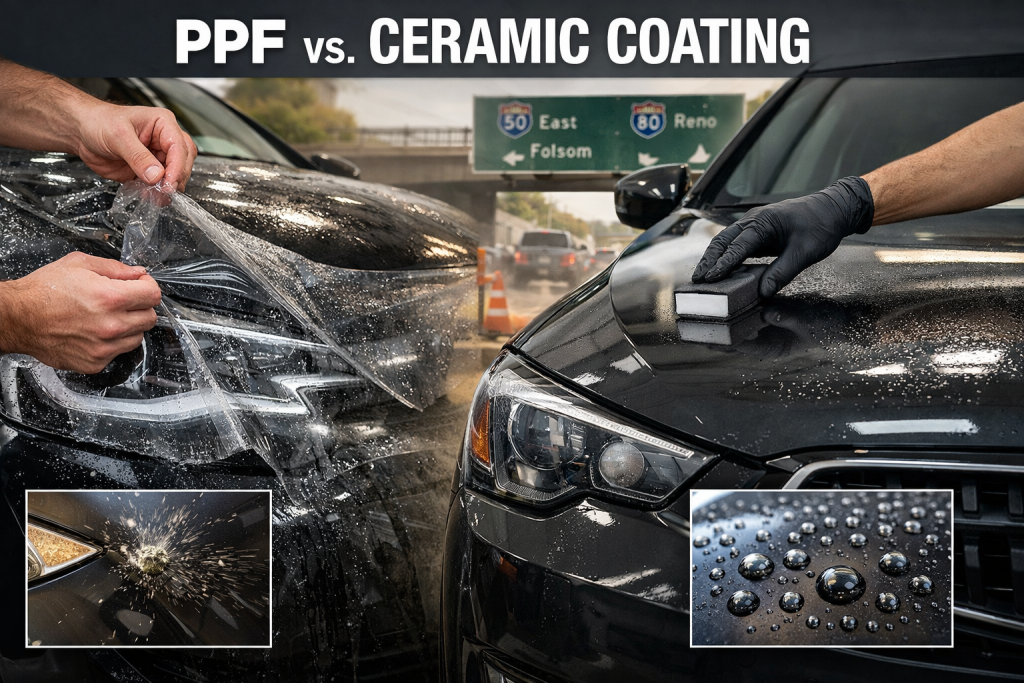
Ceramic coating is a liquid polymer that chemically bonds to your vehicle’s clear coat. Once cured, it creates a semi-permanent protective layer measured in microns—far thinner than PPF [3].
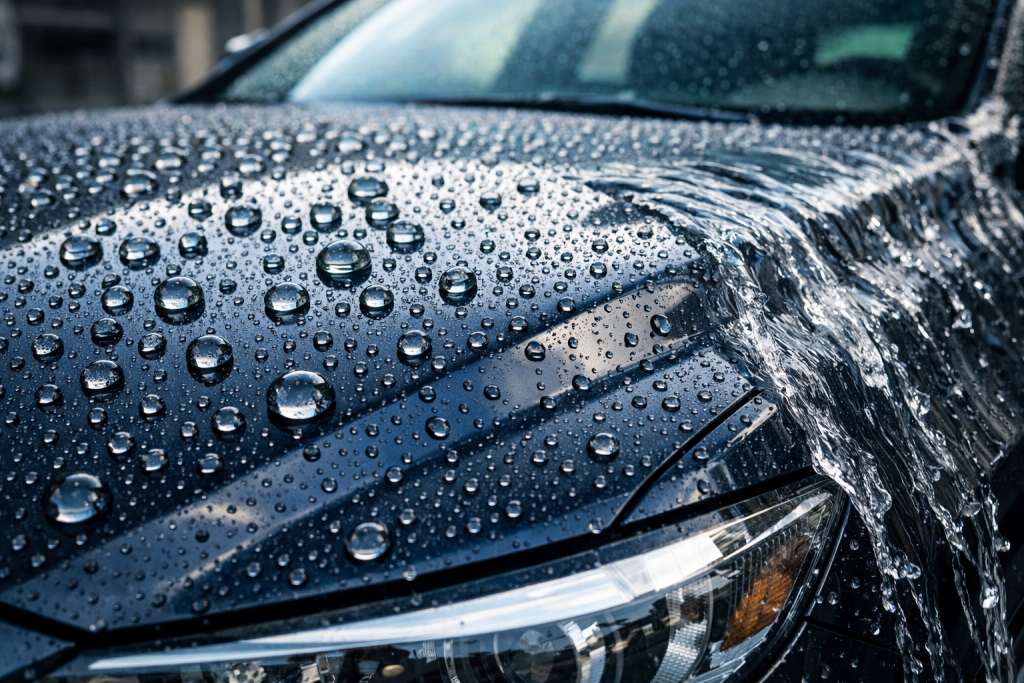
Ceramic coating is designed primarily for cleaning protection. It creates a hydrophobic surface that repels water, resists contamination bonding, and makes routine washing significantly easier. Bird droppings, bug splatter, tree sap, water spots, and road grime release more easily from a coated surface.
A quality ceramic coating also provides UV protection, helping prevent oxidation and color fading over time [4].
What Ceramic Coating Does Well
- Creates strong hydrophobic water beading
- Makes washing faster and easier
- Resists chemical staining and contamination bonding
- Adds UV protection against oxidation
- Enhances gloss and depth of paint appearance
- Reduces need for aggressive cleaning methods
What Ceramic Coating Does Not Do
Ceramic coating does not stop rock chips. It does not prevent gravel impacts from damaging paint. The coating layer is simply too thin to absorb physical impacts. If a rock hits your hood at freeway speed, the coating provides no meaningful barrier against the resulting chip.
Impact Protection vs Cleaning Protection: The Core Distinction
This is where most comparison content leaves Sacramento drivers without the information they actually need.
PPF and ceramic coating are not competing solutions to the same problem. They address different threats:
| Threat Type | PPF | Ceramic Coating |
| Rock chips and gravel | Strong protection | No protection |
| Minor scratches from debris | Self-healing capability | Minimal resistance |
| Bird droppings and bug splatter | Moderate resistance | Strong resistance |
| Water spots and mineral deposits | Limited benefit | Strong resistance |
| UV damage and oxidation | Moderate protection | Strong protection |
| Ease of routine washing | Minimal improvement | Significant improvement |
A freeway commuter dealing with daily rock chip exposure needs impact protection. A driver primarily concerned with keeping their vehicle cleaner longer needs cleaning protection.
Many Sacramento drivers need both.
Why Sacramento Freeway Commutes Create Specific Challenges
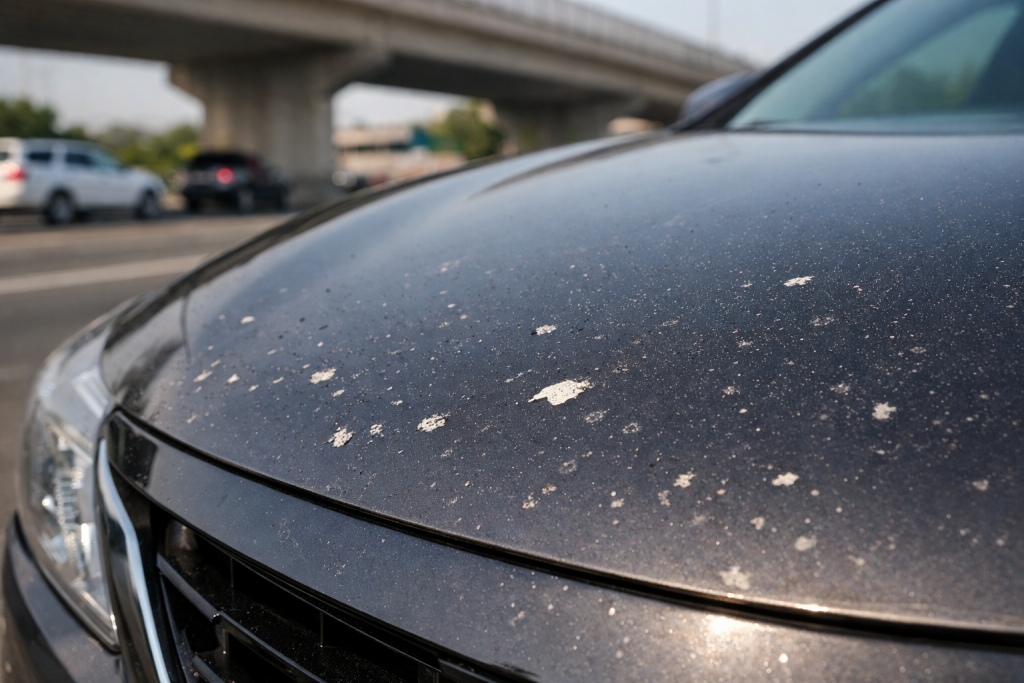
Sacramento’s highway system creates a consistent paint-damage environment. The region’s dry climate means loose gravel, sand, and debris stay on road surfaces longer than in wetter climates. Construction zones along major commuter routes add to the debris problem.
Highway 50 eastbound toward Folsom, I-80 through Roseville, and Business 80 through Arden-Arcade all deliver regular exposure to kicked-up road hazards. Vehicles following trucks, construction vehicles, or anything with uncovered loads face elevated chip risk.
The front end of your vehicle takes the worst of it. Hoods, front bumpers, fenders, mirrors, and rocker panels are high-impact zones that accumulate damage over months and years of commuting. We regularly see vehicles come into the shop with dozens of small chips concentrated on these areas—damage that happened so gradually the owner barely noticed until the clear coat started showing wear.
Comparing Investment Levels: What Each Option Costs
Cost is one of the biggest factors in this decision, and it varies significantly between the two products.
Paint Protection Film Investment
PPF typically represents a higher upfront investment. Full front-end coverage—hood, front bumper, fenders, mirrors, and headlights—generally runs higher than ceramic coating for an entire vehicle. Full-body PPF coverage increases the investment substantially.
The price reflects material costs (the film itself is expensive) and labor intensity. Quality PPF installation requires precision cutting, careful application, and time-consuming work around complex curves and edges.
Ceramic Coating Investment
Ceramic coating generally costs less than PPF for comparable vehicle coverage. Professional-grade coatings applied by trained installers fall into a moderate investment range, while consumer-grade products cost significantly less but typically deliver shorter protection periods.
The price reflects preparation work (which often includes paint correction), product quality, and the installer’s expertise and equipment.
Layered Approach Investment
Combining PPF on high-impact areas with ceramic coating over the film and remaining painted surfaces requires the highest total investment. For drivers protecting newer or higher-value vehicles, this combined approach often makes financial sense when weighed against potential paint repair costs down the road.
The bottom line: PPF costs more upfront but prevents damage that would be expensive to repair. Ceramic coating costs less but does not prevent physical damage. Your driving conditions and vehicle value should guide which investment makes sense.
Combining PPF and Ceramic Coating: The Layered Approach
For drivers who want both impact protection and cleaning convenience, layering PPF with ceramic coating makes practical sense.
Here’s how it works: PPF is applied first to high-impact areas. The film then needs proper curing time—and this part matters more than many installers explain. Fresh PPF needs time to outgas, releasing trapped solvents and moisture from the installation process. Applying ceramic coating too soon, before outgassing completes, can cause bubbling or adhesion problems.
Once the film has fully cured (typically one to two weeks depending on conditions and the specific film), a ceramic coating is applied over the PPF. The coating adds hydrophobic properties, UV resistance, and gloss enhancement to the film itself [5].
This combination delivers:
- Physical impact protection from the film
- Easier maintenance from the coating’s hydrophobic surface
- Extended PPF lifespan by reducing contamination buildup
- Enhanced appearance with coating-level gloss
The approach requires patience during the curing window and costs more than either product alone. But for Sacramento commuters driving newer vehicles or higher-value cars, the layered protection often justifies the investment.
Maintenance Realities Most Comparison Posts Skip
Both PPF and ceramic coating require maintenance. Neither product is truly “set it and forget it.”
PPF Maintenance
Paint protection film needs regular cleaning to prevent contamination from bonding to the surface. Bug splatter, bird droppings, and tree sap should be removed promptly—the same as bare paint.
Over time, PPF can develop edge lift, particularly on complex curves or areas with high sun exposure. Edge lift occurs when the film’s adhesive weakens or the edge begins separating from the paint surface. Quality installation minimizes this risk, but it remains a reality of film products [6].
PPF also has a finite lifespan. Most manufacturers rate their films for 5 to 10 years depending on conditions and maintenance. Sacramento’s intense summer sun accelerates film aging compared to milder climates.
Ceramic Coating Maintenance
Ceramic coatings are not permanent, despite some marketing language. Professional-grade coatings typically last 2 to 5 years before requiring reapplication. Consumer-grade products may last significantly less [7].
Coatings require proper washing technique to maintain performance. Automatic car washes with harsh brushes can degrade coating properties over time. Hand washing or touchless washing extends coating lifespan.
Coatings also need periodic decontamination. Even hydrophobic surfaces accumulate bonded contamination over months of use. Clay bar treatment or chemical decontamination restores the coating’s full performance.
Curing and Aftercare Basics
Both products require curing time after installation. Understanding aftercare requirements prevents accidental damage during the critical early period.
PPF Curing
After installation, PPF typically needs 24 to 48 hours before the vehicle should be washed. The adhesive continues bonding during this window. Some installers recommend avoiding high-pressure washing for up to two weeks, particularly around edges [8].
During hot Sacramento summers, curing may proceed faster. During cooler months, extended curing time may be recommended.
Ceramic Coating Curing
Ceramic coatings undergo initial cure within the first few hours, but full cure can take 24 to 48 hours or longer depending on the product. During this period, the vehicle should not get wet, and dust or debris contact should be minimized.
Some professional-grade coatings require infrared curing to achieve full hardness. Others cure adequately at ambient temperature. Your installer should specify exact aftercare requirements for the product used.
Which Protection Makes Sense for Your Situation?
The right choice depends on your specific driving conditions, vehicle value, and maintenance preferences.
PPF Makes More Sense When:
- You commute daily on Sacramento freeways
- Your vehicle’s front end faces regular debris exposure
- Preventing rock chips is your primary concern
- You drive a newer vehicle or plan to maintain resale value
- You’re willing to invest in professional installation
Ceramic Coating Makes More Sense When:
- Easier washing and maintenance is your priority
- Your vehicle is primarily used for local driving with limited freeway exposure
- You want enhanced appearance and gloss
- Your budget doesn’t accommodate full PPF coverage
- You’re comfortable with periodic reapplication
Layered Protection Makes Sense When:
- You want both impact protection and cleaning convenience
- Your vehicle value justifies higher protection investment
- You’re willing to maintain both products properly
- You want maximum protection for high-impact zones
Questions to Ask Before Choosing a Protection Product
Not all PPF and coating products are equal. Not all installers deliver equal results. Before committing to either protection option, ask these questions:
For PPF:
- What brand and thickness of film do you use?
- How long is the manufacturer warranty?
- What does the warranty actually cover?
- How do you handle edge lift if it occurs?
- What’s the expected lifespan in Sacramento’s climate?
For Ceramic Coating:
- What product are you using, and what’s the stated durability?
- What’s included in your preparation process?
- Do you offer maintenance packages or reapplication services?
- What washing methods do you recommend?
For Combined Applications:
- Do you apply coating over PPF, and which products are compatible?
- How long do you wait for PPF outgassing before applying coating?
- What’s the total curing time before normal use?
- How does the combined warranty work?
Book a Protection Consultation
Choosing between PPF, ceramic coating, or a layered approach involves matching the right protection to your specific situation. Vehicle type, daily driving conditions, budget, and maintenance preferences all factor into the decision.
The Detail Pros Sacramento helps local drivers plan paint protection that fits their actual needs. Whether you’re looking for impact protection against freeway debris, easier ongoing maintenance, or a combined approach, our team can evaluate your vehicle and recommend the right direction.
Need installation for a protection product we don’t offer directly? We coordinate with trusted specialists in the Sacramento area to connect you with qualified installers.
Contact The Detail Pros Sacramento to discuss protection planning for your vehicle.
Frequently Asked Questions
Does ceramic coating prevent rock chips?
No. Ceramic coating is too thin to absorb physical impacts from rocks or gravel. The coating excels at chemical resistance, UV protection, and making surfaces easier to clean, but it provides no meaningful barrier against debris striking your paint at highway speeds. Rock chip prevention requires paint protection film.
Can you apply ceramic coating over paint protection film?
Yes. Many professional detailers apply ceramic coating over PPF to add hydrophobic properties, enhance gloss, and make the film easier to maintain. The coating must be compatible with the specific film used, and the PPF needs adequate time to cure and outgas before coating application—typically one to two weeks.
How long does PPF last in Sacramento’s climate?
Most quality PPF installations last 5 to 10 years depending on sun exposure, maintenance, and product quality. Sacramento’s intense summer heat and UV exposure can accelerate film aging compared to cooler climates. Regular cleaning and avoiding harsh chemicals extends film lifespan.
Is ceramic coating worth it if I don’t get PPF?
For many local drivers, yes. Ceramic coating significantly reduces cleaning effort, protects against UV damage and oxidation, and resists staining from bird droppings and bug splatter. If rock chips aren’t your primary concern, coating alone delivers meaningful protection and convenience benefits.
What causes PPF edge lift, and can it be fixed?
Edge lift occurs when film edges begin separating from the paint surface, often due to adhesive degradation, improper installation, or contamination under the edge. Minor edge lift can sometimes be re-adhered by a qualified installer. Severe cases may require partial film replacement.
About This Guide
This comparison guide was developed with input from professional detailers experienced in both paint protection film installation and ceramic coating application. The information reflects current industry practices and is intended to help Sacramento drivers make informed protection decisions based on how their vehicles are actually used. The Detail Pros Sacramento provides paint correction, surface preparation, and ceramic coating services, and coordinates with trusted PPF specialists for comprehensive protection planning.
Cited Works
[1] XPEL — “What Is Paint Protection Film?” https://www.xpel.com/what-is-paint-protection-film
[2] 3M — “Paint Protection Film FAQs.” https://www.3m.com/3M/en_US/paint-protection-film-us/resources/faqs/
[3] IDA (International Detailing Association) — “Ceramic Coatings Explained.” https://www.the-ida.com/page/CeramicCoatings
[4] CarPro — “Ceramic Coating Benefits and Properties.” https://www.carpro-us.com/education/
[5] Ceramic Pro — “Coating Over Paint Protection Film.” https://www.ceramicpro.com/coating-over-ppf/
[6] SunTek — “Paint Protection Film Care and Maintenance.” https://www.suntekfilms.com/paint-protection-film/care-and-maintenance
[7] IDA (International Detailing Association) — “Ceramic Coating Durability and Maintenance.” https://www.the-ida.com/page/CeramicCoatings
[8] Llumar — “PPF Aftercare Instructions.” https://www.llumar.com/na/en/automotive/paint-protection-film/care-instructions/

 and then